Energy-Efficient Solutions in Residential HVAC
When a heat wave hits, many homeowners find their air conditioning systems struggling to keep pace. It’s a common scenario: the thermostat is set to a comfortable 72°F, but the indoor temperature stubbornly hovers around 78°F or even higher. This often leads to the question, “Is my AC broken?” The answer isn’t always straightforward, as residential HVAC systems operate within specific design limitations, particularly during extreme weather.
Understanding the 20-Degree Rule and Design Limits in Residential HVAC
One of the most crucial concepts to grasp is the “20-degree rule.” This industry guideline states that a properly functioning air conditioner is typically designed to cool your home to a maximum of 15 to 20 degrees Fahrenheit below the outside temperature. This isn’t a flaw in your system; it’s a fundamental aspect of its engineering. So, if it’s a scorching 100°F outside, your AC performing as intended might only bring your indoor temperature down to 80°F.
While this might not be your ideal setting, it means the system is working effectively within its design parameters. For more insights into how AC systems handle extreme heat and when continuous running is normal, exploring resources on how Affordable residential HVAC systems cope with temperatures exceeding 100 degrees can be very helpful.
The Physics of Temperature Differential
The ability of your AC to cool your home is governed by the principles of heat transfer. An air conditioner doesn’t “create” cold; it removes heat from your indoor environment and expels it outdoors. The greater the temperature difference between inside and outside, the harder your system has to work to move that heat.
Consider regional design temperatures. For instance, in Sarasota, Florida, the summer design temperature is around 92°F. This means HVAC systems in that area are typically sized and optimized to provide optimal comfort when outdoor temperatures are at or below 92°F. Similarly, in South Alabama, systems might be designed for an average summer high of 95°F. When actual outdoor temperatures soar significantly above these design standards, even a perfectly maintained and sized system will struggle to achieve the same indoor comfort levels it provides on a milder summer day.
The system is constantly battling against the influx of heat, attempting to reach a thermal equilibrium that is increasingly difficult to attain. The unit must also manage both sensible cooling (reducing temperature) and latent cooling (removing humidity), and during heat waves, the latter can significantly impact perceived comfort and the system’s ability to lower the thermostat setting.
Why Your Thermostat Setting Isn’t a Guarantee
Many homeowners assume that if they set their thermostat to 70°F, their AC will eventually reach that temperature, regardless of the outdoor conditions. However, during an intense heat wave, your thermostat setting becomes more of a target than a guarantee.
When outdoor temperatures are extremely high, your AC system may enter a state of continuous runtime. This means the compressor and fans are operating almost constantly, trying to shed the relentless heat gain from outside. While continuous running might sound alarming, it can be normal for a properly sized system during the hottest parts of the day, particularly between 2 PM and 8 PM when peak afternoon heat and solar heat gain are at their maximum.
Factors like direct sunlight streaming through windows (solar heat gain) and high indoor humidity levels can further compound the challenge. High humidity makes the air feel warmer and stickier, even if the dry-bulb temperature is close to your set point. Your AC dedicates a significant portion of its energy to dehumidification, which can reduce its capacity for sensible cooling. In such conditions, your system might only be able to maintain an indoor temperature a few degrees above your thermostat setting, simply because the heat load on your home exceeds its cooling capacity.
Airflow Restrictions and Heat Rejection Failures
One of the most common,, reasons an AC system fails to reach its set temperature during a heat wave is compromised airflow and inefficient heat rejection. Both are critical for the system’s ability to transfer heat effectively.
An air conditioning system relies on a continuous, unimpeded flow of air to absorb heat from your home and release it outside. When this airflow is restricted, or the system cannot efficiently reject heat, its overall efficiency plummets, leading to longer run times, higher energy bills, and ultimately, a failure to cool your home adequately. The system’s static pressure, which is the resistance to airflow, increases, putting strain on the blower motor and reducing its ability to move air.
How Dirty Air Filters and Blocked Vents Stifle Cooling
The air filter is your AC system’s first line of defense against dust and debris. However, a dirty or clogged air filter can become a significant impediment to cooling. When a filter is so full of particulates that light can barely pass through it, it severely restricts the amount of air that can flow over the evaporator coil.
This reduction in airflow means less heat is absorbed from your home’s air. The system runs longer, works harder, and consumes more energy, but delivers less cooling. This can lead to a 15-20% loss in cooling efficiency and can even cause the evaporator coil to freeze.
Similarly, blocked return grilles or supply registers can create localized airflow issues. Closing off vents in unused rooms, for example, might seem like a good way to save energy, but it can actually create pressure imbalances in your ductwork. This can force cooled air into unconditioned spaces, reduce overall system efficiency, and prevent sufficient airflow over the evaporator coil, leading to poor cooling throughout the house. The blower motor has to work harder against this resistance, increasing wear and tear.
Dirty Condenser Coils and the Threat of System Breakdown
While dirty air filters affect the indoor unit, dirty condenser coils impact the outdoor unit’s ability to release heat. The condenser coils, located in the outdoor unit, are responsible for dissipating the heat absorbed from your home into the outside air. If these coils are covered in dirt, leaves, grass clippings, or even cottonwood seeds, they cannot efficiently transfer heat. It’s like trying to cool a car engine when its radiator is caked in mud.
When the condenser coils are dirty, the refrigerant inside them cannot cool down effectively. This causes the refrigerant to remain at a higher pressure and temperature, making the compressor work much harder. This increased strain can lead to premature wear and tear on critical components like the compressor, the capacitor (which helps start the compressor), and the contactor (which controls power to the compressor and outdoor fan).
In extreme cases, the system can overheat and shut down, or components can fail entirely, leading to costly repairs during the peak of a heat wave. Keeping the area around your outdoor unit clear of debris and ensuring the coils are clean is vital for efficient heat rejection.
Mechanical Culprits: Refrigerant Issues and Frozen Coils
Beyond airflow and heat rejection, specific mechanical problems within your AC system can prevent it from reaching the set temperature. These issues often involve the refrigerant, which is the lifeblood of your cooling system, and the evaporator coil, where the magic of heat absorption happens.
When an AC system struggles to cool, it’s often a sign that something is amiss with its core cooling cycle. The refrigerant circuit is a closed system designed to continuously absorb heat indoors and release it outdoors. Any disruption to this cycle can severely impair cooling performance, leading to discomfort and potential system damage. Diagnosing these mechanical failures often requires specialized tools and expertise.
Low Refrigerant Levels and the Myth of Consumption
A common misconception among homeowners is that refrigerant is a consumable, like gasoline, that needs regular refilling. In reality, refrigerant is not “used up” in a sealed AC system. If your system is low on refrigerant, it almost always indicates a leak somewhere in the refrigerant lines.
Low refrigerant levels significantly impair your AC’s ability to absorb heat. When refrigerant pressure drops, the evaporator coil cannot get cold enough to properly cool the air passing over it. You might notice that the air coming from your vents isn’t as cold as it should be, or that the copper lines (specifically the larger suction line) leading to your outdoor unit are not “beer can cold” and sweating, which is a sign of proper heat absorption.
A leak not only reduces cooling capacity but can also lead to the compressor working harder, increasing the risk of breakdown. If you suspect a leak, a professional technician must locate and repair it before recharging the system, as simply adding more refrigerant without fixing the leak is a temporary and wasteful solution.
The Paradox of the Frozen Evaporator Coil
It might seem counterintuitive, but if your AC is blowing warm or barely cool air, a frozen evaporator coil could be the culprit. This “ice buildup” on the indoor coil prevents proper heat absorption. A frozen coil typically occurs due to one of two primary reasons: severely restricted airflow or low refrigerant levels.
When airflow is restricted (e.g., by a dirty filter or blocked vents), not enough warm air passes over the evaporator coil to absorb the cold produced by the refrigerant. This causes the moisture in the air to freeze on the coil’s surface. Similarly, if refrigerant levels are too low, the pressure in the system drops, causing the evaporator coil to get excessively cold, leading to ice formation.
A frozen coil acts as an insulator, preventing the coil from absorbing heat from your home’s air. The system will continue to run, but with virtually no cooling effect. You might hear strange noises, see ice on the copper lines, or even find water leaking from the indoor unit as the ice melts.
If you discover a frozen coil, the immediate solution is to turn off the cooling (set the fan to “on” only) and allow the coil to thaw completely, which can take several hours. Once thawed, addressing the underlying cause—whether it’s replacing a dirty filter or calling a technician to check for refrigerant leaks—is crucial to prevent recurrence.
Structural Demands on Residential HVAC Systems
Even with a perfectly functioning AC unit, your home’s structural integrity and thermal envelope play a massive role in its ability to maintain comfortable temperatures during a heat wave. A well-sealed and insulated home places significantly less demand on its HVAC system than one with numerous thermal vulnerabilities.
The “home envelope” refers to the physical separators between the conditioned interior and the unconditioned exterior, including the walls, roof, foundation, windows, and doors. If this boundary is compromised, heat can infiltrate your living space, making it incredibly difficult for your AC to keep up. This leads to substantial cooling loss and forces your system to run longer and harder, regardless of its mechanical health.
Leaky Ductwork and Attic Heat Gain
Your home’s ductwork is the circulatory system for your conditioned air. If this system has leaks, kinks, or disconnections, a significant portion of your cooled air can escape before it ever reaches your living spaces. Studies show that duct leakage can cause 20-30% of cooled air to be lost into attics or other unconditioned areas.
This problem is particularly acute when ductwork runs through hot attics. During a heat wave, attic temperatures can soar to 140-160°F. If your supply ducts are leaking in this superheated environment, your AC is essentially cooling your attic. Conversely, if your return ducts have leaks, they can pull hot, humid attic air directly into your system, distributing it throughout your home and increasing the load on your AC.
This constant influx of hot air makes it nearly impossible for your system to lower indoor temperatures, especially during peak summer heat. Sealing and insulating ductwork, particularly in unconditioned spaces, is a crucial step in improving AC performance and energy efficiency.
Insulation Deficiencies and Solar Heat Gain
Poor insulation is another major culprit behind an AC struggling during a heat wave. Insulation acts as a barrier to heat flow, and an insufficient R-value (a measure of thermal resistance) in your walls, ceiling, and floor allows heat to easily transfer into your home. This is particularly problematic in older homes or those with inadequate attic insulation.
Furthermore, solar heat gain—the heat that enters your home through windows, especially those facing west or south—can overwhelm your AC. Up to 30% of unwanted heat can enter through windows. Even with good insulation, direct sunlight can rapidly increase indoor temperatures.
Radiant barriers in attics can help reflect solar heat, but for windows, simple solutions like closing blinds, curtains, or shades on sun-facing windows during the hottest parts of the day can make a significant difference. Lifestyle adjustments, such as avoiding heat-generating appliances (ovens, dryers) during peak heat hours, also reduce the internal heat loads your AC has to battle.
Homeowner Diagnostic Checklist and Professional Intervention
When your AC isn’t reaching its set temperature during a heat wave, it’s natural to feel frustrated. Before you panic and call for emergency service, there are several simple checks you can perform as a homeowner. These basic troubleshooting steps can often identify and resolve minor issues, saving you time and money. However, it’s equally important to know when to call in the professionals.
Understanding the difference between a normal system limitation and a mechanical problem is key. Your AC system is a complex machine, and while some issues are easily fixable, others require specialized knowledge and tools. Performing regular preventive maintenance and being proactive can help avoid many common breakdowns during peak demand.
Simple DIY Checks Before Calling a Technician
Before contacting an HVAC technician, take a few minutes to run through this homeowner checklist:
- Check the Air Filter: This is the most common and easiest fix. A dirty filter restricts airflow, reducing cooling efficiency. Check your filter monthly, especially during heavy use, and replace it if it’s visibly dirty or light cannot pass through it.
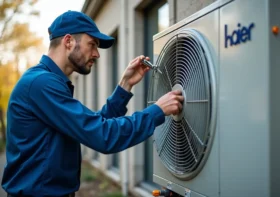
- Inspect the Outdoor Unit: Ensure there’s at least two feet of clear space around your outdoor condenser unit. Clear away any leaves, grass clippings, or debris that might be blocking the coils. You can gently rinse the coils with a garden hose (never a pressure washer) to remove accumulated dirt, but be careful not to bend the delicate fins.
- Verify Thermostat Settings: Double-check that your thermostat is set to “Cool” mode and the fan is on “Auto” (not “On,” which runs the fan continuously even when the compressor isn’t cooling). Ensure the temperature setting is realistic for the outdoor conditions, keeping the 20-degree rule in mind.
- Check for Blocked Vents: Make sure all supply and return vents inside your home are open and unobstructed by furniture, rugs, or drapes.
- Perform a Temperature Split Test (Delta T): This quick test helps gauge your AC’s cooling effectiveness. Use a thermometer to measure the temperature of the air entering your return vent and the air coming out of a supply vent. A healthy AC system should show a temperature difference (Delta T) of 15-20°F. If the split is significantly less, it indicates a cooling problem.
- Check Circuit Breakers: If your system isn’t running at all, check your electrical panel for a tripped breaker. Reset it once, but if it trips again immediately, do not keep resetting it, as this indicates a more serious electrical issue.
When to Call a Professional for Residential HVAC Service
If your DIY checks don’t resolve the issue, or if you encounter any of the following, it’s time to call a qualified HVAC technician:
- No Cold Air or Warm Air Blowing: If your system is running but blowing warm air, or no cold air at all, it’s a clear sign of a mechanical problem.
- Ice on Coils or Refrigerant Lines: A frozen evaporator coil or ice on the copper lines indicates a serious issue, likely low refrigerant or severe airflow restriction.
- Unusual Noises or Odors: Grinding, banging, hissing, or burning smells are all red flags that require professional attention.
- Water Leaks: Puddles around your indoor unit could indicate a clogged condensate drain line or a frozen coil.
- System Short Cycling: If your AC turns on and off frequently without completing a full cooling cycle, it could be due to electrical issues, a sizing problem, or other mechanical faults.
- Low Refrigerant Levels: If your temperature split test indicates poor cooling and you suspect low refrigerant, a professional is needed to find and repair the leak and properly recharge the system. Refrigerant handling requires specialized training and equipment.
- Electrical Component Failure: Problems with capacitors, contactors, or the compressor itself require expert diagnosis and replacement.
- System Sizing Issues: If your AC consistently struggles to keep up even after addressing all maintenance items, it might be undersized for your home’s heat load. A professional can perform a Manual J load calculation to determine the correct system size for your property.
- Aging System: If your AC is 10-15 years old or older and experiencing frequent breakdowns, a technician can help you weigh the repair-versus-replace decision, considering factors like efficiency improvements and long-term cost savings with a new unit.
Frequently Asked Questions About Heat Wave AC Performance
Why is my AC running all day but the indoor temperature keeps rising?
This is a common and frustrating scenario during a heat wave. Several factors can contribute to this. Firstly, your AC might be operating within its design limits; if it’s 100°F outside, your system might only be able to cool your home to 80°F, and any additional heat load (like solar gain or internal appliances) could push the temperature higher.
Secondly, underlying issues such as a dirty air filter, blocked condenser coils, low refrigerant, or leaky ductwork can severely reduce your system’s efficiency, causing it to run constantly without effectively lowering the temperature. The system is simply unable to remove heat faster than it’s entering your home.
Is it normal for my air conditioner to fail to reach 72 degrees when it is 100 degrees outside?
Yes, it is often normal. As discussed with the “20-degree rule,” residential AC systems are typically designed to achieve a maximum temperature differential of 15-20°F between the indoor and outdoor air. So, on a 100°F day, a properly functioning system might only be able to cool your home to 80-85°F. Trying to force it down to 72°F in such extreme conditions can overwork the system, lead to continuous running, and potentially cause breakdowns or freezing. It’s important to set realistic expectations for indoor temperatures during severe heat waves.
How can I tell if my cooling issue is caused by a dirty filter or low refrigerant?
Both dirty filters and low refrigerant can cause similar symptoms, such as reduced cooling and continuous running. However, there are some distinctions:
- Dirty Filter: You can visually inspect your air filter. If it’s heavily clogged with dust and debris, it’s likely restricting airflow. You might also notice weaker airflow from your vents. This is a DIY fix.
- Low Refrigerant: This is harder to diagnose without specialized tools. Signs might include ice buildup on the evaporator coil or larger copper line outside, a hissing sound from the outdoor unit (indicating a leak), or the larger copper line not feeling “beer can cold” and sweating. If you suspect low refrigerant, it requires a professional technician to confirm, locate any leaks, repair them, and properly recharge the system. A temperature split test showing a low differential (e.g., less than 12°F) can also point to a refrigerant issue.
Conclusion
Navigating a heat wave when your AC struggles to reach its set temperature can be a challenging experience. However, by understanding the fundamental design limitations of residential HVAC systems, such as the 20-degree rule, and recognizing the common culprits behind inefficient cooling, you can better manage your expectations and take appropriate action.
From simple homeowner checks like replacing a dirty air filter or clearing debris from your outdoor unit, to identifying when a professional technician is needed for issues like refrigerant leaks or electrical component failures, an informed approach is your best defense against the summer heat. Regular maintenance and a proactive mindset are key to ensuring your AC system runs as efficiently as possible, keeping your home comfortable and energy-efficient, even when the temperatures outside are soaring.