The Benefits of Shopping at Local Hardware Stores
When we invest in quality tools, whether for a weekend DIY project or demanding professional use, we expect them to last. Protecting that investment begins the moment we bring a new tool home. It’s not just about the purchase; it’s about understanding the support and safeguards available to us.
That journey often starts at our local hardware and garden supplies stores, which offer more than just products. They provide expert advice, a sense of community, and often, crucial assistance with product warranties and after-sales support.
In this guide, we’ll explore the often-overlooked benefits of buying from local retailers and, specifically, how to safeguard your Milwaukee power tools. We’ll cover everything from why tool registration matters, how to navigate the process, and what to do if you encounter common warranty questions. Understanding these steps ensures your tools remain reliable workhorses for years to come.
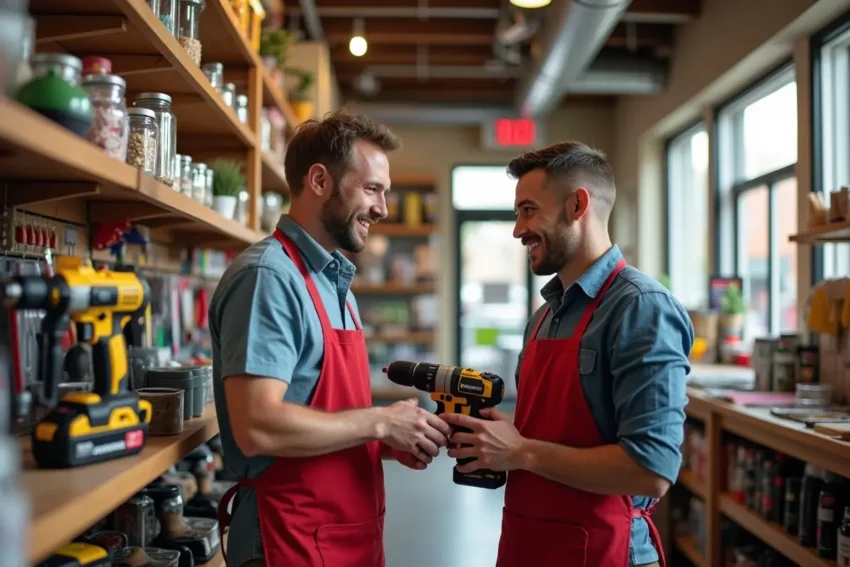
One of the most significant advantages of choosing a local hardware store over a large chain is the personalized customer service and expert advice you receive. Unlike the often-impersonal experience at big-box retailers, local stores pride themselves on building relationships with their customers. The staff often consists of seasoned professionals or tradespeople who possess an in-depth understanding of the products they sell and their practical applications.
Personalized Customer Service and Expert Advice
When you’re embarking on a new DIY project, trying to troubleshoot an issue with an existing tool, or simply looking for the right fastener, having access to knowledgeable individuals can be invaluable. They can guide you through the selection process for the perfect Milwaukee drill, advise on the best accessories for a specific task, or even offer tips and tricks that save you time and money. This level of personalized interaction fosters trust and ensures you leave with not just a product, but also the confidence to tackle your next endeavor.
For instance, imagine you’re a professional contractor in July 2026, and your Milwaukee M18 FUEL impact driver suddenly stops working on a job site. Instead of navigating a confusing automated phone system or waiting for an online chat response, you can walk into your local hardware store. The staff, who might even recognize you, can immediately assess the situation, offer initial troubleshooting, and guide you through the warranty process, potentially saving you valuable downtime. They understand the urgency of your work and can often expedite solutions or point you to the nearest authorized service center. This kind of hands-on help is a cornerstone of the local shopping experience.
Beyond immediate problem-solving, local hardware stores often host workshops or provide resources for the community, further enhancing their role as hubs of knowledge. They are invested in the success of your projects, big or small, and their expertise extends beyond just selling tools to ensuring you know how to use and maintain them effectively. This commitment to customer education and support is a distinguishing factor that sets local businesses apart.
Sourcing High-Quality Local Hardware and Home Supplies
Local hardware stores are often curated with a selection of high-quality products, including premium brands like Milwaukee, that cater to the needs of both professional tradespeople and serious DIY enthusiasts. While big-box stores might offer a broader, but often shallower, inventory, local shops typically focus on durability, performance, and reliability. This means you’re more likely to find robust tools and supplies that are built to last, reducing the need for frequent replacements.
The emphasis on quality also extends to the specific models and accessories available. Local retailers often stock specialized items that might be harder to find elsewhere, ensuring you have access to the right tool for even the most niche tasks. For example, a local store might carry a wider range of Milwaukee’s M12 or M18 systems, including tools with advanced features or specific attachments, that cater to the demands of local trades.
To illustrate the difference, consider this comparison:
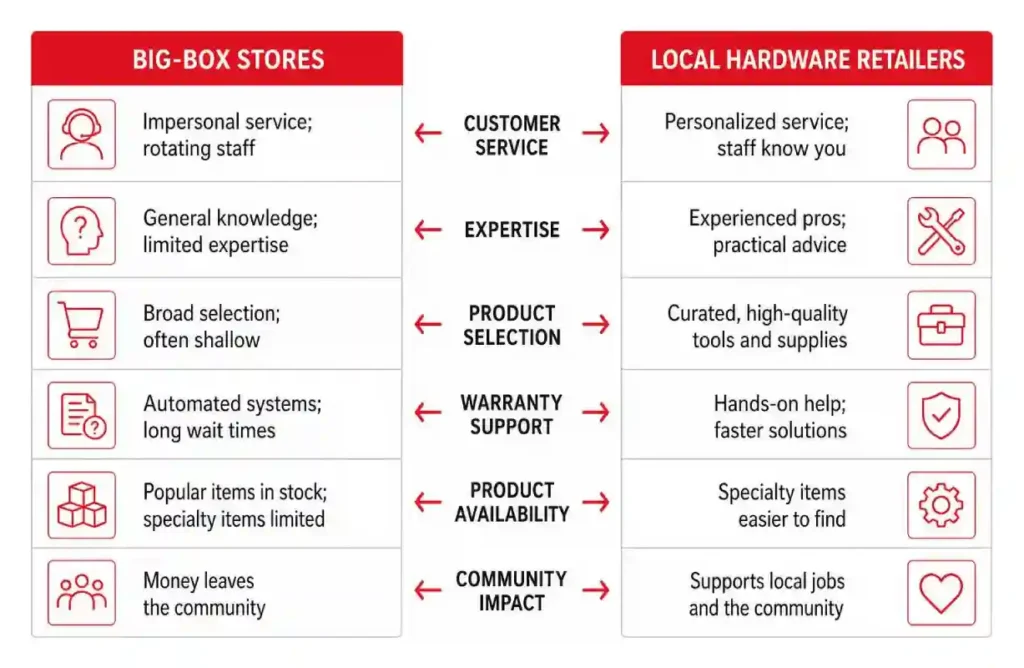
When it comes to power tools, the quality of your purchase directly impacts your efficiency and the longevity of your investment. Local hardware stores understand this, which is why they often prioritize carrying brands known for their innovation and durability. For more detailed insights on the registration process and how local stores can support your tool investments, you can explore resources provided by local hardware and garden supplies. This type of information is often readily available and tailored to common customer inquiries.
Furthermore, shopping locally contributes to the economic vitality of your community. Every dollar spent at a local business recirculates within the local economy, supporting jobs and other local enterprises. This creates a virtuous cycle that strengthens the community as a whole.
Purchasing a Milwaukee power tool is a significant investment, and understanding its warranty is crucial for protecting that investment. While Milwaukee tools are renowned for their durability, even the best tools can sometimes encounter issues. This is where warranty protection comes into play, and local hardware stores can be an invaluable resource in navigating this process.
Many local retailers are authorized dealers, meaning they have a direct relationship with manufacturers like Milwaukee. This connection can simplify warranty claims, repairs, and even provide access to specialized parts or services that might be difficult to obtain elsewhere. They often have established procedures for handling warranty issues and can act as an intermediary between you and the manufacturer, streamlining what can sometimes be a complex process.
Beyond initial purchase, the way you manage your tool’s information can significantly impact your ability to leverage its warranty. Keeping purchase receipts, understanding date codes, and knowing the registration process are all vital steps.
Understanding Warranties for Local Hardware and Home Supplies
Milwaukee Tool offers robust warranty coverage, which can vary slightly depending on the product type and region. Generally, most Milwaukee electric power tools, when purchased from an authorized distributor, come with an automatic 5-year limited warranty. This means that even without formal registration, your tool is typically covered for a significant period. Hand tools, for example, often carry a limited lifetime warranty or guarantee, underscoring Milwaukee’s confidence in their quality.
However, it’s important to note that not all products share the same warranty duration. Specialty tools, such as Job Site Radios, M12 Power Ports, M18 Power Sources, Jobsite Fans, and Heated Gear, usually have a 1-year warranty. Certain M18 FUEL 1-inch D-Handle Impact Wrenches, Airless Paint Sprayers, and specific Lithium-Ion batteries might have a 2-year warranty. Meanwhile, items like M18 Compact Heat Guns, M12 Laser Levels, and Digital Levels typically come with a 3-year warranty. Battery packs, in particular, have varying warranty periods, ranging from 1 to 3 years depending on their chemistry and model number. Some older models might even have up to 5 years prorated coverage.
The key takeaway here is that your warranty often begins from the date of purchase. This is why keeping your proof of purchase, such as a receipt or invoice, is paramount. In cases where a receipt is unavailable, Milwaukee will typically use the manufacturing date code found on the tool itself to determine the start of the warranty period.
This code, often a combination of letters and numbers on the tool’s nameplate, helps Milwaukee ascertain when the tool was produced, allowing them to estimate its age and apply the warranty accordingly. For direct support or to locate a service center, Milwaukee’s official hotline, 1-800-SAWDUST (1-800-729-3878), is a valuable resource.
How to Register Milwaukee Tools Bought at Local Hardware and Home Supplies
While standard warranty coverage is often automatic, registering your Milwaukee tool can unlock additional benefits, such as an extended warranty period in some regions, easier warranty claims, theft recovery assistance, and important product recall alerts. As of July 2026, the process is straightforward, but attention to detail is key.
1. Gather Your Information: Before you start, have your tool, its packaging, and your purchase receipt handy. You’ll need:
- Model Number: Usually found on the tool’s nameplate.
- Serial Number: A unique identifier, often 5 or 6 digits long, also on the nameplate. For newer tools, a QR code might expedite this.
- Purchase Date: From your receipt.
- Retailer Information: The name and location of your local hardware store.
- Proof of Purchase: A digital copy of your receipt (a clear photo or scan works).
2. Visit the Official Milwaukee Registration Portal: Go to the official Milwaukee Tool website and look for the “Product Registration” or “Warranty & Registration” section. In some regions, like Europe, this is explicitly tied to an extended warranty.
3. Create or Log In to Your Account: You’ll typically need a Milwaukee Tool account to register. If you don’t have one, create one, ensuring you use a personal email address for long-term access. Validate your account via email if prompted.
4. Enter Tool Details:
- Select the correct “Rating Plate” sticker style from the options provided on the website; this helps the system correctly interpret your tool’s information.
- Input the model number and serial number. Double-check for accuracy, as errors can lead to registration issues.
- Enter the purchase date and the name of your local hardware store.
- For batteries, you might need to register them separately. If an older battery lacks a serial number, some systems allow you to enter ‘0000’ to proceed. The production code, often a letter and a year at the end of a longer code, might also be required.
5. Upload Proof of Purchase: Upload the digital copy of your receipt. This is a critical step for validating your purchase date and ensuring full warranty coverage.
6. Submit and Confirm: Review all the information before submitting. You should receive a confirmation email. Save this email as an additional record of your registration.
Important Note on Extended Warranty: In some regions, like Europe, registering your new Milwaukee power tool online within 30 days of the purchase date can extend your warranty to 3 years at no additional cost. This effectively adds an extra two years beyond the standard warranty period. While the specific terms can vary, the principle of timely registration for enhanced benefits remains a best practice globally.
Using the One-Key app is another way to manage your tools. While primarily for inventory and tracking, registering your tools within One-Key can also streamline access to their information. Tools with built-in One-Key functionality might even register automatically when synced with the app.
Frequently Asked Questions about Milwaukee Tool Warranties
Navigating warranties can sometimes feel complex, especially with varying terms and conditions. Here, we address some common questions regarding Milwaukee tool warranties and registration.
Do I need to register my Milwaukee tool to get warranty repairs?
No, warranty registration is not strictly mandatory to obtain the standard warranty on a Milwaukee Tool product. If you purchase your tool from an authorized distributor, it automatically comes with a warranty. The primary requirement for a warranty claim is proof of purchase, such as your original receipt or invoice. This document establishes the purchase date, which is crucial for determining the warranty period.
However, registering your tool is highly recommended. While not required for basic warranty coverage, it offers several benefits:
- Easier Claim Process: Having your tool registered in your online account can expedite warranty claims, as your purchase details are already on file.
- Theft Recovery: In the unfortunate event of theft, a registered tool with its serial number can aid law enforcement in recovery efforts.
- Product Updates and Recalls: Registration ensures you receive important safety alerts and product updates directly from Milwaukee.
- Extended Warranty Eligibility: As mentioned, in some regions, registration within a specific timeframe (e.g., 30 days) is required to qualify for an extended warranty period.
If you lose your proof of purchase, Milwaukee will typically use the manufacturing date code stamped on the tool itself to determine the start of the warranty period. This date code serves as a fallback for warranty validation.
What is the difference between standard and extended warranties, and what is excluded?
The standard warranty period for most Milwaukee electric power tools is 5 years from the date of purchase, provided they are bought from an authorized distributor. This coverage is automatic.
An extended warranty, where offered, typically provides additional coverage beyond the standard period. For example, in some regions, registering your tool online within 30 days of purchase can extend the warranty to 3 years, adding an extra 2 years of coverage compared to a shorter standard period or offering a longer overall period. This extension is a benefit of proactive registration.
However, it’s crucial to understand what is excluded from both standard and extended warranties. Generally, these exclusions include:
- Accessories: Items like drill bits, saw blades, sanding discs, and other consumables are not covered.
- Battery Chargers: While batteries may have their own warranty, chargers are often excluded from the extended tool warranty.
- Specific Battery Packs: Some battery models, such as M28 rechargeable battery packs, are explicitly excluded from the 3-year warranty extension.
- Normal Wear and Tear: Damage from regular use, such as worn chuck jaws, brush caps, or cosmetic blemishes, is typically not covered.
- Misuse or Abuse: Damage resulting from improper use, neglect, accidents, alterations, or repairs by unauthorized service centers will void the warranty. For instance, using a hammer drill to mix concrete, which is outside its intended use, would likely not be covered.
Always consult the specific warranty documentation that comes with your tool or check the official Milwaukee Tool website for the most accurate and up-to-date terms for your region in July 2026.
What should I do if I lose my proof of purchase or need a local service center?
Losing your receipt can be a cause for concern when it comes to warranty claims, but it’s not always a deal-breaker. If you no longer have your original receipt, Milwaukee Tool has a protocol in place:
1. Manufacturing Date Code: As mentioned, if no proof of purchase is provided at the time of service, Milwaukee will use the manufacturing date code on the tool to determine the start of the warranty period. This code is usually found on the tool’s nameplate. While this is a viable option, it’s always better to have your receipt, as the date code might imply an earlier warranty start date than your actual purchase date.
2. Digital Records: If you registered your tool online, your purchase details and an uploaded copy of your receipt might be stored in your Milwaukee account, serving as proof. This highlights another benefit of registration. Some users have also found success using credit card statements or bank records as proof of purchase for secondhand tools or when receipts are lost.
Finding a Milwaukee Service Center: If your tool requires repair under warranty, or even out-of-warranty service, finding an authorized service center is essential. Milwaukee offers several ways to locate these centers:
- Online Service Center Locator: The official Milwaukee Tool website provides an eService portal or a service center locator. You can typically input your zip code or address to find the nearest authorized service stations or factory service centers.
- 1-800-SAWDUST: You can call Milwaukee’s dedicated customer service line at 1-800-SAWDUST (1-800-729-3878). Their representatives can help you find a service center, answer warranty questions, and guide you through the repair process.
- Local Hardware Stores: Your local hardware store, especially if it’s an authorized dealer, can often assist you in finding a service center or even facilitate the repair process on your behalf. They might have direct contacts or preferred service partners in the area.
For out-of-warranty tools, Milwaukee also offers services like ‘Lightning Max Repair,’ which promises rapid repair service, often within 7-10 business days, at a quoted price. This can be a valuable option for professionals who need their tools back in action quickly.
Conclusion
Investing in quality power tools is a smart move, and protecting that investment through proper warranty understanding and registration is even smarter. As we’ve explored, shopping at your local hardware store offers a wealth of benefits beyond just the transaction—from personalized expert advice to a curated selection of high-quality products. These local businesses are often your first line of support for everything from project guidance to navigating complex warranty claims for brands like Milwaukee.
By taking the simple steps of understanding your Milwaukee tool’s warranty, gathering necessary information, and registering it promptly (especially within the 30-day window for potential extended warranty benefits), you ensure that your tools remain reliable workhorses for years to come. Whether it’s through automatic coverage, date code verification, or the added security of online registration, Milwaukee stands behind its products. And when you need assistance, the combination of Milwaukee’s robust support network and the personal touch of your local hardware store creates a powerful safety net for your valuable equipment.
Choosing to shop local is an investment in your community and in your own peace of mind, knowing that expert help and reliable support are always within reach.