Streamlining Operations: Commercial Logistics and Facility Management
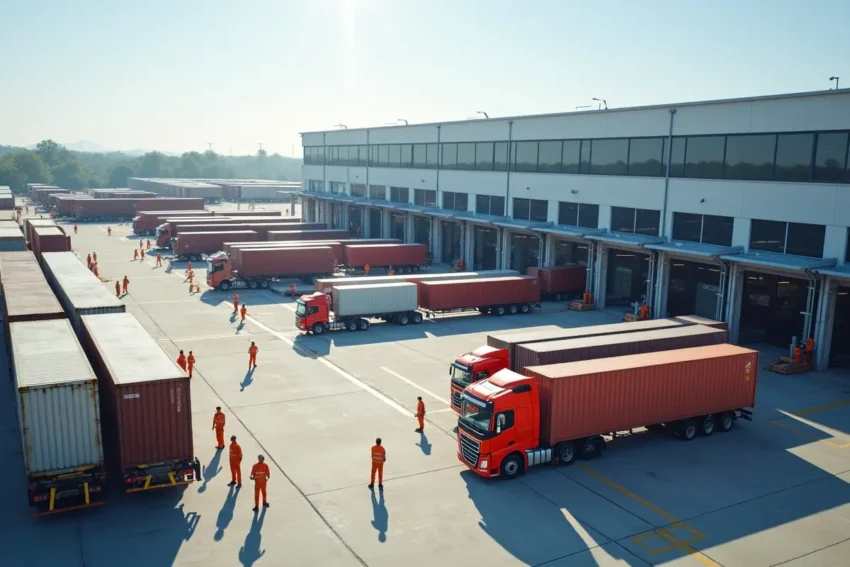
Modern supply chains are dynamic, demanding peak performance and unwavering reliability. In this environment, the seamless operation of physical assets is paramount. Yet, many businesses often overlook a crucial factor that underpins operational success: the strategic intersection of commercial logistics and facility management. This isn’t merely about building maintenance; it’s about safeguarding throughput, maximizing asset uptime, and ensuring continuous operational flow.
In this extensive guide, we will unpack the vital role of facility management in logistics. We’ll explore why it’s critical for efficiency, how its application varies across diverse sectors like air cargo and 3PL, and the core areas it addresses, from access control to emergency preparedness. We’ll also delve into regulatory compliance, the benefits of digital transformation, and the future trends shaping logistics facilities. Our aim is to provide a comprehensive understanding of how robust facility management drives resilience, protects cargo, and minimizes disruptions, reducing the reliance on costly urgent measures like expedited ground shipping.
Facility management (FM) in logistics is the comprehensive oversight and coordination of all activities related to the physical infrastructure, equipment, and environment within a logistics operation. It extends far beyond basic maintenance, encompassing everything from asset maintenance and dock turn time optimization to ensuring operational continuity and implementing robust preventive maintenance schedules.
The ultimate goal is downtime reduction, ensuring that every component of the logistics ecosystem functions efficiently to support the uninterrupted flow of goods. Effective FM directly impacts an organization’s bottom line by enhancing efficiency, reducing risks, and extending the lifespan of valuable assets.
Consider a large distribution center. Without proper facility management, critical equipment like forklifts or conveyor belts could fail unexpectedly, leading to significant delays. A poorly maintained loading dock could slow down truck turnaround times, impacting delivery schedules. Conversely, a well-managed facility ensures that all systems, from HVAC to material handling equipment, are operating at peak performance, contributing to a smooth and efficient supply chain. This strategic approach to managing physical assets transforms facilities from mere cost centers into strategic enablers of business success.
Sector-Specific Needs: Air Cargo, Marine, 3PL, and Retail
The application of facility management principles must adapt to the unique demands of different logistics sectors. Each environment presents distinct challenges and priorities:
Regardless of the sector, the underlying principle remains: tailored facility management is essential for optimizing operational performance and ensuring regulatory adherence.
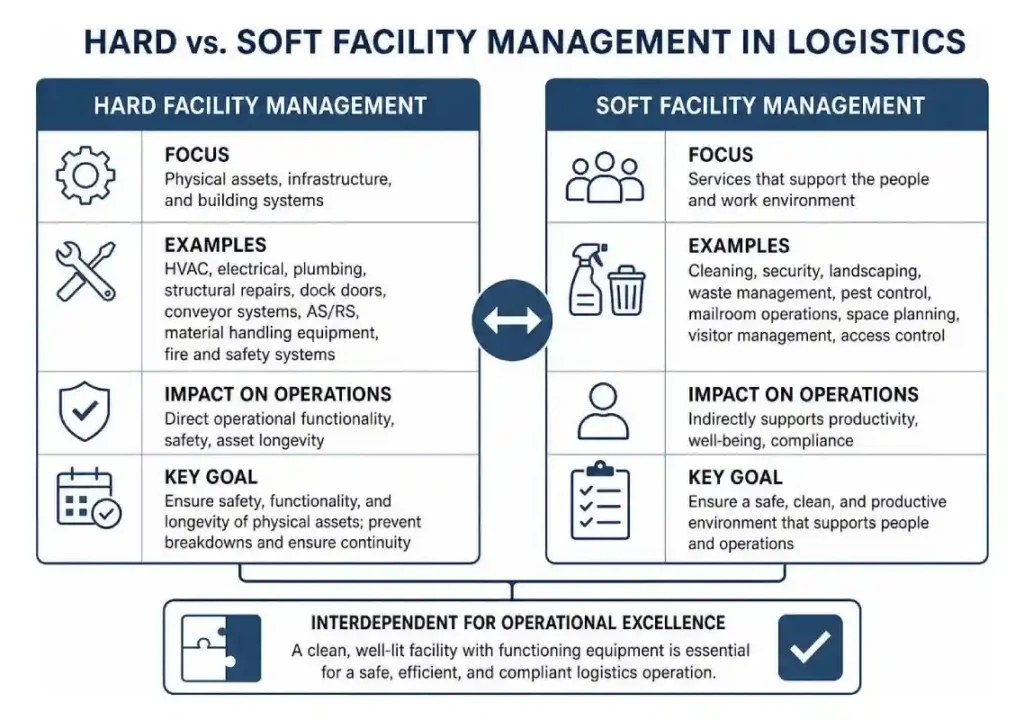
Hard vs. Soft Facility Management in Logistics
Facility management services are broadly categorized into “hard” and “soft” services, both critical for logistics operations.
Hard Facility Management refers to the physical assets and infrastructure of a building. These are typically fixed assets that directly relate to the structure and functionality of the facility. In logistics, this includes:
The goal of hard FM is to ensure the safety, functionality, and longevity of the physical building and its core systems. Regular preventive maintenance is crucial to avoid costly breakdowns and ensure operational continuity.
Soft Facility Management encompasses services that enhance the work environment and support the people working within the facility. These services are often more human-centric and contribute to the overall experience and efficiency of the operation. In logistics, this includes:
Soft FM ensures a safe, clean, and productive environment, which indirectly supports operational efficiency and employee well-being. Both hard and soft FM are interdependent; a clean, well-lit facility with functioning equipment is essential for a productive logistics operation.
Core Operational Pillars of Facility Management in Logistics
Effective facility management in logistics relies on several core operational pillars that work in concert to ensure security, efficiency, and compliance. These include robust visitor management, stringent physical security measures, meticulous identity verification, comprehensive contractor onboarding, efficient yard management, and precise asset tracking.
Access Control and Security in Commercial Logistics and Facility Management
In the high-stakes world of commercial logistics, controlling who enters and exits a facility is paramount. Access control and security systems are not just about preventing theft; they are fundamental to maintaining operational integrity, ensuring safety, and meeting regulatory requirements.
Modern logistics facilities implement sophisticated systems for:
These systems create an audit trail, provide real-time visibility, and significantly reduce the risk of unauthorized access, which can lead to theft, damage, or operational disruptions.
Contractor Compliance and Emergency Preparedness
Managing a transient workforce, including numerous contractors, and preparing for unforeseen emergencies are critical functions of logistics facility management.
Contractor Compliance: Logistics facilities frequently rely on external contractors for maintenance, repairs, and specialized services. Ensuring these contractors comply with safety regulations, site-specific rules, and legal requirements is essential. Key aspects include:
Poor contractor management can lead to safety incidents, compliance breaches, and operational delays
Emergency Preparedness: Logistics sites, with their complex layouts, heavy machinery, and transient populations (like truck drivers), require robust emergency preparedness plans. These plans must account for a wide range of scenarios, from fires and natural disasters to security breaches.
By proactively managing contractor compliance and preparing for emergencies, logistics facilities can mitigate risks, protect lives and assets, and minimize operational downtime. This proactive approach helps avoid situations where businesses might need to rely on urgent, potentially costly, solutions like specialized expedited ground shipping to recover from unforeseen disruptions.
Safeguarding Supply Chains: Compliance, Risk Mitigation, and KPIs
Effective facility management is integral to safeguarding supply chains by ensuring regulatory oversight, mitigating operational risk, protecting cargo, and maintaining brand reputation. It moves beyond reactive fixes to proactive strategies that prevent financial loss and ensure audit readiness.
Meeting Regulatory Standards and Protecting Cargo
Logistics facilities operate under a complex web of regulatory requirements designed to ensure safety, security, and environmental protection. Adhering to these standards is not optional; it’s a legal and ethical imperative.
By meticulously managing these aspects, facility management reduces business risks, prevents costly fines, avoids cargo loss, and protects the brand reputation of the logistics provider and its clients.
Key Performance Indicators for Commercial Logistics and Facility Management
To measure the success and effectiveness of facility management, organizations rely on Key Performance Indicators (KPIs). These metrics provide actionable insights into operational efficiency, cost control, and overall facility health.
Essential KPIs for Logistics Facilities:
Regularly tracking and analyzing these KPIs allows logistics managers to identify areas for improvement, justify investments in FM, and demonstrate the tangible value that facility management brings to the entire supply chain.
Technological Integration and Future Trends Shaping Logistics Facilities
The future of logistics facility management is inextricably linked to technology. Digital transformation is not just an option; it’s a necessity for achieving the speed, accuracy, and resilience demanded by modern supply chains. Integrating advanced technologies offers significant benefits, from reducing downtime and protecting cargo to improving throughput in warehouses and distribution centers.
Smart Infrastructure, Energy Resilience, and Automation
The evolution of logistics facilities is marked by the adoption of smart infrastructure, a focus on energy resilience, and increasing automation.
These technological advancements are revolutionizing how facilities are managed, making them more efficient, sustainable, and resilient. For organizations seeking comprehensive solutions to manage their physical assets and infrastructure, exploring advanced facilities and asset management platforms, such as those offered by TMA Systems, can provide the tools needed for this digital transformation.
Selecting the Right Facility Management Partner
Choosing the right facility management partner is a strategic decision that can significantly impact a logistics business’s operational efficiency and long-term success. It’s not just about cost; it’s about expertise, scalability, and alignment with business goals.
Key considerations when selecting a partner include:
The right FM partner acts as an extension of the logistics operation, providing specialized knowledge and resources that allow the core business to focus on its primary mission: moving goods efficiently and reliably.
Frequently Asked Questions About Commercial Logistics and Facility Management
How does facility management directly reduce dock turn times and warehouse downtime?
Effective facility management directly impacts dock turn times and warehouse downtime through several key strategies. Firstly, preventive dock maintenance ensures that dock levelers, doors, and seals are always in optimal working condition, preventing delays caused by equipment malfunction.
Secondly, implementing automated gate check-ins and yard management systems streamlines the entry and exit of trucks, reducing queuing and processing times. Thirdly, continuous monitoring and maintenance of material handling equipment uptime (e.g., forklifts, conveyors) through predictive maintenance prevents unexpected breakdowns that can halt operations. Finally, proactive scheduled repairs for all critical infrastructure are planned during off-peak hours, minimizing disruption to daily workflows.
What regulatory standards govern logistics facility management?
Logistics facility management is governed by a diverse set of regulatory standards designed to ensure safety, security, and environmental compliance. Key standards include:
What is the role of technology in modern logistics facility maintenance?
Technology plays a transformative role in modern logistics facility maintenance, shifting practices from reactive to proactive and predictive. CMMS platforms (Computerized Maintenance Management Systems) centralize work orders, asset data, and maintenance schedules, streamlining operations. IoT sensor monitoring on critical equipment provides real-time data on performance, temperature, vibration, and energy consumption.
This data, analyzed by AI algorithms, enables predictive asset management, allowing facility managers to anticipate and address issues before they cause costly breakdowns. Furthermore, automated work order dispatch ensures that maintenance tasks are assigned and tracked efficiently, improving response times and accountability. These technologies collectively enhance efficiency, reduce downtime, optimize resource allocation, and extend the lifespan of valuable assets.
Conclusion
In the intricate world of commercial logistics, the strategic intersection of facility management is no longer a secondary concern but a foundational pillar of success. We’ve explored how robust facility operations, encompassing everything from hard and soft services to advanced security and compliance measures, are critical for maintaining operational excellence. By embracing technology and digital transformation, logistics facilities can move beyond reactive maintenance to achieve proactive, predictive management, ensuring continuous improvement and enhancing supply chain resilience.
The commitment to comprehensive facility management translates directly into tangible benefits: reduced downtime, optimized throughput, enhanced cargo protection, and strong regulatory compliance. It ensures the long-term asset value of physical infrastructure and supports a safer, more productive working environment. As the logistics landscape continues to evolve, with increasing demands for speed, efficiency, and sustainability, investing in strategic facility operations will be the distinguishing factor for businesses aiming to thrive in August 2026 and beyond.