How Sacramento Valley Homeowners Can Cool a House Overnight Without Touching the Thermostat
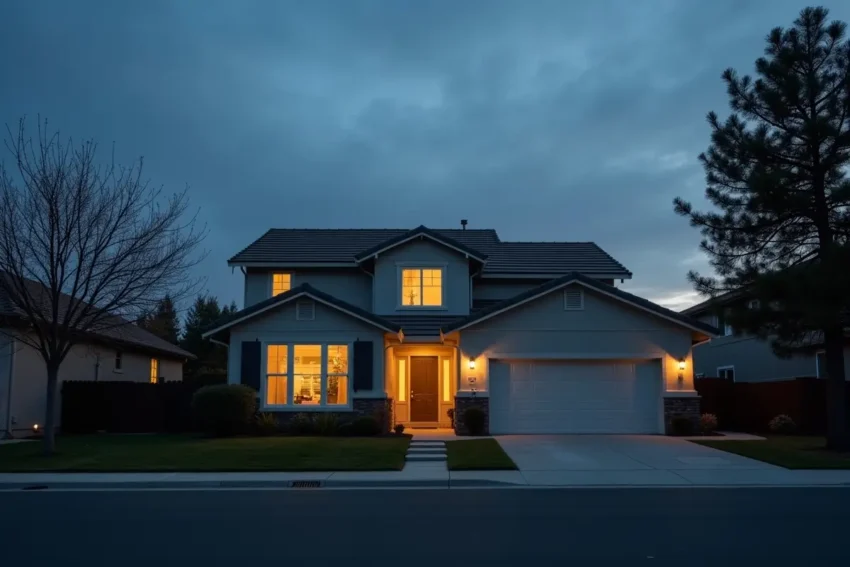
Anyone who has spent a July in Placer County knows the pattern. The afternoon climbs past 100 degrees, the air conditioner runs from noon until well after dark, and the utility bill arrives looking like a car payment. What most homeowners never notice is what happens around 10 p.m., when the valley air drops thirty degrees or more in a matter of hours.
That overnight swing is free cooling, and it goes unused in most houses on the block. The reason usually is not the weather. It is that opening the house at night feels like an invitation to mosquitoes, dust, and a whole set of security worries. This is a solvable problem, and solving it changes how the house behaves all summer.
The Overnight Drop Is the Whole Opportunity
Inland Northern California has one of the more dramatic day-to-night temperature spreads in the country. A 104 degree afternoon in Lincoln or Rocklin routinely gives way to a 62 degree night. That is not a minor dip. It is enough to pull heat out of drywall, flooring, and framing so the house starts the next day cooler than it otherwise would.
Building scientists call this night flushing, and it is one of the few strategies that can substantially cut cooling costs in climates with warm days and cool nights. The physics are simple. Cool air enters through lower openings, absorbs heat from the interior mass, rises, and exits through higher ones. Do that for six or seven hours and the house is genuinely colder at 7 a.m., not just briefly ventilated.
Why Most Homes Never Take Advantage
Ask a homeowner in a newer Lincoln subdivision why they do not sleep with the patio door open and you will hear the same three answers. Bugs. Valley dust and pollen. And leaving a slider open all night while the family is asleep.
All three objections are legitimate. None of them require giving up on the idea. They just mean the opening needs a barrier that lets air through and keeps everything else out, which is exactly what a properly fitted screen system does.
The Opening That Actually Matters
Windows help, but the largest air pathway in most valley homes is the patio slider or the French doors off the living room. A window screen moves a trickle. A full door opening moves real volume, and it is the difference between a house that feels stuffy at midnight and one that is genuinely flushed by morning.
This is where retractable systems earn their keep. They disappear into a housing when they are not in use, so the view and the door operation stay exactly as they were, then pull across when the evening cools off. Homeowners who add retractable screens in Lincoln, California tend to report the same thing: they stop thinking about whether to open the door, because opening it costs nothing.
Make the Air Actually Move
A single open door is ventilation. Two openings on opposite sides of the house is airflow, and the difference in effectiveness is not subtle.
Aim for a low intake on the cooler side of the house, usually north or east after sundown, and a high exhaust on the opposite side. A box fan pointed outward in an upstairs window accelerates the whole thing considerably. In two story homes, the upstairs hallway window is often the single best exhaust point in the building.
One caution specific to this region: during wildfire smoke events, skip the whole strategy and keep the house sealed. Air quality trumps the energy savings on those days.
Handle the Daytime Half Too
Night flushing only pays off if the house does not reabsorb all that heat by 2 p.m. West and south facing glass is the main culprit, and exterior sun screens intercept heat before it passes through the window rather than after, which is why they outperform interior blinds by a wide margin.
The same logic applies outdoors. Shaded, screened areas extend the usable hours of a yard considerably, and homeowners investing in custom outdoor living spaces usually find that shade and airflow do more for comfort than any single furniture purchase.
Worth Trying Before Next Summer
The best part of this approach is that it costs almost nothing to test. Pick a night when the low is forecast below 70, open two openings on opposite sides of the house, run one fan, and check the indoor temperature at sunrise. Most people are surprised by the result.
If the only thing standing between the house and that free cooling is a door nobody wants to leave open, that is a small fix with an unusually good return. Get the screens right and the Sacramento Valley climate stops being something to fight and starts being something to use.