Innovations in Advanced Composite Materials for Industrial Applications

In today’s industrial world, engineers constantly seek materials that push the boundaries of performance. Traditional materials often fall short when faced with extreme conditions or demands for lighter, stronger components. This drive for innovation has brought advanced composites to the forefront, with Advanced fiberglass epoxy tubing emerging as a critical solution.
We recognize the growing need for materials that offer an exceptional balance of mechanical, thermal, and electrical properties. Fiberglass epoxy tubing provides just that, delivering a unique blend of high strength-to-weight ratio, excellent corrosion resistance, and superior electrical insulation. This versatility makes it indispensable across a wide range of demanding applications.
This comprehensive guide will dive deep into fiberglass epoxy tubing. We will explore its innovative manufacturing processes, detail its key properties, compare it to traditional metal alternatives, and highlight its diverse applications in structural, electrical, and marine environments. Join us as we uncover why this advanced composite material is shaping the future of industrial design and engineering.
The landscape of modern engineering is continually reshaped by the quest for superior materials. As industries demand components that are lighter, stronger, and more resilient, the focus has shifted dramatically from traditional metals to advanced composites. This evolution is driven by the need for enhanced performance, extended lifespan, and reduced overall system weight, all while mitigating risks associated with material failure in critical applications. Fiberglass epoxy tubing stands at the vanguard of this material revolution, offering a compelling alternative to conventional options.
For decades, engineers have grappled with the limitations of materials like steel, aluminum, and brass, particularly in environments prone to corrosion, high electrical interference, or where weight is a critical factor. The development of advanced composite materials, specifically those utilizing fiberglass and epoxy resins, has provided a robust solution to these challenges. These materials are engineered to deliver a unique combination of properties that are simply unattainable with monolithic substances. The benefits extend beyond mere strength, encompassing aspects like thermal stability, electrical insulation, and resistance to environmental degradation.
Our understanding of material science has advanced to a point where we can precisely tailor composite structures to meet highly specific performance criteria. This precision allows for significant risk reduction in demanding applications, ensuring greater reliability and safety. The inherent characteristics of fiberglass epoxy tubing, such as its high impact resistance and structural integrity, make it an ideal choice for a multitude of industrial uses.
For those interested in specific product examples, you can explore detailed specifications for filament-wound epoxy-dipped tubing designed for high-impact scenarios. Furthermore, the global availability and continuous innovation in this sector are highlighted by various manufacturers, offering a broad range of fiberglass epoxy resin tubes tailored for diverse industrial needs. This continuous innovation underlines the material’s growing importance in modern engineering.
Thermoset Resins vs. Thermoplastics in Advanced Composites
At the heart of fiberglass epoxy tubing lies the epoxy resin matrix, a prime example of a thermoset polymer. Understanding the distinction between thermoset and thermoplastic resins is crucial for appreciating the unique performance characteristics of these advanced composites. Thermoplastics, when heated, soften and melt, allowing them to be reshaped, and they solidify upon cooling. This process can be repeated, making them recyclable but also susceptible to creep and reduced strength at elevated temperatures.
Thermoset resins, like epoxy, undergo an irreversible chemical reaction during curing, known as polymerization. This process creates a highly cross-linked, rigid molecular structure. Once cured, a thermoset material cannot be melted or reshaped. This fundamental difference imparts superior properties to thermoset composites:
- Enhanced Thermal Stability: The cross-linked network in epoxy resins provides excellent dimensional stability and mechanical property retention at higher temperatures compared to thermoplastics. This makes them suitable for applications where sustained heat exposure is a concern.
- Superior Chemical Resistance: The tightly bound molecular structure of cured epoxy makes it highly resistant to a wide range of chemicals, solvents, and corrosive agents, which is critical for industrial environments.
- Higher Strength and Stiffness: The rigid, cross-linked nature contributes to higher modulus and strength, allowing the composite to withstand greater loads without deformation.
When designing components for demanding applications, the thermal behavior of the chosen material is paramount. For instance, understanding how different glass epoxy grades conduct heat is vital for applications requiring thermal management or insulation. Further insights into this can be found by exploring the thermal conductivity of G10 in engineered composite materials. The epoxy matrix not only binds the fibers but also dictates many of the composite’s environmental and thermal performance characteristics, making its selection a critical engineering decision.
Structural Reinforcements and Fiber Orientation in Advanced Composites
The strength and performance of fiberglass epoxy tubing are not solely dependent on the epoxy resin; the selection and orientation of the glass fibers play an equally vital role. Glass fibers serve as the primary structural reinforcement, providing the high tensile strength and stiffness that characterize these composites. The most common types of glass fibers used include:
- E-glass (Electrical Glass): This is the most widely used and cost-effective type, known for its good strength, electrical insulation properties, and moderate stiffness. It forms the backbone of many general-purpose fiberglass composites.
- S-glass (Structural Glass): Offering higher tensile strength and modulus (stiffness) than E-glass, S-glass is employed in applications where maximum strength-to-weight ratio is critical, such as aerospace and defense.
The way these fibers are arranged within the epoxy matrix significantly influences the tubing’s mechanical properties. In the manufacturing of fiberglass epoxy tubing, fibers are precisely oriented to bear specific loads. For example, fibers aligned longitudinally primarily contribute to axial tensile strength, while circumferentially wound fibers enhance hoop strength, crucial for resisting internal pressure.
The process of fiber placement is a key differentiator in composite manufacturing, leading to various types of tubing, each optimized for different performance envelopes. For a deeper dive into how different winding techniques impact performance and to determine which might be right for your specific needs, consider reviewing our detailed comparison on filament wound vs. convolute wound glass epoxy. This highlights the importance of matching the manufacturing process to the desired structural characteristics, ensuring optimal tensile strength and overall component integrity.
Manufacturing Intelligence: Filament Winding vs. Convolute Wound Processes
The manufacturing process is where the theoretical advantages of fiberglass and epoxy are translated into tangible, high-performance tubing. Among the various methods, filament winding stands out for its ability to produce exceptionally strong and consistent tubular structures.
Filament Winding Process
Filament winding is a sophisticated automated process where continuous strands of fiberglass, pre-impregnated with epoxy resin (or wet-impregnated during winding), are precisely wound onto a rotating mandrel. The mandrel dictates the internal diameter and shape of the tube. The fibers are laid down in specific patterns and angles, layer by layer, building up the desired wall thickness and fiber orientation.
Key aspects of the filament winding process include:
- Mandrel Winding: The mandrel acts as the mold, around which the resin-impregnated fibers are helically or circumferentially wound. This allows for the creation of tubes with precise internal dimensions.
- Precision Finishing: After winding, the composite is cured, typically under heat, to fully cross-link the epoxy resin. Once cured, the mandrel is removed, and the tube undergoes precision finishing processes such as grinding, cutting, and surface treatment to meet exact specifications and tolerances.
This method offers unparalleled control over fiber placement and resin content, leading to high fiber volume fractions and excellent mechanical properties. The ability to vary the winding angle allows engineers to optimize the tubing for specific stress conditions, whether it’s high internal pressure, axial loads, or bending moments. Our capabilities in filament wound tubes demonstrate the precision and versatility achievable with this advanced manufacturing technique.
Convolute Wound Process
While filament winding excels in creating strong, uniform tubes with tailored fiber orientation, convolute winding offers another valuable approach, particularly for certain applications. In convolute winding, pre-impregnated fabric or sheet material is wrapped around a mandrel in a spiral fashion. This method is often favored for producing tubes with consistent wall thickness and for applications where specific material layups are beneficial.
While the primary focus for our keyword “fiberglass epoxy tubing” often leans towards filament winding for its structural advantages, understanding both methods highlights the breadth of composite manufacturing. For a detailed look at the advantages and applications of tubes produced via this method, you can explore our capabilities in convolute wound tubes. Both processes, when executed with intelligence and precision, yield high-performance composite tubing.
Customization and Performance Optimization
The true power of advanced composite manufacturing, particularly with filament winding, lies in its capacity for customization and subsequent performance optimization. Unlike metals, whose properties are largely fixed by their alloy composition, fiberglass epoxy tubing can be engineered at a micro-structural level to meet highly specific application demands.
Critical parameters that can be precisely controlled during manufacturing include:
- Wind Angle: By altering the angle at which the fiberglass filaments are wound around the mandrel, engineers can significantly influence the tube’s anisotropic properties. For instance, a higher hoop angle (closer to 90 degrees) enhances resistance to internal pressure, making the tube ideal for fluid transfer, while a lower angle (closer to 0 degrees) maximizes axial stiffness and tensile strength, suitable for structural rods or spars.
- Wall Thickness: The number of layers and the thickness of each layer can be precisely controlled, allowing for tailored strength-to-weight ratios. This is crucial for applications where weight reduction is paramount, but structural integrity cannot be compromised.
- Fiber Type and Resin System: The choice between E-glass and S-glass, or even specialized resins, further refines the mechanical and environmental performance.
This level of control enables the creation of tubing that is not merely strong but optimally strong for its intended purpose, reducing material waste and improving efficiency. The ability to customize these parameters allows for enhanced performance in challenging conditions. For example, understanding how convolute tubes enhance performance in harsh environments further illustrates how specific manufacturing choices contribute to material resilience and longevity. This adaptability is a cornerstone of advanced composite engineering, ensuring that each piece of fiberglass epoxy tubing is fit-for-purpose.
Mechanical, Thermal, and Electrical Performance Profiles
Fiberglass epoxy tubing distinguishes itself from traditional materials through a remarkable combination of mechanical, thermal, and electrical properties. These characteristics make it an indispensable material for engineers designing systems that require high performance under challenging conditions.
We can illustrate these advantages by comparing fiberglass epoxy tubing with common metal alternatives:
Mechanical Properties: The structural integrity of fiberglass epoxy tubing is outstanding, especially when considering its lightweight nature.
- Weight: It is approximately 1/4 the weight of steel or brass and 3/4 the weight of aluminum. This significant weight reduction translates directly into lower transportation costs, easier installation, and improved energy efficiency in moving systems.
- Strength: Despite its low density, fiberglass epoxy tubing boasts impressive strength.
- Tensile Strength: Longitudinal 16,000 psi, Circumferential 40,000 psi. This directional strength is a direct result of the filament winding process, allowing for optimization based on load.
- Compressive Strength: Longitudinal 27,000 psi, Circumferential 37,000 psi.
- Flexural Modulus: Longitudinal 1.3 x 10^6 psi, Circumferential 3.6 x 10^6 psi. This indicates excellent resistance to bending and deformation.
- Impact Resistance: With a material impact strength of 40 Izod ft-lbs, this tubing demonstrates robust resistance to sudden shocks and impacts, a critical factor in many industrial applications.
- Shear Properties: A shear modulus of 0.8 x 10^6 psi and shear strength of 8,000 psi further underscore its ability to resist forces that cause internal deformation.
Thermal Properties: Fiberglass epoxy tubing exhibits excellent thermal stability and a low coefficient of thermal expansion (CTE).
- Operating Temperature: It operates efficiently up to 250 °F, and customers have reported successful use at temperatures below -50 °F. This wide operational range makes it suitable for diverse thermal environments.
- Coefficient of Thermal Expansion (CTE): The CTE is remarkably low, with circumferential 4.6 x 10^-6 in/in/°F and longitudinal 8.8 x 10^-6 in/in/°F. This low expansion rate means the tubing maintains its dimensional stability across significant temperature fluctuations, preventing issues like warping or stress buildup common in metals.
Electrical Properties: One of the most significant advantages of fiberglass epoxy tubing is its inherent electrical insulation.
- Dielectric Strength: As a non-conductive material, it prevents the flow of electric current, making it ideal for electrical insulation applications. This property is crucial in areas where electrical isolation is required, protecting sensitive equipment and personnel.
- Transparency to RF/X-rays: Fiberglass epoxy tubing is transparent to x-rays, radio, and television transmission. This unique characteristic makes it highly suitable for specialized applications such as radomes, where signal interference must be minimized.
The combination of these properties, along with a density of 0.072 lb/in³, positions fiberglass epoxy tubing as a superior choice for many demanding engineering challenges. For a deeper understanding of specific material grades and their properties, such as the robust characteristics of Grade G-10 NT, further resources are available to guide material selection.
Industrial Applications and Extreme Environment Performance
The exceptional properties of fiberglass epoxy tubing translate into a vast array of industrial applications, particularly where traditional materials falter under extreme conditions. Its resilience in harsh environments makes it a preferred choice across numerous sectors.
Temperature Extremes: As noted, fiberglass epoxy tubing operates efficiently across a broad temperature spectrum, from below -50 °F to 250 °F. This thermal stability is critical for applications exposed to significant temperature swings or sustained extreme heat or cold.
- Cryogenic Applications: Its low coefficient of thermal expansion and excellent insulation properties make it ideal for cryogenic environments, such as those found in scientific research, medical equipment, and industrial gas handling. It minimizes heat transfer and maintains structural integrity at ultra-low temperatures. To understand the specific benefits and challenges in such environments, we recommend understanding the use of G10 and G11 glass epoxy in cryogenic applications.
- High-Temperature Environments: While not designed for extreme high-heat, its 250 °F continuous operating temperature allows it to perform reliably in many industrial processes where metals might suffer from thermal expansion issues or reduced mechanical strength.
Chemical Resistance: The epoxy resin matrix provides superior resistance to a wide range of corrosive chemicals, acids, and alkalis. This makes fiberglass epoxy tubing an excellent choice for:
- Chemical Processing: Piping and structural components in chemical plants, wastewater treatment facilities, and other environments where exposure to aggressive substances is common. It resists degradation that would quickly corrode metal counterparts.
- Marine Environments: Its imperviousness to saltwater corrosion is a significant advantage, extending the lifespan of components in naval and offshore applications.
Impact Conditions: The robust impact strength of 40 Izod ft-lbs ensures that the tubing can withstand significant mechanical shocks without fracturing. This durability is vital in dynamic environments or where accidental impacts are a possibility, contributing to enhanced safety and reduced maintenance. The unique advantages of using G10 in such demanding applications, particularly for its role in cryogenic neck tubes, enhancing performance and reliability, further exemplify the material’s versatility.
Structural, Electrical, and Marine Environments
Fiberglass epoxy tubing’s unique blend of properties makes it exceptionally well-suited for diverse applications across structural, electrical, and marine domains.
Structural Applications: In structural roles, the high strength-to-weight ratio of fiberglass epoxy tubing allows for the design of lighter, yet equally robust, frameworks and components.
- Lightweight Structures: From aerospace components to industrial machinery, reducing weight without compromising strength is a constant goal. Fiberglass epoxy tubing provides this balance, making it ideal for support structures, booms, and specialized frameworks.
- Corrosion-Resistant Frameworks: In environments where steel or aluminum would quickly corrode, such as chemical facilities or coastal installations, fiberglass epoxy tubing offers long-term structural integrity with minimal maintenance.
Electrical Applications: The non-conductive nature of fiberglass epoxy tubing is a cornerstone of its utility in electrical engineering.
- Electrical Insulation: It serves as an excellent insulator, preventing electrical current flow and protecting sensitive equipment and personnel. This is crucial for high-voltage applications, circuit board standoffs, and various electrical enclosures.
- Radomes: Its transparency to x-rays, radio, and television transmission makes it perfect for radome applications, where it can protect antennas and electronic equipment without interfering with signal transmission.
- MRI Coil Forms: The non-magnetic properties of the material ensure it does not interfere with strong magnetic fields, making it an indispensable material for MRI (Magnetic Resonance Imaging) coil forms and other medical diagnostic equipment.
Marine Environments: The inherent resistance to corrosion and moisture makes fiberglass epoxy tubing a standout material for marine applications.
- Marine Propulsion: In the challenging marine environment, components are constantly exposed to saltwater, UV radiation, and mechanical stress. Fiberglass epoxy tubes are increasingly used in stern tubes and other propulsion system components, offering a lightweight, corrosion-resistant alternative to traditional metals. For specific industrial applications, detailed specifications for Bondstrand™ Series 3200A Fiberglass Pipe highlight its suitability for robust piping systems.
- Offshore Structures: Used in various offshore oil and gas applications, as well as in recreational boating, for everything from mast components to piping systems.
The versatility of this material is further underscored by the broad range of epoxy fiberglass tube suppliers and manufacturers globally, indicating its widespread adoption and the continuous innovation in its application across these critical sectors.
Frequently Asked Questions about Fiberglass Epoxy Tubing
As engineers and designers increasingly turn to advanced composites, several common questions arise regarding the performance, handling, and application of fiberglass epoxy tubing. Addressing these helps clarify its benefits and practical considerations.
How does fiberglass epoxy tubing compare to carbon fiber in terms of electrical conductivity?
This is a crucial distinction. Fiberglass epoxy tubing is inherently non-conductive. The glass fibers themselves are electrical insulators, and when embedded in an epoxy resin matrix, the resulting composite maintains excellent dielectric properties. This makes it ideal for applications requiring electrical isolation, such as electrical conduits, antenna components, or structural elements near sensitive electronics where electromagnetic interference (EMI) must be avoided. It is also transparent to radio frequency (RF) signals, allowing for applications like radomes.
In contrast, carbon fiber composites are electrically conductive. Carbon fibers are excellent conductors of electricity. While this property is advantageous for applications requiring lightweight conductors or static discharge pathways, it means carbon fiber cannot be used where electrical insulation or RF transparency is needed. Therefore, the choice between fiberglass epoxy and carbon fiber often hinges on the electrical requirements of the application.
What are the best practices for cutting and machining fiberglass epoxy tubing?
Working with fiberglass epoxy tubing requires specific techniques to ensure clean cuts, maintain structural integrity, and protect workers.
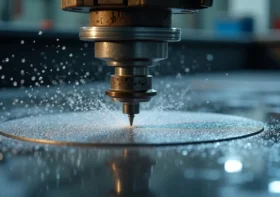
- Tooling: For the cleanest cuts, a high-speed abrasive cutting wheel, often found on a Dremel tool or similar rotary tool, is recommended. Fine-toothed hacksaws can also be used, but may result in a rougher edge. For precision and volume, CNC machining with diamond-tipped tools is ideal.
- Preventing Splintering: Fiberglass can splinter or delaminate if not cut properly. Taping around the area to be cut with masking tape can help hold the fibers in place and prevent fraying or splintering. Securely holding the tube without crushing it is also important.
- Safety Precautions: Cutting fiberglass generates fine dust, which can be an irritant. Always wear appropriate personal protective equipment (PPE), including eye protection (safety glasses or goggles) and a dust mask or respirator. Working in a well-ventilated area is also essential.
- Cooling: For extensive machining, cooling the cutting area can prevent resin burn and tool wear.
Proper handling and machining techniques ensure that the tubing maintains its performance characteristics and aesthetic quality.
What is the maximum operating temperature for standard fiberglass epoxy tubing?
Standard fiberglass epoxy tubing is designed to operate efficiently up to 250 °F (121 °C). This temperature represents the point at which the material maintains its optimal mechanical and thermal properties over extended periods.
However, it’s important to note its impressive performance at the other end of the spectrum as well. Customers have reported successful use of fiberglass epoxy tubing in applications at temperatures as low as -50 °F (-45 °C) and even below, particularly with specific grades like G10 and G11, which are known for their excellent cryogenic performance.
The epoxy resin system plays a significant role in determining the exact thermal limits. While 250 °F is a common benchmark for continuous operation, specialized epoxy formulations can sometimes extend this range. The material’s very low coefficient of thermal expansion contributes to its dimensional stability across this wide temperature range, making it a reliable choice for environments with significant thermal cycling. Always consult the manufacturer’s specifications for the exact temperature limits of a particular product grade.
Conclusion
As we look towards June 2026 and beyond, the role of advanced composite materials like fiberglass epoxy tubing in industrial applications is only set to expand. Its unparalleled combination of lightweight strength, exceptional corrosion resistance, superior electrical insulation, and thermal stability makes it an indispensable material for engineers pushing the boundaries of design and performance. From the depths of cryogenic environments to the challenges of marine propulsion and the precision of medical devices, fiberglass epoxy tubing offers solutions where traditional materials simply cannot compete.
The intelligent manufacturing processes, particularly filament winding, allow for a level of customization that ensures optimal performance for every unique application. This adaptability, coupled with continuous innovation in material science, positions fiberglass epoxy tubing as a cornerstone of future engineering.
We are committed to advancing the capabilities of these materials, providing engineering support and material consultation to help industries harness the full potential of advanced composites. For those seeking robust, high-performance solutions for their most demanding projects, exploring the possibilities with Advanced fiberglass epoxy tubing is a strategic step towards innovation and efficiency.