Upgrading Property Infrastructure: From Plumbing to Paving
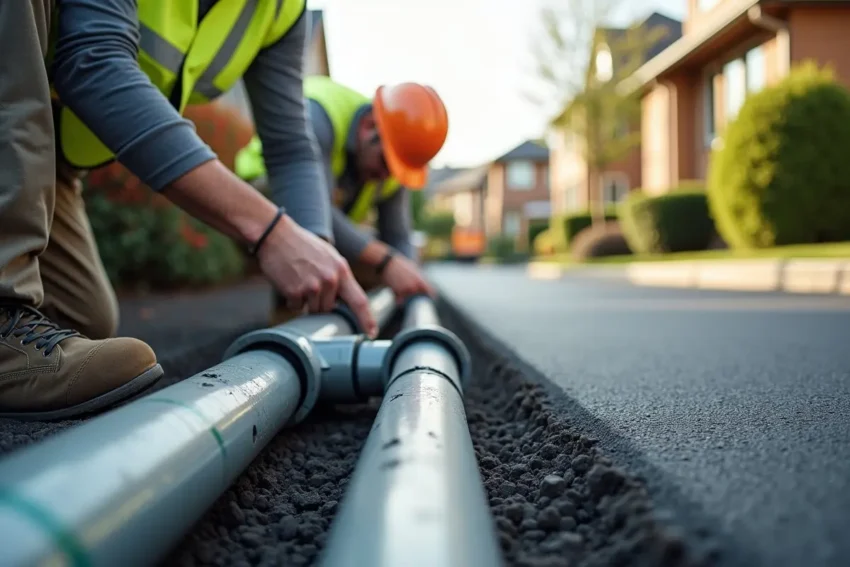
Ensuring our properties are in top condition is crucial for comfort, safety, and value. But often, the essential systems beneath and around our buildings, known as property infrastructure, go unnoticed until a problem arises. From the pipes bringing water into homes in Los Alamitos, CA, to the roads we drive on daily, these foundational elements are vital. Ignoring them can lead to costly repairs, decreased efficiency, and even safety hazards. This guide explores the critical role of property infrastructure, detailing how smart upgrades, like a timely property water heater replacement Los Alamitos, can improve our communities and protect our investments.
In this extensive guide, we’ll delve into how property infrastructure is evolving, merging traditional real estate with public works. We’ll explore the dynamic investment landscape, including how real assets provide diversification and stable cash flows. We will also cover how to capitalize on modern trends, from digital infrastructure to energy transition. Finally, we’ll discuss practical upgrades for micro-level property systems and answer frequently asked questions about this crucial topic.
Property infrastructure encompasses a vast network of systems and facilities, both public and private, that support our daily lives and economic activity. Historically, the distinction between public infrastructure (roads, bridges, utilities) and private real estate assets was clearer. However, as of June 2026, we are witnessing a significant convergence, driven by a growing recognition of their interconnectedness and the need for strategic public investment.
Contents
- 1 The Evolution of Property Infrastructure: Merging Real Estate and Public Works
- 2 Investment Dynamics: Portfolio Allocation and the Real Assets Convergence
- 3 Capitalizing on Modern Property Infrastructure Trends
- 4 Practical Upgrades: Enhancing Micro-Level Property Systems
- 5 Frequently Asked Questions about Property Infrastructure
- 6 Conclusion
The Evolution of Property Infrastructure: Merging Real Estate and Public Works
Across the United States, capital spending on infrastructure has seen a decline in recent decades, leading to significant challenges. Illinois, for example, received a concerning C- grade from the American Society of Civil Engineers in 2022, highlighting a critical need for investment. The state faces a staggering $24 billion deferred maintenance backlog at its facilities and educational institutions, a clear indicator of underinvestment. This trend, where infrastructure spending as a share of Illinois’ GDP dropped by 0.62% from 2002 to 2016, mirrors a national issue.
In response to these pressing infrastructure challenges, Illinois has pioneered an innovative solution: the FIRST Fund (Fund for Infrastructure, Real Estate, and Sustainable Transformation). Launched by the Illinois State Treasurer, the FIRST Fund is a first-of-its-kind, evergreen $1.5 billion impact investment fund dedicated to addressing the state’s infrastructure and real estate needs. This model represents a national blueprint for public investment, demonstrating how state-run real assets funds can drive local economic development.
The FIRST Fund’s investment objectives are multifaceted and designed for long-term impact:
- Local Impact: Ensuring investments directly benefit Illinois communities.
- Diversification: Providing a robust and varied portfolio.
- Sustainability: Promoting environmentally sound and resilient projects.
- Diversity and Inclusion: Actively investing with Minority, Women, Veteran, and Disabled-owned (MWVD) firms.
- Worker-Centric Policies: Supporting fair wages and benefits.
A cornerstone of the FIRST Fund’s design is its commitment to recycling capital within Illinois. It mandates that fund managers allocate two times the committed amount to Illinois-based projects. This strategy ensures that the state’s investment has a significant multiplier effect, fostering local job creation and economic growth. To date, the fund has committed $625 million, catalyzing an impressive $2.6 billion in underlying Illinois assets.
Furthermore, the fund emphasizes social equity through its Responsible Contractor Policy. This policy ensures that all workers employed by fund managers, contractors, and subcontractors receive fair wages and benefits, reflecting the belief that well-trained and fairly compensated workers lead to higher-quality results. The commitment to diversity, equity, and inclusion is also evident in its investment strategy: approximately 50% of committed capital, totaling $315 million, has been invested with MWVD-owned firms. This approach demonstrates a unique opinion that true economic development must be inclusive and all-encompassing.
This innovative public investment model showcases how states can proactively address infrastructure deficits while promoting sustainable, equitable growth. For property owners and developers, understanding the broader context of public infrastructure investment is crucial, as it directly influences the environment in which private assets operate. Whether it’s the large-scale construction of new roads or the maintenance of existing facilities, a comprehensive approach to Full-service Property Infrastructure is essential for a thriving community.
Investment Dynamics: Portfolio Allocation and the Real Assets Convergence
The investment landscape for property infrastructure is undergoing a significant transformation, with real estate and infrastructure increasingly converging into a unified category of “income-producing real assets.” This shift is driven by their shared characteristics and the unique benefits they offer to diversified investment portfolios.
Both real estate and infrastructure assets are long-duration investments that generate economic rent and provide stable cash flows. They offer crucial diversification benefits, often exhibiting a low correlation with traditional stocks and bonds, which can help stabilize portfolio returns during market volatility. Moreover, real assets are renowned for their inflation protection capabilities, as their income streams and asset values tend to rise with inflation, safeguarding purchasing power.
For individual and institutional investors alike, the question of recommended portfolio allocations for real estate and infrastructure is critical. While optimal allocations vary based on investment goals, time horizon, and risk profile, experts often suggest a combined allocation of 10-40% of total net worth. Some institutional investors, like the Norwegian Government Pension Fund Global, might suggest a maximum 10% weighting for each asset class, demonstrating that direct infrastructure investment can prevent over-allocation to real estate within a portfolio.
Accessing these asset classes has also evolved. While infrastructure investing was historically the domain of large pension funds and sovereign wealth funds, publicly traded vehicles now offer broader accessibility. Infrastructure REITs (Real Estate Investment Trusts), MLPs (Master Limited Partnerships), and other public companies provide individual investors with exposure to assets like transmission lines, pipelines, cell towers, and data centers. As of June 2026, approximately 350 publicly traded companies are identified as sharing infrastructure investment characteristics, making it easier for a wider range of investors to participate.
Leading private infrastructure funds demonstrate the scale and strategic focus within this sector. Blackstone Infrastructure, for instance, manages $84 billion in assets under management with a total enterprise value of $206 billion across its portfolio companies, focusing on Core+ and Core infrastructure assets globally. Brookfield Infrastructure operates across 12 corporate offices with approximately 57,000 operating employees and over 320 corporate and investment professionals, owning and operating a globally diversified portfolio of utilities, transport, midstream, and data assets.
Franklin Templeton highlights the “EDGE” framework (Energy, Digitalization, Growing Economies) as key drivers for private infrastructure opportunities, noting that emerging markets, while having the biggest infrastructure needs, are often underserved by private capital. Horizon Infrastructure Partnership, a UK-based firm, manages over £224 million in combined AUM across 718 properties, focusing on long-income residential real estate with inflation-linked returns and strong social impact. Similarly, the Fisher Funds Property & Infrastructure Fund has delivered a 10.4% annualized return since its inception in December 2008, showcasing the long-term potential of these investments.
Here’s a comparison of public and private infrastructure investment vehicles:
| Feature | Public Investment Vehicles (e.g., FIRST Fund) | Private Infrastructure Funds (e.g., Blackstone, Brookfield) |
| Primary Goal | Local economic development, social impact, infrastructure improvement | Financial returns (capital appreciation, yield), portfolio diversification |
| Funding Source | State treasury, public funds | Institutional investors (pension funds, endowments), high-net-worth individuals |
| Investment Focus | State-specific infrastructure (e.g., Illinois), real estate, community assets | Global, diversified across sectors (energy, digital, transport, utilities), core+ and core assets |
| Local Impact Mandate | Often explicit (e.g., 2x capital allocation to in-state projects) | Varies, but typically driven by market opportunity and operational efficiency |
| Social/ESG Focus | High (e.g., MWVD firms, Responsible Contractor Policy) | Growing importance, but often secondary to financial returns |
| Liquidity | Generally illiquid, long-term commitments | Generally illiquid, long-term commitments |
| Transparency | High (public reports, policy details) | Varies, less public disclosure than state-run funds |
| Risk Profile | Regulatory, political, construction, market-specific | Market, operational, regulatory, geopolitical, construction |
This convergence into real assets signifies a maturation of the investment landscape, where the distinct characteristics of real estate and infrastructure are recognized for their complementary strengths in optimizing portfolio performance and achieving broader societal goals.
Capitalizing on Modern Property Infrastructure Trends
Understanding the dynamic interplay between infrastructure developments and real estate values is crucial for investors and property owners. New infrastructure projects are not merely about improving connectivity or services; they are catalysts for economic growth, often leading to significant property value appreciation in their vicinity.
For example, the extension of the Washington Metro’s Silver Line spurred substantial development in Northern Virginia, elevating property values along its corridor. Similarly, the High Line park in New York City transformed an old railway into a vibrant public space, resulting in a surge of property prices nearby. The Atlanta BeltLine project also saw significant appreciation in surrounding properties even before its completion, demonstrating the power of anticipated improvements.
Investors can strategically capitalize on upcoming infrastructure developments by:
- Monitoring project announcements: Identifying regions slated for significant infrastructure improvements.
- Early investment: Acquiring properties in these growth areas before values fully reflect the anticipated changes.
- Understanding local impact: Assessing how specific projects (e.g., new transit lines, upgraded utilities, community parks) will enhance accessibility, quality of life, and economic activity.
However, investing in infrastructure-focused markets also comes with risks and challenges. Construction delays, regulatory hurdles, and the inherent illiquidity of large-scale infrastructure projects can impact timelines and returns. Zoning laws and regulations play a pivotal role, influencing density developments, mixed-use properties, and overall community planning. Investors must stay informed about local ordinances and engage with community planning to navigate these complexities effectively.
Technology is increasingly influencing real estate investment decisions in these markets. Data analytics tools help assess market trends, predict property value appreciation, and identify optimal investment opportunities. Virtual reality and 3D modeling are used for better planning and visualization of future developments, while advanced mapping and GIS systems provide critical insights into infrastructure proximity and impact.
Leveraging these technologies can provide a competitive edge in evaluating the return on investment (ROI) for infrastructure-driven real estate opportunities. Factors influencing property value appreciation near new infrastructure projects include the type of infrastructure, its direct utility to residents and businesses, the quality of complementary development, and the overall economic health of the region.
Digitalization and Energy Transition in Property Infrastructure
The growth of AI data centers and digital infrastructure is creating unprecedented demand for robust and resilient energy infrastructure. This demand is driving significant investment in microgrids, high-voltage transmission, and energy transition infrastructure. As of June 2026, the need for reliable power to fuel AI’s explosive growth is a primary driver in this sector.
Consider the situation in Australia, where the distribution grid, built for households and factories, cannot adequately serve AI at scale. This limitation has led to innovative solutions like private high-voltage infrastructure that bypasses distribution queues by connecting directly to 66-500 kV transmission lines. Companies are developing “powered land” assets, achieving land value uplifts of 3-5x by zoning, powering, and leasing transmission-adjacent industrial land for hyperscale AI campuses. Australia’s AI data center demand is projected to reach 1.7 GW by 2030, highlighting the urgency and opportunity in this area.
The integration of real estate and infrastructure within the broader framework of real assets is also crucial for supporting energy transition and sustainable urban development. Investments in renewable energy infrastructure, such as solar grids and EV charging networks, are not only environmentally beneficial but also represent significant financial opportunities. Decarbonization goals are reshaping how we plan and develop properties, with a focus on energy efficiency and sustainable practices. This shift is not just about compliance but about creating long-term value in a world increasingly focused on climate solutions.
Regulatory and Technological Drivers of Property Infrastructure Value
The value of property infrastructure is profoundly shaped by a complex interplay of regulatory frameworks and technological advancements. Zoning ordinances, for instance, dictate land use, building density, and the types of developments permitted in specific areas. These regulations can either facilitate or hinder the integration of new infrastructure and real estate projects. Investors must navigate these laws carefully, as changes can significantly impact property values and development potential. Engaging with local planning departments and participating in community meetings can provide valuable insights and influence future policy.
Furthermore, regulatory hurdles and permitting processes can cause construction delays and increase project costs, posing significant risks to infrastructure investments. Illiquidity, another inherent characteristic of large-scale infrastructure assets, means that converting these investments into cash can be challenging and time-consuming. These factors necessitate thorough risk assessment and due diligence.
On the technological front, advancements are transforming how property infrastructure is planned, built, and managed. Data analytics tools are becoming indispensable for market analysis, risk assessment, and predicting the long-term performance of infrastructure-adjacent properties. Virtual reality and 3D modeling enhance visualization and design, allowing stakeholders to experience proposed developments before construction begins.
The integration of operational technology (OT) with traditional IT systems is creating smarter, more connected environments, optimizing resource management and operational efficiency in real estate and infrastructure projects. These technological drivers, coupled with a deep understanding of regulatory landscapes, are essential for maximizing returns and mitigating risks in modern property infrastructure investments.
Practical Upgrades: Enhancing Micro-Level Property Systems
Beyond large-scale public works, the infrastructure within individual properties is equally vital for comfort, safety, and long-term value. These micro-level systems, ranging from plumbing and electrical to paving and landscaping, are the backbone of any home or commercial building. Proactive maintenance and strategic upgrades to these systems are essential to prevent costly emergencies and enhance overall property functionality.
Consider the plumbing system, which delivers clean water and removes waste. Outdated or corroded pipes can lead to leaks, reduced water pressure, and health hazards. Similarly, a property’s water heating system is a critical component, impacting daily comfort and energy bills. In regions like Southern California, where energy efficiency and earthquake preparedness are paramount, ensuring your water heater is up to date and properly secured is not just about convenience but also safety and compliance.
Regular maintenance, including flushing the tank and checking for sediment buildup, can extend the life of your unit. When replacement becomes necessary, opting for an energy-efficient model, such as a tankless water heater, can offer significant long-term savings and improved performance. For those in the Los Alamitos area, professional guidance on property water heater replacement Los Alamitos can ensure a seamless upgrade.
Paving, another often-overlooked aspect of property infrastructure, includes driveways, walkways, and parking lots. Well-maintained paving enhances curb appeal, improves safety, and prevents damage to vehicles. Cracks, potholes, and poor drainage can lead to trip hazards, water damage to foundations, and costly repairs if neglected. Regular inspections and timely repairs are crucial for preserving the integrity and appearance of these surfaces.
Energy-efficient systems, such as smart thermostats, LED lighting, and improved insulation, contribute significantly to a property’s sustainability and operational costs. Preventative maintenance programs for HVAC systems, electrical wiring, and roofing can identify potential issues before they escalate, saving property owners from unexpected expenses and disruptions. Leveraging system diagnostics and professional inspections provides valuable insights into the health of these critical components, allowing for informed decisions on repairs and upgrades.
Investing in these practical, micro-level infrastructure upgrades not only improves the daily experience for occupants but also contributes to the property’s overall market value and resilience. It aligns with the broader movement towards sustainable and well-maintained infrastructure, ensuring that individual properties are robust components of a larger, thriving community.
Frequently Asked Questions about Property Infrastructure
The evolving landscape of property infrastructure often raises questions for both property owners and investors. Here, we address some of the most common inquiries, shedding light on the distinctions and convergences within this vital sector.
How do public infrastructure developments directly impact nearby private real estate values?
Public infrastructure projects are powerful catalysts for economic growth and significantly influence the value of nearby private real estate. Improved transportation infrastructure, such as new highways, public transit lines, or expanded airports, enhances accessibility, making areas more attractive to residents and businesses.
This increased demand often leads to property appreciation. Quality-of-life enhancements, including new parks, cultural centers, or upgraded public utilities (like water and broadband), also boost an area’s desirability, directly translating into higher property values. Investors who identify and invest early in areas slated for such developments often realize substantial returns as projects progress and complete.
What is the FIRST Fund, and how does it address public infrastructure challenges?
The FIRST Fund, established by the Illinois State Treasurer, is a pioneering $1.5 billion evergreen impact investment fund designed to address Illinois’ significant infrastructure challenges. It operates as a state-run real assets fund, a first-of-its-kind model for public investment. The fund tackles issues like the state’s $24 billion deferred maintenance backlog and its C- infrastructure rating by strategically investing in Illinois infrastructure and real estate assets.
Its objectives include fostering local economic impact, ensuring investment diversification, promoting sustainable development, and prioritizing diversity and inclusion by investing with MWVD-owned firms. A key mechanism is its requirement for fund managers to allocate two times the committed amount to Illinois-based projects, ensuring capital is recycled within the state and creating local job opportunities.
Why are real estate and infrastructure increasingly treated as a single asset class?
Real estate and infrastructure are increasingly viewed as a unified “real assets” class due to their fundamental similarities and complementary investment characteristics. Both involve long-duration assets that generate economic rent and provide relatively stable cash flows. They offer crucial diversification benefits within a portfolio, often having a low correlation with traditional financial assets like stocks and bonds.
Furthermore, real assets are excellent hedges against inflation, as their income streams and underlying values tend to adjust upwards with rising prices. This convergence recognizes that the value and performance of private real estate are intrinsically linked to the surrounding public and private infrastructure, from utility networks to transportation systems, making a holistic investment approach more logical and effective.
Conclusion
The journey through property infrastructure, from the foundational plumbing within our homes to the expansive public works that connect our communities, reveals a sector undergoing profound transformation. As of June 2026, the convergence of real estate and infrastructure into a unified “real assets” class is not just an academic concept but a practical reality shaping investment strategies and urban development worldwide. Innovative public investment models like Illinois’ FIRST Fund demonstrate a powerful blueprint for addressing infrastructure deficits while fostering equitable economic growth.
For property owners, understanding and actively engaging with both micro-level property systems and macro-level infrastructure developments is paramount. Strategic upgrades, such as investing in energy-efficient water heating solutions or maintaining robust paving, contribute directly to a property’s long-term value, safety, and sustainability. For investors, the ability to identify and capitalize on trends in digitalization, energy transition, and regulatory landscapes offers significant opportunities for portfolio diversification, inflation protection, and stable returns.
The future of our properties and communities hinges on a holistic and forward-thinking approach to infrastructure. By recognizing the interconnectedness of these vital systems and committing to strategic upgrades and sustainable development, we can build a more resilient, efficient, and prosperous future for all.
To ensure your property’s infrastructure is ready for the future, explore our comprehensive services and solutions.
Explore Our Services Get a Quote Today