Why Warehouse Safety Standards Exist (And What Happens When They’re Ignored)
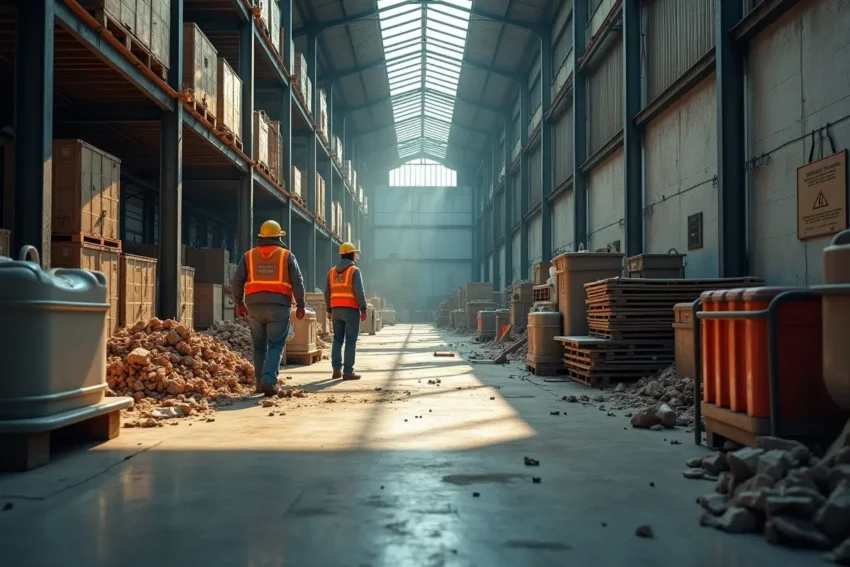
Visit a warehouse anywhere in the nation and it’s likely that the same basic safety measures will greet you. Yellow lines etched into the floor to denote where traffic should be. Emergency exits seem to be plastered everywhere. Fire extinguishers affixed to walls at regular intervals. Signs regarding how much weight a given racking system can hold. While many might think they’re merely boxes to check, there are legitimate reasons for all of them.
The sad part is that these health and safety measures exist because of incidents, many of which have been fatal. It’s not as if warehouse safety standards came from committees sitting around envisioning what could go wrong. Instead, every major component of OSHA warehouse guidelines exists because something happened somewhere, and more often than not, it happened more than once.
When there exists a safety regulation to ensure that emergency aisles remain clear, it’s because people have been trapped. Where there is a demand for ventilation in areas where forklifts operate, it’s because people have become sick from exhaust fumes in small spaces.
Contents
Standards That Are Obvious Until They’re Not
In fact, some of these safety regulations are so rudimentary that warehouse managers complain about them even being written down. It should be clear that safety is not conducted when debris is lining the aisles, right? But what happens is that during busy seasons, boxes get stacked up. Then stacked for a few days. Then a week or two. Before long, workers are meandering obstacle courses, and forklift drivers can’t see around corners.
The same goes for weight allowances on storage racks. Each rack system is designed with a top weight allowance, one that is supposed to be denoted by signage. But when space is tight, an extra pallet here and there might not indicate a failure.
One more probably won’t create a collapse. It might even take two. But the problem with weight limit violations is that they do not give way to gradual failure. When a rack collapses, it collapses wholly and takes adjacent racks down with it. People have died from rack collapses that began because a worker thought that the rules could be bent “just this once.”
Where Visual Systems Avoid Accidents
Visually, many warehouses rely on systems to keep things safe, and it’s not only for compliance issues. The more that people, both skilled workers and temporary help, understand safe navigation without constant supervision, the better. Professional warehouse labels signage and striping experts know that clear visual systems help make the cognitive load lesser for those already managing myriad responsibilities.
For example, when floor striping fades, accidents increase. Not immediately, but incrementally over time. Workers begin to deduce where safe walkways might be or where materials might fit best. Different crews develop different habits. New help learns poor practices from those who have become comfortable operating around subpar markings.
On the contrary, where there are graphic safety systems that fail to meet proper regulatory standards, conditions become unsafe. Warehouses that have high-vigilance visual safety systems have lower pedestrian-forklift incidents, loading dock mishaps and workers’ compensation claims. It’s not because it’s magical; instead, it’s that information that is clear and consistent helps people make better choices.
The Financial Implications of Shortcuts
In a warehouse setting where safety measures are ignored, costs might be reduced temporarily, but expenses catch up with neglect quickly. OSHA violations are easily preventable but also easily assigned. Serious violations can range from $15,000 and above PER incident, with willful violations far exceeding that. Yet fines are the least of the financial concerns.
Workers’ compensation claims due to warehouse incidents can run in the tens of thousands for minor accidents and hundreds of thousands for serious incidents. Then there’s the indirect operational costs when someone is injured. Other coworkers must pick up the slack. Productivity plummets. If the injury is serious enough, OSHA might recommend operational changes or temporary shut down while something is investigated.
Insurance companies also get concerned. Warehouses with poor safety records see premiums rise, sometimes astronomically. In an industry where margins are already tight, an increase could be the difference between a profit or a loss.
The Standards That Matter Most
Not every safety standard is created equal in injury reduction potential. Certain things contribute more to practical application than others. The single greatest safety element is proper training for powered industrial vehicles (forklifts, pallet jacks, etc.). The most serious incidents occur in warehouses due to vehicle-pedestrian interactions or vehicle-vehicle incidents (tip-overs, dropped loads, etc.).
Adequate lighting matters more than people think. Warehouses that are dimly lit prevent clear reading of signage as well as hazard visibility, distance assessments and responses to unexpected situations. Employees working in poorly lit areas develop bad habits by speeding through spaces they can’t see well enough but ultimately lead them to accidents.
Regular equipment maintenance addresses a whole category of injuries preemptively. Non-functioning brakes on forklifts, damaged wheels on pallet jacks or broken rungs on ladders all seem avoidable unless they’re not. And when stresses come into play because someone is distracted or in a rush, they might not even notice an issue until it’s too late.
What It Means in Practice
Where warehouse safety standards are concerned, they only work when they’re applied, not just written down. For example, if there are regulations about maintaining clear pathways but pathways aren’t clear? These standards are meaningless. If there are signs regarding weight allowances but no one holds workers accountable? Safety becomes compromised.
The safest warehouses aren’t the newest or the most expensive; they’re the ones whose management treats safety standards like required operational components instead of bureaucratic nuisances. Where worn floor markings are repainted before they’re illegible. Where equipment has maintenance BEFORE it breaks. And where new workers receive true training instead of just a walkthrough.
Those aren’t glamorous adjustments that transform a business overnight. But they’re the difference between a warehouse that runs smoothly from year to year and one that’s constantly embroiled in accidents, investigations and the operational chaos of both.