Why Liquid Roofing is Ideal for Complex Flat Roof Projects
Flat roofing may look simple from ground level, but for architects, contractors, and developers, complexity often lies in the detail. Irregular shapes, varying substrates, awkward junctions, and restricted access points can all present challenges—especially when working on refurbishments or large-scale commercial builds. For these scenarios, traditional membrane systems may fall short. Enter liquid flat roofing, a highly adaptable solution that’s proving indispensable in complex flat roof projects across the UK.
Designed to offer seamless coverage, even on challenging roofscapes, liquid systems provide both flexibility and durability—making them a reliable choice for professionals tasked with delivering long-term performance on non-standard builds.
Contents
What Is Liquid Roofing?
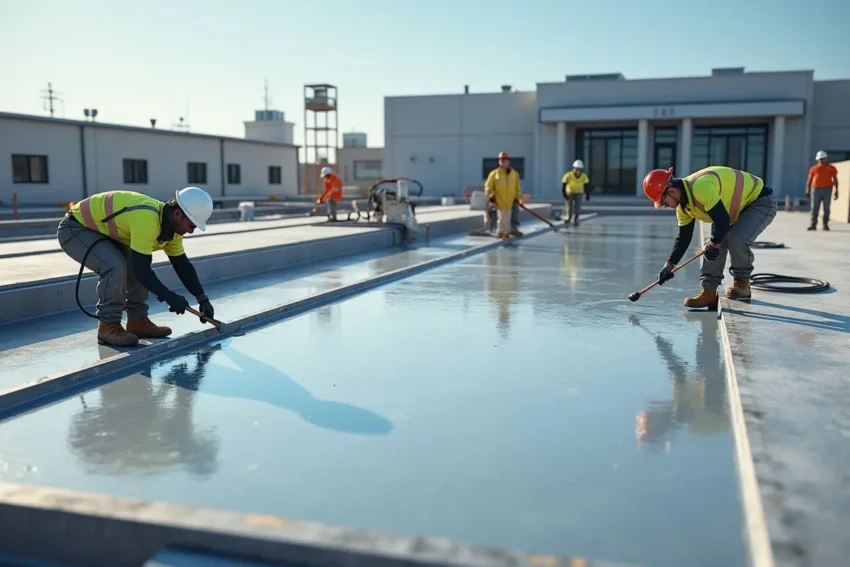
Liquid roofing involves applying a cold, fluid coating—typically based on polyurethane or PMMA (polymethyl methacrylate)—directly onto a prepared roof surface. Once applied, the material cures into a fully bonded, waterproof membrane with no seams, overlaps, or joints.
It’s this seamless application that gives liquid flat roofing in Manchester and beyond a strong advantage in design-sensitive or structurally complex projects. The system easily adapts to penetrations, curves, and changes in level, bonding tightly around every detail for full coverage.
Liquid systems can be applied to a range of substrates including concrete, timber, metal, and bitumen, and are compatible with both warm and cold roof constructions. The result is a versatile solution with a long service life—typically 20–30 years with proper installation.
Key Advantages for Flat Roof Design
For professionals working on projects with intricate detailing or awkward layouts, liquid roofing offers several key benefits:
- Seamless Application: With no laps or joins, liquid systems eliminate common weak points associated with traditional felt or membrane roofs. This is especially beneficial around skylights, upstands, vents, and drainage outlets.
- Cold-Applied Safety: Unlike bitumen systems that require open flame or hot works, liquid roofing is applied cold—reducing fire risk on site and simplifying installation around combustible materials.
- Fast Curing Options: Advanced liquid systems offer rapid curing times, allowing work to continue in stages and helping keep timelines on track—even in unpredictable weather.
- Durability and Elasticity: Once cured, liquid membranes remain flexible, allowing them to accommodate movement, thermal expansion, and structural shifts without cracking.
- Low Maintenance: The seamless nature of the system reduces the likelihood of water ingress, ponding, or material degradation—resulting in minimal ongoing maintenance and strong lifecycle value.
These benefits are particularly valuable on buildings with unusual footprints, heritage features, or access restrictions, where traditional roll-on systems may struggle to achieve full and consistent coverage.
When to Use It
Liquid roofing is especially well-suited to:
- Refurbishment Projects: It can be applied over existing roof surfaces (subject to condition), reducing the need for full strip-outs and cutting down on waste and disruption.
- Complex Roof Geometries: Curved parapets, multiple roof levels, internal gutters, and architectural detailing are all handled with ease thanks to the adaptable nature of the liquid membrane.
- Large Commercial Roofs: With spray-application options and consistent curing, liquid systems allow for quick progress across large roofscapes without compromising finish quality.
- Terraces and Podiums: Where roofs double as usable space, liquid systems offer a reliable waterproof base that can be overlaid with paving, decking, or green roof elements.
This versatility has seen liquid roofing become a go-to option for schools, hospitals, heritage buildings, residential blocks, and commercial developments—particularly when design flexibility is a key consideration.
A Forward-Thinking Approach to Modern Roofing
As expectations rise for both performance and design in the built environment, roofing solutions must evolve to match. Liquid systems offer a highly responsive option for flat roofs that require precision, longevity, and design flexibility.
By partnering with trusted specialists in liquid flat roofing in Manchester, contractors and specifiers can confidently approach complex projects—knowing the roofing system will adapt to the architecture, not the other way around.
For forward-thinking construction and refurbishment projects, liquid roofing isn’t just an alternative—it’s often the smarter solution.