What is Standard Gypsum Board? Decoding ASTM C1396
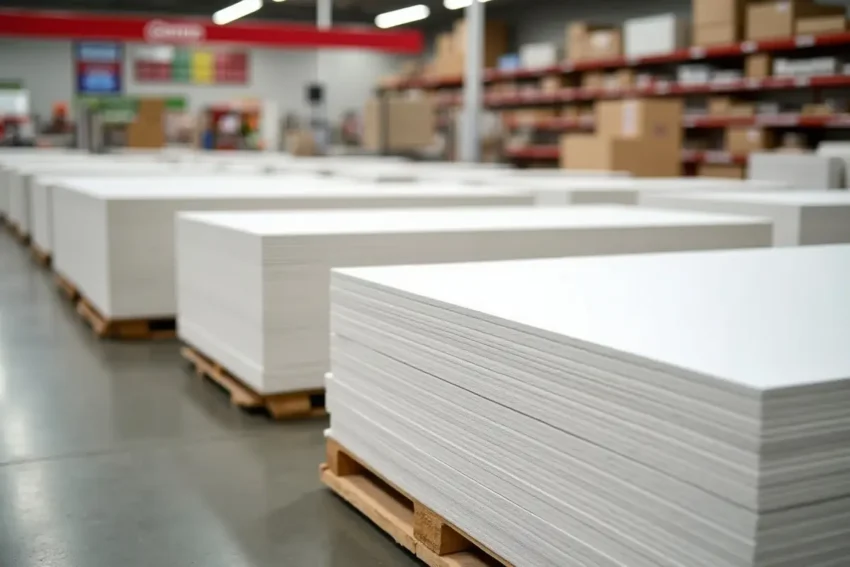
You see it everywhere, from homes to offices, forming the backbone of countless interior spaces. We’re talking about drywall, or more technically, standard gypsum board. While it might seem like a simple panel, this ubiquitous building material is a cornerstone of modern construction.
But what truly defines “standard” gypsum board? And why is that definition so critical for the safety and performance of our buildings? The answer lies in stringent industry guidelines, particularly those set by ASTM International.
In this extensive guide, we will peel back the layers of standard gypsum board. We’ll explore its primary components, discuss its key benefits, and highlight its role in fire resistance and sound insulation. Crucially, we will decode the relevant ASTM standards, especially ASTM C1396, which outlines the essential physical characteristics and performance requirements. For reliable construction, choosing materials that meet these benchmarks is key, and often this means relying on an experienced standard gypsum board supplier. Join us as we steer this essential building material, ensuring you have the knowledge to build with confidence.
At its heart, standard gypsum board is a panel product designed to create smooth, durable interior surfaces. It’s often referred to generically as drywall, plasterboard, or wallboard. Its primary components are deceptively simple: a noncombustible core made primarily of gypsum, sandwiched between layers of paper surfacing. This paper is typically bonded securely to the gypsum core, forming a robust and stable panel.
The gypsum core itself is a mineral composed of calcium sulfate dihydrate, which naturally contains chemically bound water. This inherent water content is a key factor in gypsum board’s unique properties, particularly its natural fire resistance. When installed and finished, gypsum board systems are designed to create a monolithic surface, with joints and fastener heads seamlessly concealed by joint treatment systems, ready for painting or other decorative finishes.
Gypsum board stands apart from other panel products like plywood or hardboard due to its unique core composition. It’s not merely a covering; it’s a structural element in terms of its contribution to fire safety and sound control. Its widespread use in residential, institutional, and commercial structures underscores its versatility and reliability.
Contents
- 1 Standard Dimensions and Physical Composition
- 2 Decoding ASTM C1396 and the Role of an Experienced Standard Gypsum Board
- 3 Specialized Panels and Their Functional Applications
- 4 Fire Resistance and Acoustic Performance
- 5 Installation, Finishing, and Sustainability Standards
- 6 Frequently Asked Questions about Standard Gypsum Board
- 7 Conclusion
Standard Dimensions and Physical Composition
Standard gypsum boards are manufactured to conform to specific industry dimensions, ensuring compatibility with standard framing practices. The most common width is 48 inches, designed to align perfectly with wall studs spaced 16 or 24 inches on center. Lengths typically range from 8, 10, 12, or 14 feet, allowing for efficient installation with minimal waste in rooms of various sizes.
Thicknesses are also standardized, varying in 1/8-inch increments from 1/4 inch to 3/4 inch. For example, 1/4-inch panels are often used as an additional sound-control layer or as a face layer over existing walls, while 3/8-inch panels are common in double-wall systems. The more prevalent 1/2-inch and 5/8-inch boards are used for general wall and ceiling applications, with 5/8-inch often specified for enhanced fire ratings.
The paper facing of standard gypsum board is predominantly made from recycled materials. Nearly 100% of the fiber used in gypsum board face and back paper comes from recycled newsprint and post-consumer waste, contributing significantly to the product’s sustainability profile. The gypsum core can be derived from natural gypsum deposits or synthetic gypsum.
Synthetic gypsum, a by-product of pollution control processes in fossil fuel power generation (specifically, the desulfurization of coal power plant exhaust gases), accounts for approximately 20% of US raw gypsum use and is now found in about 30% of drywall. In fact, over 80% of coal fly ash sold in the United States is used in gypsum board manufacturing, highlighting the industry’s role in the utilization of waste materials.
Decoding ASTM C1396 and the Role of an Experienced Standard Gypsum Board
The term “standard gypsum board” isn’t merely a descriptive phrase; it refers to a product that meets specific criteria outlined by industry standards. Foremost among these is ASTM C1396, the Standard Specification for Gypsum Board. This crucial document, developed by ASTM International, defines the minimum physical characteristics and performance-based requirements that gypsum board products must satisfy.
ASTM International, founded in 1898, plays a vital role in ensuring consistency and quality across various industries, including construction. While ASTM itself is not a regulatory body, its standards often become mandatory when adopted by model building codes. This means that gypsum board used in construction must comply with C1396 to meet essential safety, durability, and performance benchmarks.
When selecting materials, working with an experienced standard gypsum board supplier ensures that the products you receive meet these rigorous specifications, providing peace of mind and contributing to the longevity of your projects.
Why Quality Matters in an Experienced Standard Gypsum Board
Compliance with ASTM C1396 translates directly into product quality and reliable performance. The standard specifies various physical properties that gypsum board must exhibit, which are critical for its function in a building. These include:
- Nail Pull Resistance: This measures the board’s ability to hold fasteners securely, which is crucial to the integrity of walls and ceilings.
- Flexural Strength: This indicates the board’s resistance to bending or breaking under load, essential for structural stability and preventing sagging.
- Humidified Deflection: This test assesses how much the board sags or deforms under high-humidity conditions, ensuring stability across varying environments.
- Core, End, and Edge Hardness: These properties relate to the board’s resistance to indentation and damage, affecting its durability during handling and once installed.
- Straightness of Edges and Ends: Precise dimensions and straight edges are vital for achieving a smooth, seamless finish during installation.
These parameters are not arbitrary; they are derived from extensive research and real-world performance data. Ensuring that your gypsum board meets the specifications outlined in the Standard Specification for Gypsum Board is fundamental to constructing safe, durable, and aesthetically pleasing interior spaces. Adherence to these standards ensures that every panel performs as expected, reducing callbacks and increasing project efficiency.
Selecting an Experienced Standard Gypsum Board for Commercial Projects
For commercial projects, selecting gypsum board requires a deeper dive into specifications and testing. ASTM C473 covers standard test methods for the physical testing of gypsum panel products, providing procedures to verify compliance with C1396. This includes detailed measurements of dimensional tolerances for thickness, width, length, tapered edge depth, and end squareness. Tapered edges, for instance, are specifically designed to facilitate the reinforcement and concealment of joints with joint compound, creating a smooth surface ready for decoration.
Beyond the basic product standard, understanding the typical mechanical and physical properties of gypsum board is key to informed decision-making. Resources like GA-235, Gypsum Board Typical Mechanical and Physical Properties, provide comprehensive information on characteristics, properties, and performance, helping specifiers and contractors choose the right product for their specific application. This document, along with many others, is available in the GA Bookstore and serves as an invaluable resource for the industry.
Specialized Panels and Their Functional Applications
While “standard gypsum board” refers to the baseline product meeting ASTM C1396, the broader category of gypsum panel products includes many specialized variants designed for enhanced performance in specific applications. These specialized panels leverage the core gypsum composition while incorporating additives or different facings to address particular needs such as fire resistance, moisture and mold resistance, or increased durability.
Common types of specialized gypsum boards include:
- Regular Gypsum Board: The most basic type, offering inherent fire resistance due to its gypsum core.
- Type X Gypsum Board: Enhanced fire resistance, often achieved through the addition of glass fibers to the gypsum core.
- Type C Gypsum Board: Offers even greater fire resistance than Type X, often with proprietary core additives.
- Moisture-Resistant Gypsum Board (e.g., “Green Board”): Features a water-repellent paper facing and/or a treated core to reduce moisture absorption.
- Mold-Resistant Gypsum Board: Incorporates additives in the core and/or special facings to inhibit mold growth.
- Abuse-Resistant Gypsum Panels: Designed for high-traffic areas, offering increased resistance to surface abrasion, indentation, and impact.
- Impact-Resistant Gypsum Panels: Engineered to withstand more significant impacts than abuse-resistant panels, often featuring fiberglass mesh or other reinforcing materials.
These variations allow architects and builders to specify the precise performance characteristics required for different areas within a building, optimizing both safety and longevity.
Fire-Rated Performance and Type X Specifications
One of gypsum board’s most critical contributions to building safety is its fire resistance. This property is inherent in the gypsum mineral itself, which contains approximately 21% chemically combined water. When exposed to fire, this water is released as steam, slowing the transfer of heat and acting as a thermal barrier.
For applications requiring enhanced fire protection, Type X gypsum board is specified. This product is manufactured with special core additives, typically glass fibers, that allow it to maintain its integrity for longer when exposed to fire. Type X boards are tested under rigorous conditions, often in accordance with ASTM E119, Standard Test Methods for Fire Tests of Building Construction and Materials. This testing determines the fire-resistance rating of wall and ceiling assemblies. /
For example, a 5/8-inch-thick Type X gypsum board can provide a 1-hour fire-resistance rating when installed in a specific assembly, making it indispensable for fire-rated partitions, shaft walls, and other critical fire-separation elements. The noncombustible nature of the gypsum core, combined with these additives, makes Type X a cornerstone of passive fire protection in modern construction.
Moisture and Mold Resistance in Wet Areas
While standard gypsum board is excellent for most interior applications, areas with high humidity or direct water exposure require specialized solutions. This is where moisture-resistant and mold-resistant gypsum boards come into play.
Moisture-resistant gypsum board, often identified by its green paper facing, is designed for use in areas such as bathrooms, kitchens, and laundry rooms. Its paper facing is treated with a water-repellent agent, and the core itself may contain wax additives to reduce water absorption. However, it’s important to note that while moisture-resistant, it is not waterproof and should not be used in areas of continuous water exposure, such as inside showers without a proper waterproof membrane.
For even greater protection against biological growth, mold-resistant gypsum board is available. These panels incorporate special additives in the gypsum core and/or feature fiberglass mat facings (instead of paper) that are highly resistant to mold and mildew growth. These products are often tested to standards like ASTM D3273, which evaluates resistance to mold growth.
For areas that will be tiled, such as shower walls or tub surrounds, water-resistant gypsum backing board (like those offered by PermaBASE Building Products, LLC) is typically specified. These boards provide a stable substrate for tile and offer superior moisture and mold resistance compared to standard gypsum board, ensuring the longevity of tiled surfaces in wet environments.
Fire Resistance and Acoustic Performance
Beyond its structural role, standard gypsum board is a dual-purpose material that contributes significantly to both fire safety and acoustic comfort in buildings. Its inherent properties make it an effective component in creating fire-rated assemblies and in reducing sound transmission between spaces.
The Material Science of Fire Protection
The fire-resistive properties of gypsum board are rooted in its unique chemical composition. As mentioned, the gypsum core contains chemically bound water (approximately 21% by weight). When exposed to high temperatures, this water is gradually released as steam through a process called calcination.
This process effectively absorbs heat energy, slowing the temperature rise on the unexposed side of the board. The steam acts as a thermal barrier, protecting the underlying structure from the direct impact of flames and heat. This “dehydration” process can last for a considerable period, depending on the board’s thickness and type, allowing occupants valuable time to evacuate and firefighters to control the blaze.
Furthermore, gypsum board’s surface burning characteristics are also regulated. When tested according to ASTM E84, Standard Test Method for Surface Burning Characteristics of Building Materials, standard gypsum board typically achieves a flame spread index of not more than 25, indicating its low contribution to flame propagation. This material science makes gypsum board an indispensable element in passive fire protection systems.
Sound Insulation Strategies
In an increasingly noisy world, sound insulation is a critical aspect of building design. Gypsum board plays a key role in creating quiet and comfortable interior environments. The ability of a wall or ceiling assembly to reduce sound transmission is measured by its Sound Transmission Class (STC) rating. Gypsum board contributes to sound insulation primarily through its mass and stiffness. Thicker boards provide more mass, which inherently reduces sound transfer (the “mass law”).
However, effective sound insulation often involves more sophisticated strategies than just adding mass. Double-layer gypsum board applications, for instance, significantly improve STC ratings by creating a decoupled wall assembly. This involves using two layers of gypsum board on each side of a stud, often with an air gap or insulation in between, which disrupts sound waves and reduces their ability to travel through the wall.
Specialized gypsum products, such as those with enhanced density or those designed for specific acoustic performance, can further improve STC ratings. The use of resilient channels, sound-damping compounds, and acoustic sealants, in conjunction with gypsum board, also contributes to superior sound control, effectively reducing airborne noise and impact noise. Even 1/4-inch gypsum panels can be used as an additional layer to improve sound control in double-layer partitions, demonstrating gypsum board’s versatility in achieving the desired acoustic performance.
Installation, Finishing, and Sustainability Standards
The widespread adoption of standard gypsum board is also due to its relative ease of installation and finishing, as well as to increasingly important sustainability considerations.
Installation typically involves a “score and snap” method, where the board is scored with a utility knife and then snapped along the line, making it highly efficient to cut and fit. Panels are fastened to framing members (wood or metal studs) using screws or nails. The crucial step in finishing is applying joint compound and tape over the seams and fastener heads, then sanding to create a smooth, continuous surface.
ASTM C840, Standard Specification for Application and Finishing of Gypsum Board, provides comprehensive guidelines for these processes, ensuring proper installation techniques for optimal performance and appearance. The level of finish required can vary, from a basic Level 1 (joints covered) to a Level 5, which involves a skim coat of joint compound over the entire surface, creating a perfectly smooth backdrop for high-gloss paints or specialized finishes. The tapered long edges of standard gypsum board are specifically designed to accommodate joint tape and compound, allowing for a seamless transition between panels.
Sustainability and Environmental Considerations
The gypsum board industry has made significant strides in sustainability. As previously noted, the use of synthetic gypsum is prevalent, diverting a major industrial by-product from landfills and reducing the need for virgin gypsum mining. This synthetic gypsum, often derived from coal fly ash, represents a considerable environmental benefit.
Furthermore, the paper facings of gypsum board are typically made from 100% recycled newsprint and post-consumer waste. Many gypsum board products also achieve certifications such as GREENGUARD Gold, indicating they are low-VOC (Volatile Organic Compound) emitting and contribute to healthier indoor air quality. This commitment to environmental responsibility extends to the production process, with manufacturers continually seeking ways to reduce energy consumption and waste.
While recycling post-consumer gypsum board from demolition sites poses challenges due to contamination, efforts are ongoing to improve recycling processes. The industry’s focus on recycled content, waste diversion, and low-emission products underscores its commitment to sustainable construction practices. These environmental considerations make standard gypsum board a more eco-friendly choice for modern building projects.
Advantages and Limitations Compared to Other Materials
Standard gypsum board offers a compelling array of advantages that have solidified its position as the most common indoor building material in the United States:
Advantages:
- Cost-effectiveness: Generally more affordable than plaster or wood paneling.
- Ease of Installation: Can be installed quickly and efficiently, reducing labor costs.
- Fire Resistance: Inherent fire-resistive properties, with enhanced options like Type X.
- Sound Control: Contributes to sound insulation, especially in multi-layer assemblies.
- Versatility: Suitable for walls, ceilings, and partitions in virtually any interior space.
- Smooth Finish: Provides an excellent substrate for paint, wallpaper, and other decorative finishes.
- Nontoxicity: Composed of natural minerals, making it a safe choice for indoor environments.
- Availability: Widely available from numerous suppliers and manufacturers.
Limitations:
- Impact Durability: Can be susceptible to damage from heavy impacts or abrasion if not a specialized abuse- or impact-resistant type.
- Moisture Sensitivity: Standard gypsum board is not suitable for wet areas without specialized moisture-resistant variants or proper waterproofing.
- Curved Surfaces: Difficult to apply to tight curves without specialized flexible boards or extensive scoring.
- Weight: While modern formulations are lighter, handling large sheets can still require multiple people.
Compared to traditional lath-and-plaster, gypsum board is significantly faster and less labor-intensive to install. Against wood paneling, it offers superior fire resistance and a more versatile surface for decoration. While materials like cement board offer greater water resistance, gypsum board remains the preferred choice for general interior applications due to its balance of performance, cost, and ease of use.
Frequently Asked Questions about Standard Gypsum Board
We often encounter common questions about standard gypsum board. Here are some of the most frequent inquiries:
What is the difference between regular gypsum board and Type X?
The primary difference lies in fire resistance. Regular gypsum board has natural fire resistance due to the chemically bound water in its gypsum core. When exposed to fire, this water converts to steam, slowing heat transfer.
Type X gypsum board takes this a step further. It is manufactured with special core additives, typically glass fibers, that enhance its fire resistance. This allows Type X to achieve higher fire-resistance ratings (e.g., a 5/8-inch Type X board can provide a 1-hour fire rating in specific assemblies) and is often required by building codes in fire-rated partitions, garages, and multi-family dwellings.
How does synthetic gypsum compare to natural gypsum?
From a performance standpoint, synthetic gypsum is chemically identical to natural gypsum and performs just as well in gypsum board products. The main differences lie in their origins and environmental impacts. Natural gypsum is mined from geological deposits. Synthetic gypsum is a by-product of industrial processes, primarily flue gas desulfurization (FGD) in coal-fired power plants.
Using synthetic gypsum helps divert waste from landfills and reduces the environmental impact associated with mining natural gypsum. The industry widely uses both, and the finished gypsum board quality is consistent regardless of the gypsum source.
What are the most common sizes for residential construction?
For residential construction, the most common sizes for standard gypsum board are 48 inches (4 feet) wide by 8, 10, or 12 feet long. The 4×8-foot panel is a staple for standard ceiling heights, while 4×12-foot panels are often preferred for longer wall runs or higher ceilings to minimize joints and improve efficiency. Common thicknesses include 1/2 inch for general wall and ceiling applications, and 5/8 inch for enhanced fire resistance or greater rigidity. These standard dimensions are designed to integrate seamlessly with typical residential framing practices.
Conclusion
Standard gypsum board, often simply called drywall, is far more than just a wall covering. It is a sophisticated, highly engineered building material that underpins modern interior construction. From its noncombustible gypsum core with chemically bound water to its paper facings made from recycled materials, every component is designed for performance, safety, and efficiency.
Adherence to rigorous standards like ASTM C1396 defines “standard” gypsum board, ensuring that these panels meet essential benchmarks for physical characteristics, fire resistance, and overall quality. Understanding these standards is crucial for anyone involved in construction, from architects and contractors to homeowners.
By selecting gypsum board that complies with these industry benchmarks, we ensure material longevity, improve structural safety, and contribute to the overall quality and sustainability of our built environment. For more in-depth information on the characteristics, properties, and performance of gypsum board, we encourage you to refer to GA-235, Gypsum Board Typical Mechanical and Physical Properties. GA-235 is one of many free downloads in the GA Bookstore section.