The Tile Choices That Transform an Ordinary Bathroom Into Something Special
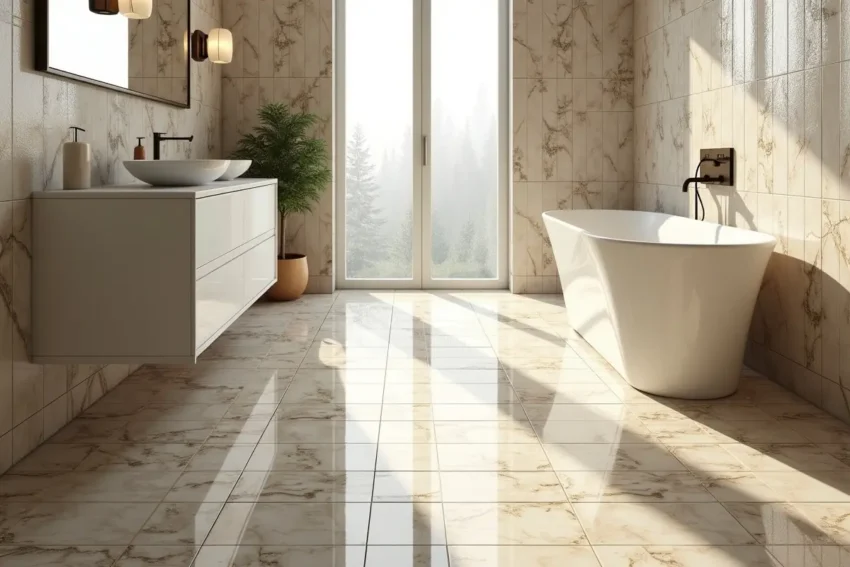
There’s a very specific type of bathroom that will stop you in your tracks. Not because it’s humongous or filled with expensive finishes, but instead because every single surface feels intentional. The tiles, they really make a difference, and once you’ve experienced what the right tile can do, you’ll never look at a plain white bathroom the same again.
Contents
Where to Start: It Matters More Than You Think
Before going into colours and patterns, it would benefit anyone to start with the material. Ceramic, porcelain, natural stone, glass, they all act differently in appearance and aging and maintenance. Arguably this is one component that starts to make things overwhelming, but it doesn’t have to be.
Porcelain is perhaps the workhorse of bathroom tiles. It’s dense and water resistant with a range of finishes that border on ridiculous, from matte concrete-look larger slabs to something that looks legitimately like marble. It’s also quite forgiving if the installation isn’t perfectly staggered. For people perusing inspiration and options, taking the time to explore the different materials and finishes available for bathroom tiles can truly change perception on what’s possible in a bathroom setting.
Natural stone, however, is in an entirely different ballpark aesthetically. Travertine, slate, limestone, they all bring something to the table that manufactured tiles simply cannot compare. The variety from piece to piece, subtle texture underfoot and interaction with light can be stunning. The downside is that they require sealing and extra care, but for many, that’s a fair trade off.
Size and Scale: The Detail People Always Mess Up
Tile size has a huge impact on how a room reads, and it’s one of those things that aren’t always obvious until it’s experienced in person. Large format tiles in smaller bathrooms (especially) can make them feel larger; fewer grout lines means less visual confusion and a feeling of continuity for the eye.
At the same time, smaller tiles give texture and detail; mosaic formats work wonderfully in shower walls or as accent strips, however tiling an entire wall of tiny tiles in a small space can make things feel too busy. The scale of the tiles should match the scale of the room, not fight against it.
Colour and Finish: Safe vs. Smart
Here’s where either the magic happens or renovations fizzle out. The reasoning behind going neutral with colours is entirely valid, white, grey and beige have dominated bathroom spaces for years, and there are good reasons why. They’re timeless, they work with virtually any fixture colour, and they don’t run the risk of feeling outdate years down the line.
However, playing it so safe means people are left with nice bathrooms that are completely forgettable. A happy medium that many people are finding is going with neutral tiles for the bulk of the room and adding personality either through a feature wall, bold floor tile, or interesting texture in certain areas.
Matte finishes are becoming more popular for good reason. They soften the eye more than glossy surfaces while getting fingerprint watermarks on them less than typical semi-glossy features and making spaces feel more modern than clinical. However, there’s nothing wrong with installing a properly placed glossy tile to reflect light beautifully in a window-less bathroom; neither are right or wrong, they depend on the space.
Patterns and Layouts: This Is Underrated
The pattern tiles are laid down in is something people often decide last and almost as an afterthought, but really can be one of the most powerful tools to make a bathroom look more designed instead of simply tiled.
A herringbone layout of basic rectangular tiles looks entirely different than a brick bond or straight stack. The same tile, in the same colour can read differently based on how it’s laid on a wall. This can save money if someone loves a cheaper option and finds a good way to lay it down in an interesting way; a more expensive tile laid in a basic way looks worse than even an average tile placed in a more intentional orientation.
It’s also worthwhile noting that feature walls don’t need every wall to have the same type of tile; one wall, behind the tub or vanity, could use something different to create a focal point without committing every surface to something bold; it’s an easy way to add personality without overwhelming.
Putting It All Together
There seem to be so many intentional aspects from people who have bathrooms that seem special. It’s simple things; people didn’t start with their tiles first, they began with material, size, colour, finish, and layout considerations that took into account lighting and existing fixtures.
It doesn’t take a bigger budget or a complete overhaul; sometimes it’s as simple as choosing a floor tile that adds warmth or running your wall tiles in such a direction that they’re eye-level at the ceiling. Small changes in perception can make results feel anything but small.