The Role of Automation in High-Volume Precision Machining for Aerospace
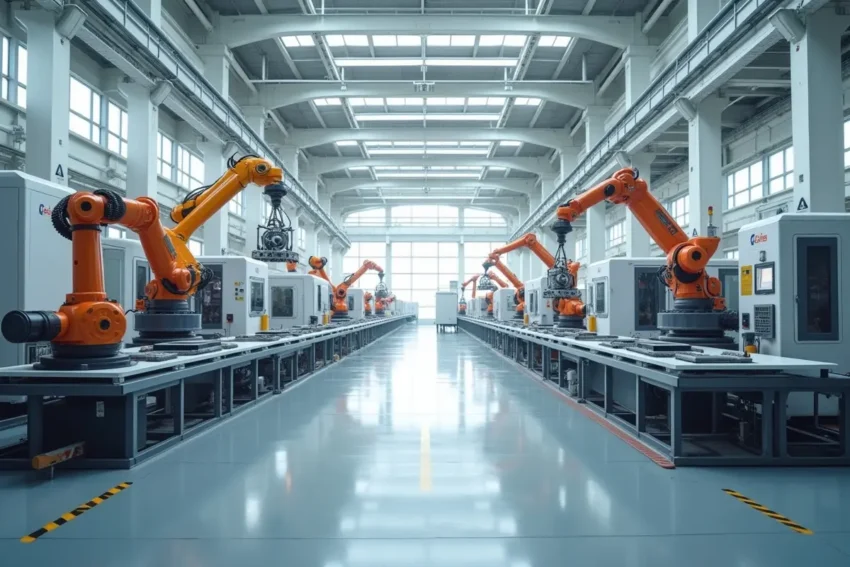
The aerospace industry demands nothing less than perfection. Every part, every component, must meet stringent standards. This is especially true for high-volume precision machining. The need for consistent quality at scale pushes manufacturers to innovate.
We see automation as a key player in meeting these tough challenges. It transforms how aircraft parts are made. This guide will explore the vital role automation plays in this field. We will look at its benefits for speed, accuracy, and reliability. We will also discuss the problems involved.
For companies seeking top-tier results in complex projects, leveraging expert partners is often essential. This includes working with specialists in High-volume precision contract manufacturing. Join us as we uncover how automation shapes the future of aerospace manufacturing.
The aerospace sector operates at the pinnacle of engineering and manufacturing. It demands components that are not only incredibly precise but also capable of performing flawlessly under extreme conditions. This necessity drives the continuous evolution of manufacturing techniques, with precision machining standing out as a cornerstone.
When we talk about high-volume precision machining in aerospace, we are referring to the systematic production of numerous identical parts, each crafted to extremely tight tolerances, often measured in microns. These components are critical for the safety, efficiency, and performance of aircraft, spacecraft, and related systems.
The process involves working with complex geometries and a range of exotic materials that possess unique properties essential for aerospace applications. Materials like titanium and Inconel are favored for their high strength-to-weight ratio, corrosion resistance, and ability to withstand extreme temperatures. However, these very properties make them challenging to machine, requiring specialized tools, techniques, and often, automated systems to achieve the desired precision and surface finish without compromising material integrity.
Quality control is paramount in this environment. Every step, from material selection to final inspection, is rigorously monitored. Certifications such as AS9100, which is the international standard for quality management systems for the aerospace industry, and ITAR (International Traffic in Arms Regulations) registration, which governs the export and import of defense-related articles and services, are not just badges of honor but fundamental requirements.
These certifications ensure that manufacturers adhere to the highest standards of quality, traceability, and security, providing confidence in the reliability and safety of every component produced. Consistency across thousands, or even millions, of parts is not just desirable; it is essential to the operational integrity of aerospace systems.
Contents
The Unique Demands of Aerospace Manufacturing
The components that make up an aircraft are subjected to some of the most demanding operational environments imaginable. From the intense heat and pressure within jet engines to the structural stresses on wings and fuselages during flight, every part must be designed and manufactured to endure. This is why unique and stringent demands characterize aerospace manufacturing.
Consider aircraft components such as turbine blades, engine parts, landing gear, and the countless fasteners that hold everything together. Each plays a vital role, and a failure in any one could have catastrophic consequences. Therefore, the material properties are carefully chosen for their ability to resist stress, fatigue, and corrosion, and to maintain structural integrity across vast temperature extremes—from the cold of high altitudes to the scorching heat of engine combustion chambers. Machining these materials to the required specifications, often with complex internal channels or intricate surface features, is a monumental task that pushes the boundaries of conventional manufacturing.
Beyond the physical demands, regulatory compliance forms another layer of complexity. Aerospace is one of the most heavily regulated industries globally. Agencies like the Federal Aviation Administration (FAA) in the U.S. and the European Union Aviation Safety Agency (EASA) impose strict rules on design, manufacturing processes, and quality assurance.
This means that every manufacturing process, every machine, and every operator must adhere to specific, documented procedures. Traceability of materials, tools, and methods is mandatory, ensuring that, should an issue arise, its origin can be precisely identified and addressed. This regulatory burden, while essential for safety, adds significant overhead and complexity to manufacturing operations, making efficiency gains through automation all the more valuable.
Why High Volume is Critical
While precision and quality are non-negotiable, the aerospace industry also operates on a scale that necessitates high-volume production. Modern aircraft programs, whether for commercial airliners or defense applications, involve orders for hundreds or even thousands of units. Each aircraft, in turn, comprises hundreds of thousands, if not millions, of individual components. Producing these parts efficiently and consistently is where high volume becomes critical.
The sheer volume of components required drives the need for optimized production lines. High-volume manufacturing is essential for achieving economies of scale, which, in turn, helps reduce the cost per part. This is vital in an industry where development costs are astronomical, and airlines or defense departments are constantly seeking ways to manage their budgets. Standardized components, produced in large quantities, contribute significantly to the overall efficiency and affordability of aircraft manufacturing and maintenance.
Moreover, global demand for air travel and defense capabilities continues to grow, placing immense pressure on the supply chain. Manufacturers must be able to scale their production quickly and reliably to meet these demands without compromising quality. This constant push for increased output, combined with the unwavering requirement for extreme precision, makes automation not just an advantage but a fundamental necessity for aerospace manufacturers looking to remain competitive and responsive in a dynamic global market.
Core Technologies Driving Automation in Machining
Automation in precision machining is not a singular technology but a synergistic combination of advanced systems working in concert. At its heart lies Computer Numerical Control (CNC) machining, which has revolutionized manufacturing by enabling machines to execute complex operations with unparalleled accuracy and repeatability based on digital instructions. However, modern automation extends far beyond basic CNC.
Today, 5-axis CNC machining centers are commonplace, enabling the machining of highly complex parts from multiple angles in a single setup, reducing material handling and improving accuracy. Robotics plays a crucial role in automating tasks such as loading and unloading parts, changing tools, and performing secondary operations. Automated tool changers and pallet systems further improve efficiency by allowing machines to run unattended for extended periods, even overnight—a concept known as “lights-out manufacturing.”
Beyond the physical machines, sophisticated software and inspection technologies are integral to the automated ecosystem. Coordinate Measuring Machines (CMMs) are often integrated into production lines for automated, high-precision inspection of finished parts. In-process inspection systems, using probes or vision technology, monitor machining operations in real time, detecting deviations before they lead to scrap.
The entire process is orchestrated and optimized by advanced CAD/CAM (Computer-Aided Design/Computer-Aided Manufacturing) software, which translates design intent into precise machine instructions, simulates machining paths, and identifies potential collisions or inefficiencies. These core technologies collectively form the backbone of automated precision machining, enabling manufacturers to meet the stringent demands of the aerospace industry.
From Computer Control to Full Autonomy
The journey from basic computer control to full manufacturing autonomy is a testament to the continuous innovation in the machining sector. Early CNC systems provided programmed control over machine axes, replacing manual operation. Today, this has evolved significantly. CNC programming, often generated directly from CAD models, specifies intricate G-code instructions that dictate every movement of the machine, from tool selection and spindle speed to feed rates and coolant application.
The next leap involves integrating these CNC machines with robotic systems. Robots are now adept at tasks such as loading and unloading raw materials and finished parts, dramatically reducing manual intervention and enabling continuous, unattended operation. This level of automation means that a single operator can oversee multiple machines, or an entire cell can run autonomously for hours, producing parts without human interaction.
Automated quality assurance systems are also becoming increasingly sophisticated. Instead of relying solely on post-production inspection, in-process sensors and probes can monitor critical dimensions and surface finishes as the part is being machined. This real-time data is fed back into the system, allowing for immediate adjustments to machining parameters, a process known as adaptive manufacturing.
This closed-loop feedback mechanism ensures that deviations are corrected instantly, minimizing waste and maximizing consistency. The ultimate goal is a fully autonomous manufacturing environment where machines can self-diagnose, self-correct, and optimize their own processes, paving the way for brilliant factories.
The Role of Advanced Software and System Integration
The true power of automation in high-volume precision machining for aerospace lies in the sophisticated software that orchestrates the entire process and the seamless integration of various systems. Advanced software solutions are the brains behind automated machinery.
Digital twins, for instance, are virtual replicas of physical systems, processes, or products. They allow manufacturers to simulate entire production lines, test new machining strategies, and predict potential issues in a virtual environment before committing to physical production. This reduces risk, saves time, and optimizes resource allocation. Process simulation software goes hand-in-hand with digital twins, enabling engineers to fine-tune every aspect of a machining operation, from toolpath optimization to material removal rates, ensuring maximum efficiency and minimal wear on tools.
Beyond the machine-level control, enterprise-wide systems like Enterprise Resource Planning (ERP) play a critical role in integrating manufacturing data with other business functions such as procurement, inventory management, and scheduling. This holistic view allows for better decision-making, improved resource allocation, and a more responsive supply chain. Real-time monitoring systems provide operators and managers with live data on machine performance, tool life, and production progress, allowing for proactive intervention.
Predictive maintenance, powered by machine learning algorithms that analyze sensor data, can anticipate equipment failures before they occur, proactively schedule maintenance, and minimize costly downtime. This level of system integration ensures that every element of the manufacturing process is connected, optimized, and contributes to the overall efficiency and quality of high-volume precision machining.
Key Benefits of Automation for High-Volume Precision Machining
Automation offers transformative advantages for high-volume precision machining, particularly in the aerospace industry, where the stakes are incredibly high. The benefits extend across efficiency, quality, cost, and safety, fundamentally reshaping manufacturing operations.
One of the most immediate advantages is increased throughput. Automated systems, especially those capable of lights-out manufacturing, can operate 24/7 without breaks, dramatically increasing the number of parts produced within a given timeframe. This continuous operation is crucial for meeting the demanding production schedules of large aerospace programs.
Coupled with increased throughput is vastly improved precision and repeatability. Automated machines, guided by precise digital instructions, can execute complex operations with micron-level accuracy consistently across thousands of parts. This eliminates the variability inherent in manual operations, ensuring that each component meets the exact specifications. The reduction in human error is a significant factor here; while human operators are skilled, fatigue or minor inconsistencies can lead to defects. Automated systems, once programmed correctly, perform tasks identically every time.
These improvements directly translate into substantial cost reductions. Labor savings are evident as fewer operators are required to manage more machines. Furthermore, reduced scrap rates resulting from higher precision and fewer errors yield significant material savings, especially when working with expensive aerospace-grade alloys. The cumulative effect of these benefits is a more efficient, reliable, and cost-effective manufacturing process that can meet the rigorous demands of the aerospace sector.
Achieving Unprecedented Consistency and Quality
In aerospace, consistency and quality are not just buzzwords; they are foundational to safety and performance. Automation plays an unparalleled role in achieving these objectives. The ability of automated systems to perform identical operations repeatedly, without deviation, results in part-to-part consistency that is simply unattainable with manual methods. Every cut, every drill, every surface finish is executed precisely as programmed, eliminating the variables that can creep into human-operated processes.
Sophisticated quality control mechanisms bolster this consistent execution. Statistical Process Control (SPC) is often integrated into automated workflows, continuously monitoring key process parameters and part dimensions. Data is automatically collected from in-process sensors and post-machining inspection systems, providing a real-time picture of quality. This allows for immediate identification and correction of any trends that might lead to defects, often before a single non-conforming part is produced.
Automated data collection is a game-changer for traceability. Every step of the manufacturing process, every machine used, every tool applied, and every measurement taken can be digitally recorded and linked to a specific part. This creates a comprehensive digital thread for each component, ensuring full traceability from raw material to finished product.
Should an issue arise years down the line, the entire manufacturing history of that part can be accessed, analyzed, and understood. This level of meticulous documentation and consistent quality assurance is vital for regulatory compliance and for maintaining the highest standards of safety and reliability in aerospace.
Boosting Efficiency and Throughput for High-Volume Precision Machining
The aerospace industry’s need for high volumes of precision parts necessitates manufacturing processes that are not only accurate but also exceptionally efficient. Automation is the primary driver behind boosting this efficiency and throughput.
Automated systems significantly reduce cycle times. By optimizing toolpaths, minimizing non-cutting movements, and consistently operating at peak performance parameters, machines can complete operations much faster than manual counterparts. Furthermore, automated setup times are drastically reduced through quick-change fixturing, automated tool measurement, and pre-programmed job setups. This means less downtime between production runs and more time spent actually machining parts.
The ability to operate continuously, often in a “lights-out” mode, significantly increases production capacity. Machines can run overnight or over weekends without human supervision, maximizing machine uptime and effectively expanding the manufacturing window. This continuous production flow, coupled with optimized toolpaths that reduce wear and tear, ensures machines remain productive for an extended period.
The result is a substantial increase in the overall output of high-volume precision components, allowing aerospace manufacturers to meet aggressive delivery schedules and respond rapidly to market demands without compromising the critical quality and precision required.
Overcoming Challenges in Automated Aerospace Machining
While the benefits of automation in high-volume precision machining for aerospace are undeniable, its implementation is not without challenges. These problems often involve significant investments, technical complexities, and the need for a highly skilled workforce.
The high initial investment required for advanced automated systems, including multi-axis CNC machines, robotics, and sophisticated software, can be a barrier for many companies. These are not off-the-shelf solutions but often require custom integration and significant capital outlay. Furthermore, the complex programming needed to orchestrate these systems—especially for intricate aerospace components—demands specialized expertise that is not always readily available.
This leads to another significant challenge: the skilled labor shortage. While automation reduces the need for manual labor in repetitive tasks, it creates a demand for highly trained engineers, programmers, and technicians who can design, operate, and maintain these complex systems.
System integration itself is a considerable challenge. Connecting disparate machines, software platforms (CAD/CAM, ERP, MES), and inspection equipment into a seamless, cohesive manufacturing ecosystem requires careful planning and execution. Equipment maintenance for these advanced systems is also more complex and often requires specialized technicians, potentially leading to higher maintenance costs and longer downtime if not managed effectively.
Finally, with increased connectivity and digital control, cybersecurity becomes a paramount concern. Protecting proprietary designs, manufacturing processes, and operational data from cyber threats is essential to maintain competitive advantage and national security in the aerospace sector.
Implementing advanced automation in aerospace manufacturing is a strategic undertaking that requires careful planning and a phased approach. One effective strategy is phased adoption, where automation is introduced incrementally, starting with smaller, less critical processes before scaling up. This allows organizations to build expertise, refine processes, and demonstrate return on investment before committing to larger-scale changes.
Workforce training is absolutely crucial. As roles shift from manual operation to oversight, programming, and maintenance, existing employees need to be upskilled through comprehensive training programs. Investing in human capital is as important as investing in technology. Scalable solutions are also key; manufacturers should choose automation systems that can grow and adapt with their needs, avoiding rigid, single-purpose investments.
Finding the right expertise, whether internal or external, is paramount. This includes engineers with experience in automation, robotics, and advanced manufacturing software. Many companies find value in partnering with specialized firms that offer expertise in implementing and managing these complex systems. Such partnerships can help mitigate risks and accelerate the transition to automated production. For those needing to scale quickly or access advanced capabilities without the upfront investment, leveraging a high-volume precision contract manufacturing partner can be a strategic move.
These partners already have advanced infrastructure and skilled personnel, enabling companies to tap into automated production capabilities immediately. Effective risk management, including thorough feasibility studies and contingency planning, is essential to navigate the complexities and ensure the successful implementation of automation.
The Human Element in an Automated World
Despite the increasing sophistication of automation, the human element remains indispensable in advanced manufacturing environments. The shift is not about replacing people entirely, but rather redefining their roles and upskilling them for new responsibilities.
Technicians, for instance, are no longer just operating machines; they are becoming highly skilled experts in machine diagnostics, maintenance, and troubleshooting complex automated cells. Their role involves monitoring system performance, optimizing programs, and ensuring the seamless flow of production. Engineers play even more critical roles in designing, programming, and integrating these systems, constantly seeking ways to improve efficiency and capabilities. They are the architects of the automated factory, responsible for the initial setup, continuous improvement, and systemic problem-solving.
The rise of collaborative robotics (cobots) further highlights this synergy between humans and machines. Cobots are designed to work alongside human operators, assisting with tasks that require precision, strength, or repetitive motion, while humans provide dexterity, decision-making, and oversight.
This collaborative approach leverages the strengths of both human and machine, creating safer, more efficient, and more flexible manufacturing environments. While automation handles repetitive, precise tasks, humans provide the critical thinking, innovation, and problem-solving capabilities necessary to drive continuous improvement and adapt to new challenges in the dynamic aerospace industry.
Frequently Asked Questions about Automated Precision Machining
What is the difference between precision machining and standard machining?
Precision machining distinguishes itself from standard machining primarily through the extremely tight tolerances it achieves. While standard machining produces parts with tolerances typically measured in hundredths or thousandths of an inch, precision machining operates at a much finer scale, often achieving tolerances measured in microns (millionths of a meter) or even sub-micron levels. This level of accuracy is critical for industries like aerospace, medical devices, and defense, where components must fit together perfectly and perform flawlessly in highly sensitive applications.
To achieve these exacting standards, precision machining relies on advanced machinery such as multi-axis CNC machines, specialized cutting tools made from exotic materials, and highly controlled manufacturing environments. It also involves rigorous quality control processes, often including automated in-process inspection and sophisticated metrology equipment, such as Coordinate Measuring Machines (CMMs), to verify every dimension.
Standard machining, in contrast, is typically used for general-purpose parts where looser tolerances are acceptable and the application does not demand such extreme accuracy. The investment in equipment, expertise, and quality assurance is significantly higher for precision machining, reflecting its critical role in high-performance industries.
How does automation impact quality control in high-volume production?
Automation fundamentally transforms quality control in high-volume production by embedding inspection and verification directly into the manufacturing process, moving beyond traditional post-production checks. This integration is achieved through various technologies, such as in-process probes that measure dimensions during machining, vision systems that detect surface defects, and sensors that monitor machine performance parameters.
The most significant impact is the ability to achieve 100% inspection without slowing down production. Automated CMMs, for example, can be integrated into the production line to measure every part and compare it against the digital design model. This creates a complete digital record for each component, ensuring full compliance and traceability.
This level of comprehensive inspection is practically impossible with manual methods due to time, cost, and human error limitations. By catching deviations early and providing real-time feedback, automation minimizes scrap, reduces rework, and ensures that only perfectly conforming parts move down the line. This leads to unprecedented levels of consistent quality and reliability, which are paramount in sectors like aerospace, where component failure is not an option.
Is automation suitable for smaller aerospace suppliers?
Absolutely, automation is increasingly suitable and even essential for smaller aerospace suppliers, mainly due to its scalability and the strategic advantages it offers. While large-scale, fully autonomous factories might seem out of reach, smaller suppliers can begin with targeted automation solutions that provide immediate benefits.
Entry-level automation, such as robotic loading/unloading systems for a single CNC machine, bar feeders, or automated deburring cells, can significantly increase efficiency and allow for unattended operation during off-hours. These smaller investments can free up skilled labor for more complex tasks, improve consistency, and reduce labor costs. The key is to identify bottlenecks and implement automation strategically where it yields the greatest return.
Furthermore, the growth of the contract manufacturing industry provides a powerful avenue for smaller firms to leverage advanced automation without the prohibitive upfront capital expenditure. Many specialized contract manufacturers have already invested heavily in state-of-the-art automated equipment and possess the expertise to run them efficiently.
By partnering with such a firm, a smaller aerospace supplier can access high-volume, high-precision automated production capabilities, enabling them to bid on larger, more complex projects that would otherwise be inaccessible. This strategic outsourcing allows them to remain competitive, scale their operations, and benefit from automation’s advantages without owning the entire infrastructure.
Conclusion
The integration of automation into high-volume precision machining is fundamental to advancing the aerospace industry. It enables the production of safer, more reliable, and more efficient aircraft by delivering unparalleled consistency, speed, and quality. As technology continues to evolve with the rise of AI and the Industrial Internet of Things, the capabilities of automated manufacturing will only expand, pushing the boundaries of what is possible in the skies and beyond. The future of aerospace manufacturing is undeniably automated, precise, and highly efficient.
The global contract manufacturing industry is projected to reach $1018 billion by 2032, highlighting the growing reliance on specialized manufacturing partners to achieve these advanced production goals. This trend underscores the strategic importance of automation for both in-house operations and external manufacturing partners, ensuring the aerospace sector continues to soar to new heights.