Balancing The Heat: How To Choose Safe, Fast, And Cost-Effective Inputs For High-Volume Processing
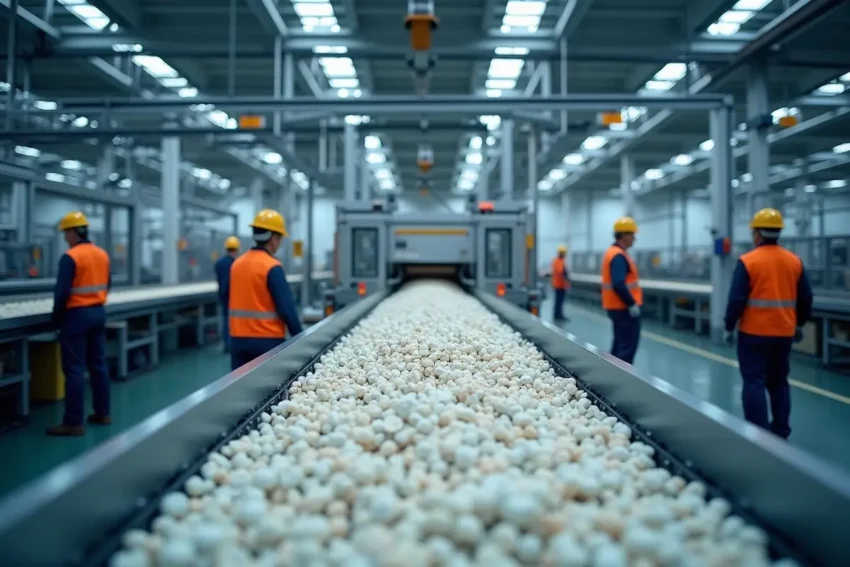
As production volume rises, inputs no longer remain mere line items. A wrong selection can lead to a deterioration in profit through waste, idle machines, and increased controls. This is why engineering, EHS, and purchasing keep close tabs on one another, and why companies like Ohana Chem Co. are often part of the picture from the very beginning.
At this juncture, you are not just buying “materials” but instead purchasing consistent outcomes and manageable risks. The greater the volume, the faster minor differences become apparent.
Contents
- 1 Start With The Real Goal: Throughput With Control
- 2 Safety Isn’t A Box To Check, It’s A Design Constraint
- 3 Cost: Look Beyond The Price Per Unit
- 4 Performance Tradeoffs: Speed, Yield, And Stability
- 5 Safety Data And Supplier Transparency Matter
- 6 Designing For Total Cost Of Ownership
- 7 Building A Decision Framework You Can Reuse
- 8 Conclusion
Start With The Real Goal: Throughput With Control
People frequently claim they want “high performance,” but the truth is they really need a steady processing rate. The best inputs behave similarly during the night shift as they do during the middle of the week, during peak hours. Look for very tight specifications, slight lot-to-lot variation, and constant lead times. A material that attains excellent yield but fluctuates in purity will cost you in rework and interruptions. In high-volume jobs, reliability is the most crucial quality, often more than flashiness.
Safety Isn’t A Box To Check, It’s A Design Constraint
In a plant situation, safety has already been taken into account when choosing an input. Flash point, toxicity, reactivity, and vapor behavior become more consequential as one transitions from small to large vessels. What appeared responsive in R&D can turn out to be a ventilation and fire-protection issue on the shop floor. Choosing a safer alternative at the outset can reduce PPE requirements, the need for special storage facilities, and permitting difficulties. The savings over time can outweigh the small premium on the invoice.
Cost: Look Beyond The Price Per Unit
Price per unit is straightforward to compare, but it may also be deceptive. Lower-cost inputs may increase disposal costs or require more energy to produce the same output. It may also cause equipment breakdowns or seal deterioration, resulting in additional maintenance and downtime. Occasionally, a higher-purity or easier-running option will shorten the cycle time or increase the yield sufficiently to cover its cost. At high volume, even minor percentage increases can be very valuable.
Performance Tradeoffs: Speed, Yield, And Stability
Input selection is typically a compromise between speed, yield, and stability. One reagent might give a high yield, but only over a narrow temperature range. Another reagent might yield lower but be stable over a wider temperature range. If your setup is 24/7, with different operators and changing conditions, a wider temperature range is very valuable. A steady process that seldom sounds alarms may win over a very delicate one for a month.
Safety Data And Supplier Transparency Matter
The best decisions are based on the best information. Search for easy-to-understand SDS papers, useful handling hints, and a realistic view of the most severe scenarios. Reliable suppliers will guide you not only through the regular operation of storage and transfers, but also through upset conditions and worst-case scenarios. They will talk about by-products, risks of decomposition, and what changes when the process is out of control. Such transparency lessens the surprises once the process is scaled up.
Designing For Total Cost Of Ownership
Total cost of ownership is where performance, safety, and cost intersect. Consider the purchase price along with the cost of waste treatment, utilities, maintenance, downtime, and compliance. A less hazardous solvent may reduce the need for a more complex ventilation or fire protection system, thereby reducing waste classification problems. A more stable intermediate product may allow larger production batches with less safety concern. The right inputs can reduce the overall operating burden over time.
Building A Decision Framework You Can Reuse
The quality of the final decision increases if the same evaluation method is applied to every case. Non-negotiables like safety limits, regulatory constraints, and minimum performance targets should be the starting point. Then, preferences like easier storage, reduced odor, or better yield can be added. Options should be scored against those criteria, and weights should be applied based on what is most important at your site. Eventually, you will be able to
Conclusion
Choosing inputs for high-volume processing involves trade-offs that don’t appear on a quote sheet, including specialty materials like CDA 12a. The most economical option is the one that lowers your total cost over time, not just the price per drum, primarily when you work with experienced partners such as Ohana Chem Co. When you treat inputs as long-term commitments, the line runs smoother and the business benefits.