How to Refresh Your Outdoor Space Without Starting Over
That feeling hits every gardener eventually. You walk outside, look at your patio or deck, and realize everything looks… tired. Same plants in the same spots doing the same thing they’ve been doing for months or years. The excitement you felt when you first set everything up has completely vanished.
Here’s the thing though – you don’t need to spend hundreds of dollars on new plants or rip everything out to make your outdoor space feel different. Most people assume a tired-looking garden needs a complete overhaul, but that’s rarely true. The problem usually isn’t what you have, it’s where you have it.
Contents
The Psychology Behind Garden Boredom
Our brains are wired to stop noticing things that don’t change. That beautiful container arrangement you created last spring? Your brain filed it under “permanent fixture” after a few weeks and stopped really seeing it. This is actually a survival mechanism – our ancestors needed to notice changes in their environment, not spend mental energy on static surroundings.
But this creates a weird situation with gardens. You can have genuinely beautiful plants in great condition, and still feel completely uninspired by your outdoor space. The plants aren’t the problem. The sameness is.
Why Rearrangement Works Better Than Replacement
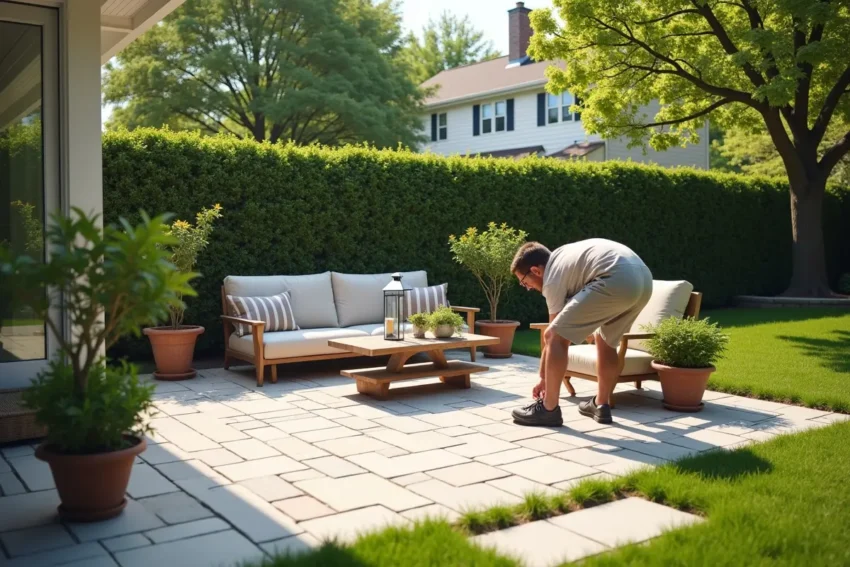
Moving things around tricks your brain into seeing your space fresh again. That fiddle leaf fig that’s been blocking the corner view? Put it by the entrance and suddenly it’s a statement piece. Those three matching planters that looked balanced but boring? Split them up across different areas and they create rhythm instead.
The best part is that rearrangement costs nothing. You’re working with what you already have, just using it differently. And if you don’t like the new setup? Move everything again next week. There’s no commitment.
This approach also lets you experiment without risk. Want to see if that seating area would work better on the other side? Try it for a few days. Wondering if grouping all your herbs together makes more sense than scattering them? Test it out. When nothing is permanent, everything becomes a low-stakes experiment.
The Weight Problem Nobody Talks About
Now, this is where it gets tricky. Most established container gardens are ridiculously heavy. A large pot filled with soil and a mature plant can easily weigh 50 to 100 pounds or more. Add in decorative planters made from concrete or ceramic, and you’re looking at weights that aren’t safe to drag across decking.
People injure themselves all the time trying to shift heavy planters. Back strains, dropped pots, damaged decks from dragging ceramic across wood – it’s a whole mess. And this weight issue is exactly why most gardens never get rearranged. Once those pots are in place and filled, they basically become permanent installations.
But there are solutions if you want to maintain flexibility. Click here to see heavy-duty options that handle serious weight while protecting your deck surface. The difference between a garden you can rearrange and one that’s stuck forever often comes down to whether you can actually move things without throwing out your back.
Smart Repositioning Strategies
When you’re ready to refresh your space, start by taking photos of your current setup. This sounds unnecessary, but you’ll want them. Sometimes you move everything around and realize the original arrangement was actually better – having photos means you can recreate it.
Look at your space with fresh eyes and ask where things naturally draw attention. Entrances, seating areas, and view lines from inside your home are prime real estate. These spots should showcase your best plants or most interesting combinations.
Think about creating zones instead of even distribution. Clustering plants together in groups of three or five (odd numbers look better) creates impact. Then leave some areas deliberately sparse. This contrast makes spaces feel more intentional and less cluttered.
Consider traffic flow too. You don’t want to navigate an obstacle course every time you step outside. Main pathways should be clear, with plants positioned to frame movement rather than block it.
Seasonal Rotation Makes Sense
Different plants look their best at different times. That hydrangea is stunning in summer but pretty unremarkable in winter. Those ornamental grasses are boring in spring but incredible in fall when they’re full and golden.
Instead of keeping everything in fixed positions year-round, rotate what’s front and center based on what’s currently performing. This keeps your space looking its best without buying seasonal replacements. The spring bloomers can hang out in the background during their off months, then rotate forward when they’re showing off again.
This approach works especially well if you have plants that need different conditions seasonally. Things that want full sun in spring might appreciate some shade in the brutal summer heat. Being able to move them around means you can optimize growing conditions without maintaining separate garden areas.
The Instant Impact Changes
Some adjustments create immediate visual difference with minimal effort. Raising plants to different heights using stands or upturned pots adds dimension. Your space stops looking flat and starts having layers.
Switching out just one or two statement pieces makes everything else look different too. That big planter by the door sets the tone for the whole space. Change it, and suddenly the entire arrangement reads differently even though you only moved one thing.
Playing with symmetry and asymmetry also creates quick impact. If everything is currently balanced and matchy, try an asymmetrical arrangement. If things are random, create some intentional symmetry. The contrast from what was there before makes it feel fresh.
Maintenance Gets Easier Too
Here’s something people don’t expect – rearranging your garden actually makes maintenance simpler. When you move plants around, you’re forced to look at them closely. You notice the ones that aren’t thriving, spot pest problems early, and realize which pots have terrible drainage.
Plus, accessing plants for watering and pruning gets easier when you’re thinking about placement strategically. That gorgeous planter shoved in the back corner? It’s probably not getting the attention it needs because reaching it is annoying. Move it somewhere accessible and you’ll actually take care of it properly.
Making It Sustainable
The key to keeping your outdoor space feeling fresh long-term is accepting that gardens shouldn’t be static. Treat rearrangement as regular maintenance, not a special project. Seasonal changes are natural opportunities – spring cleanup, summer optimization, fall preparation, winter protection.
Even small adjustments prevent that stale feeling from setting in. Moving two or three pots every few weeks keeps your brain engaged with the space. You don’t need dramatic overhauls constantly, just enough change to maintain interest.
The garden you have right now probably has way more potential than you’re seeing. It just needs to be looked at differently, arranged differently, experienced differently. Sometimes the best garden improvement isn’t adding more – it’s just moving what you already have to where it works better.