How To Protect Your Septic System From Household Chemicals
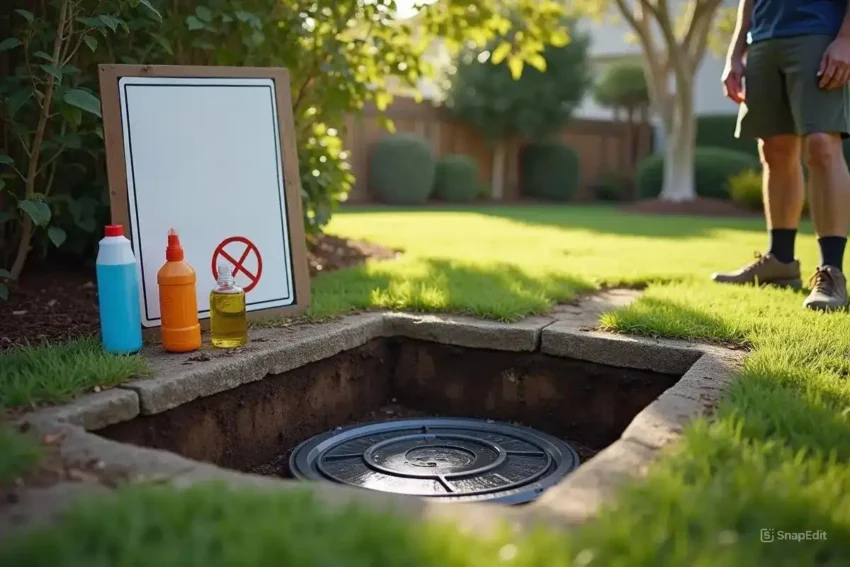
Household chemicals are marketed as a quick fix for clogged drains, but there’s one thing the marketers do not tell you: these chemicals can harm your plumbing and septic system. Apart from accelerating pipe corrosion, household chemicals can interrupt the bacterial activity in your septic tank and cause many problems. In this guide, Septic Blue explains how to protect your septic system from household chemicals.
Contents
Why Household Chemicals Can Harm Your Septic System
A septic system relies on naturally occurring bacteria to break down waste. Many common cleaning agents, disinfectants, and drain treatments contain ingredients that kill bacteria. When the bacterial balance inside your tank drops, solids break down more slowly, increasing the chance of clogs, backups, and even drainfield failure.
Household chemicals can also corrode pipes, disturb soil absorption, and contaminate groundwater. Preventing these issues starts with being mindful of what goes down your drains. It’s also advisable to schedule routine septic pumping in Kennesaw to keep everything flowing smoothly.
Avoid These Harmful Chemicals
- Bleach and Chlorine-Based Cleaners
While small, diluted amounts won’t destroy your tank, frequent use of chlorine bleach can wipe out essential bacteria. Avoid pouring large quantities of bleach down drains or using chlorine tablets in toilets connected to a septic system.
- Antibacterial Soaps and Disinfectants
Products labeled antibacterial, antimicrobial, or sanitizing often contain triclosan, quaternary ammonium compounds, and other harsh ingredients. These chemicals directly inhibit the bacterial activity your septic system needs to function properly.
- Chemical Drain Cleaners
Fast-acting chemical drain cleaners may clear clogs temporarily, but they can severely damage pipes and kill beneficial bacteria. They are also one of the most common sources of septic tank corrosion.
- Solvents, Oils, and Paints
Never dispose of paint thinners, gasoline, motor oil, latex paint, or adhesives in your sinks or toilets. These substances do not break down, and they can poison the microbes in your tank.
- Excessive Detergents and Fabric Softeners
Laundry products that contain phosphates or synthetic fragrances may disrupt the tank’s biological processes. While they won’t destroy the system on their own, using too much can overload your tank and send harmful compounds into the drainfield.
Safer Alternatives for a Septic-Friendly Home
- Choose Biodegradable, Non-Toxic Cleaners
Look for cleaners labeled septic-safe, plant-based, or biodegradable. Vinegar, baking soda, and castile soap are excellent alternatives for daily cleaning.
- Use Enzyme-Based Drain Treatments
Rather than chemical drain openers, use enzyme or bacteria-based products that help maintain the natural ecosystem inside your tank.
- Moderate the Use of Cleaning Products
Even septic-safe cleaners should be used sparingly. Overuse of any detergent or solution can send excessive chemicals into the tank.
Healthy Habits That Protect Your System Long-Term
- Space out laundry loads to avoid overwhelming the system
- Never flush wipes, cotton swabs, paper towels, or hygiene products
- Schedule professional septic inspections every 1–3 years
- Pump your tank as recommended based on household size
Contact Septic Blue for Septic Pumping in Kennesaw and All of Your Septic System Needs
Is it time to pump out your septic tank? Have you noticed signs of a blocked septic system? If so, contact the specialists at Septic Blue for septic repair service. Some of the signs you may notice when your septic system is in disrepair include multiple slow-draining fixtures, foul odors, and sewage backup.
As a local septic company with years of experience in the industry, we have the knowledge and tools to handle all of your septic issues. Whether you’re in need of septic tank cleaning or it’s time to upgrade to a modern septic system, we’ve got you covered. Contact us today to schedule an appointment for septic service.