Managing Pet Allergies at Home—A Comprehensive Guide
Sarah adores her golden retriever Max, but lately she’s been battling persistent sneezing fits, watery eyes, and stuffy sinuses every time she walks through her front door. Like millions of pet owners around the world, she’s caught in an emotionally charged predicament: finding relief from uncomfortable allergy symptoms without sacrificing the deep bond she shares with her four-legged family member.
Here’s the encouraging news—you don’t have to choose between your health and your pet. With the right combination of environmental adjustments, smart lifestyle changes, and targeted medical support, countless pet owners have found ways to breathe easier while keeping their beloved companions close.
Contents
Understanding Pet Allergies: The Basics
Here’s something that might surprise you: pet allergies have nothing to do with your cat’s luxurious coat or your dog’s fluffy fur. The real culprits are proteins lurking in pet dander (those tiny flakes of dead skin), saliva, and urine.
These microscopic troublemakers float through the air like invisible dust, ready to send your immune system into overdrive if you’re one of the unlucky sensitive souls. What makes these allergens particularly stubborn is their clingy nature—they latch onto your furniture, burrow deep into carpet fibers, and hitchhike on your clothing long after your pet has wandered off to another room.
Perhaps most frustrating of all, allergies can blindside you at any stage of life. You might have shared your home with pets for decades without a single sniffle, only to suddenly develop reactions that leave you wondering what changed. The intensity of symptoms runs the full spectrum too, from mild annoyances that feel like seasonal hay fever to more serious breathing difficulties that can significantly impact daily life.
Identifying Pet Allergy Symptoms
Common pet allergy symptoms read like a laundry list of misery: stuffy nose, relentless sneezing, eyes that itch and water constantly, persistent coughing, and skin reactions ranging from raised hives to angry patches of eczema.
For some unlucky individuals, the symptoms escalate to wheezing or genuine difficulty catching their breath. These reactions might hit you immediately after snuggling with your pet, or they could build up slowly, like a storm gathering strength over hours or days of exposure.
If you’re starting to connect the dots between your symptoms and your furry housemate, don’t play guessing games. An allergist can run proper tests to pinpoint exactly what’s triggering your misery. This professional insight proves invaluable because it helps you distinguish between pet allergies and other sneaky household culprits like dust mites or seasonal pollen—ensuring you’re fighting the right battle with the right weapons.
Environmental Controls and Home Cleaning
Allergen reduction serves as your first line of defense in this ongoing battle. Think of it as creating a less hospitable environment for those pesky proteins to set up camp throughout your home. Regular, methodical cleaning becomes your secret weapon, dramatically cutting down on both airborne particles and the buildup of dander that accumulates on every surface.
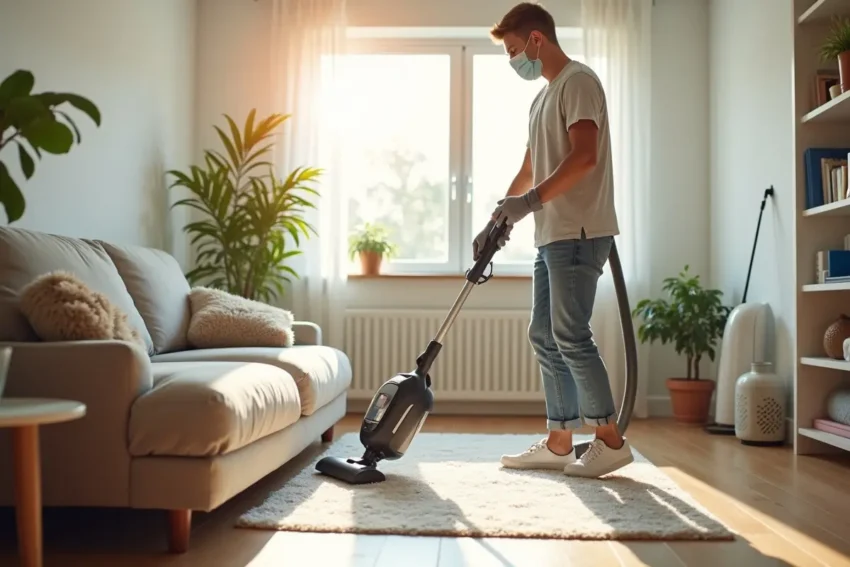
A quality pet vacuum cleaner equipped with HEPA filtration can work wonders, capturing and containing the microscopic allergens that ordinary vacuums might just shuffle around and spit back into the air.
Make it a habit to vacuum carpeted areas at least twice each week, focusing extra attention on your pet’s favorite lounging spots. HEPA air purifiers stationed in your main living spaces and bedroom work around the clock to scrub allergens from the air you breathe.
Weekly washing of both pet bedding and your own linens in scalding hot water (130°F or higher) helps break down and wash away accumulated proteins. If you’re ready for a bigger change, consider swapping out wall-to-wall carpeting for hardwood, tile, or other smooth surfaces that won’t trap allergens and are much simpler to keep genuinely clean.
Creating Pet-Free Zones
Carving out allergen-reduced sanctuaries, especially in your bedroom, can provide the relief your body desperately needs to recover each night. Since most of us spend a solid 6-8 hours sleeping, keeping your bedroom as a pet-free haven can significantly reduce your total daily allergen exposure. Arm these spaces with high-performance air purifiers, invest in allergen-proof covers for your mattress and pillows, and keep doors firmly closed to maintain these precious refuge areas.
While completely banishing pets to just one room tends to be less effective than you might hope, thoughtful zoning throughout your home helps strike a workable balance between enjoying your pet’s company and managing your symptoms.
Personal Hygiene and Behavioral Modifications
Sometimes the smallest changes yield the biggest improvements. Washing your hands thoroughly after any pet contact might seem obvious, but it’s remarkably effective at preventing you from inadvertently rubbing allergens into your eyes or nose. Changing clothes after extended cuddling sessions or play time adds another layer of protection.
Here’s a game-changer: bathing your pet weekly can slash dander production by an impressive 84%. The catch? This benefit fades relatively quickly, so consistency is key. Try to resist the urge to bury your face in your pet’s fur, no matter how irresistible they might be.
When possible, delegate grooming duties to non-allergic family members, and if you must handle brushing yourself, do it outdoors or in a well-ventilated area to keep those allergens from building up indoors.
Medical Treatment Options
Fortunately, modern medicine offers several effective medical interventions to help you reclaim comfort in your own home. Many people find solid relief with over-the-counter antihistamines and nasal corticosteroid sprays, which can take the edge off daily symptoms.
When symptoms persist despite your best home management efforts, prescription medications or immunotherapy—commonly known as allergy shots—can provide more robust, long-lasting solutions.
Immunotherapy works by gradually retraining your immune system to tolerate pet allergens, typically showing meaningful improvement within 4-6 months. With proper maintenance treatments, these benefits can last for years, potentially offering the closest thing to a permanent solution. An allergist can evaluate your specific situation and symptom severity to craft the most effective treatment approach for your unique needs.
When Professional Help Is Needed
If your home management efforts aren’t delivering the relief you need, or if symptoms continue worsening despite your dedicated efforts, it’s time to call in the experts. Allergists bring sophisticated testing capabilities to the table, can rule out other potential conditions masquerading as pet allergies, and develop comprehensive treatment plans that blend environmental strategies with targeted medical interventions.
Successfully managing pet allergies demands both patience and persistence, but the payoff is worth it. With the right mix of strategies tailored to your situation, many pet owners discover they can significantly reduce their symptoms while preserving the joy their animal companions bring to their lives. Remember, allergen management works best as an ongoing, multi-faceted approach rather than a search for that one magic bullet solution.