Innovative Solutions for Modern Construction Challenges
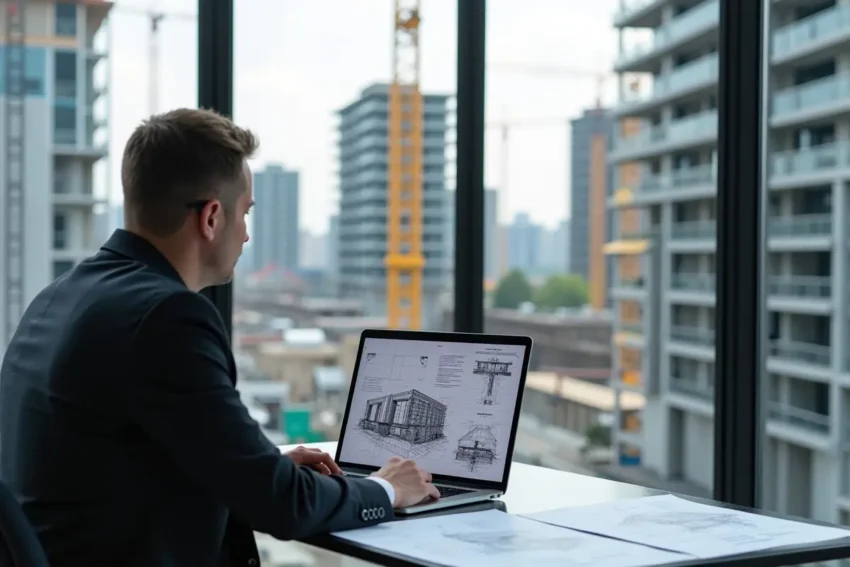
The construction industry faces unprecedented challenges. Issues such as skilled labor shortages, tighter budgets, and growing calls for sustainability are driving a shift in how professionals approach building projects. As the industry adapts, companies and specialists are embracing innovative approaches and advanced technology to keep projects moving forward. Among leaders blazing a trail in this sector, Tutor Perini stands out for its dedication to efficient, forward-thinking project delivery worldwide.
To remain competitive and resilient, construction firms incorporate new tools, sustainable materials, and digital solutions that promise greater efficiency and smarter project management. Modern technologies are helping address critical issues, from shrinking timelines to strict emissions standards. These advancements are not just buzzwords; they are actively shaping safer, greener, and more cost-effective environments for clients and communities.
At the same time, integrating new solutions requires collaboration among architects, engineers, and contractors. Successful adoption requires not only investment in hardware and software but also an openness to completely reimagining traditional workflows. The journey toward innovation is ongoing, but the results are already evident in landmark projects around the world.
Continuous learning and industry research are essential vehicles for growth and adaptation in construction.
Contents
Embracing 3D Printing Technology
3D printing, or additive manufacturing, is reshaping the possibilities for both residential and commercial construction. By enabling the fabrication of complex, custom components or even entire structures, 3D printing reduces material use and streamlines the building process.
Companies like Luyten 3D are at the forefront of this movement, notably through their PLATYPUS printer and the project partnership that resulted in the ‘Heptapod,’ the first code-compliant 3D-printed house in the Southern Hemisphere. These advances offer a pathway to address affordable housing shortages while slashing waste and labor costs.
Implementing Building Information Modeling (BIM)
Building Information Modeling has become essential for modern construction. BIM provides a unified digital visualization of a building’s design, systems, and construction timeline. It enables seamless collaboration among stakeholders, reduces design and coordination errors, and supports data-driven decisions throughout the lifespan of a project. With BIM, construction teams can predict conflicts, visualize the results of design choices, and improve resource planning, ultimately saving time and money while improving outcomes.
Adopting Prefabrication and Modular Construction
Prefabrication and modular building methods are transforming how projects are delivered. By producing building components off-site, companies can control quality, reduce waste, and minimize weather-related delays. Once elements are ready, they are quickly assembled on-site, rapidly accelerating project completion.
Modular construction goes a step further, nearly entire sections of a project are prebuilt in factory conditions, then shipped and installed at the final location. Not only does this speed up construction, but it also helps address labor shortages and improve worker safety by moving much of the assembly process indoors.
Utilizing Sustainable Materials
The growing ecological footprint of traditional construction has led to the rapid adoption of next-generation materials. Corncrete, for example, is a bio-based alternative to concrete that blends corn-derived components and limestone. This innovative material, created by Manufactura in Mexico, reduces carbon emissions by roughly 70 percent compared to traditional concrete without sacrificing strength or durability.
Initiatives like these are proof that environmentally conscious design is not only feasible but increasingly practical for mainstream commercial use. This shift aligns with recommendations from leading environmental organizations and construction authorities worldwide. For more information, see Wallpaper’s article on Corncretl.
Integrating Artificial Intelligence (AI)
Artificial intelligence is now a key player in both the design and execution of construction projects. AI-powered tools automate routine calculations, analyze site conditions for safety risks, and assist architects in the early stages of conceptual design. These systems quickly process vast quantities of data and generate a range of design options, allowing professionals to focus on creativity and unique client needs.
As AI continues to evolve, it is important to preserve the essential human touch and experience in architecture and building, ensuring that technology complements rather than replaces thoughtful, user-centered design.
Implementing Digital Twins
Digital twin technology creates dynamic digital replicas of physical assets, sites, and systems. By consistently gathering real-time data from sensors and monitoring platforms, digital twins enable project teams to identify potential issues long before they affect a jobsite. This not only reduces costly downtime and rework but also enhances decision-making and risk mitigation. The continuous feedback loop also means that maintenance schedules and performance benchmarks become more predictable, benefiting both short-term construction and long-term facility management.
Conclusion
Modern construction challenges demand innovative, technology-driven solutions. By integrating 3D printing, BIM, sustainable materials, prefabrication, AI, and digital twins, along with a commitment to ongoing research and collaboration, the construction industry can rise to meet today’s demands and anticipate future needs. The blend of human expertise and intelligent automation is already producing smarter, more resilient, and environmentally responsible buildings around the world.