Innovations in Transportation Infrastructure: What’s Next?
Across the globe, transportation infrastructure is entering a dynamic period marked by rapid advancements and an imperative to enhance environmental sustainability. Cities and regions are addressing the challenges of population growth, congestion, and climate change by integrating cutting-edge technology and long-term planning. This movement is not only about better roads or faster trains, but about delivering more resilient, efficient, and accessible networks for all users. Engaging a transportation engineer is increasingly important as these innovations demand specialized skills to ensure safety and effectiveness.
What might the future hold as we enter this new era? With smart highways, high-speed rail, and next-generation mobility solutions, transportation planners and engineers are focused on harnessing data, automation, and clean energy to push boundaries. These changes are expected to make travel smoother, safer, and more sustainable for everyone involved.
This transformation is not happening overnight. It is the result of collaborative efforts among engineers, city leaders, policymakers, and technologists. Together, they shape initiatives that will define infrastructure for decades. From pilot projects in urban corridors to sweeping national transportation plans, each step brings us closer to a more connected and sustainable future.
Contents
Smart Highways: The Road Ahead
Today’s highways are becoming ‘smarter’ as engineers embed sensors, cameras, and communication equipment directly into the infrastructure. These technologies allow vehicles and roadways to interact in real time, reducing accidents and optimizing traffic flow. For example, a three-mile corridor of Interstate 94 in Michigan serves as a pioneering testbed, featuring a network of sensor pods that collect traffic and environmental data. With advancements such as these, officials are better equipped to manage congestion and reduce emissions. Modern technology is also laying the groundwork for future vehicle-to-infrastructure communication, paving the way for safer and more connected roads.
High-Speed Rail: Accelerating Connectivity
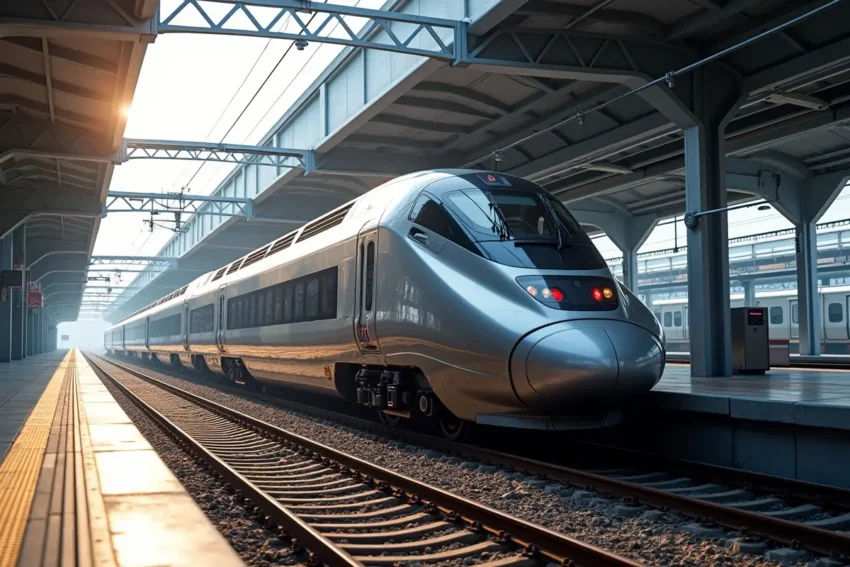
Governments around the world are investing heavily in high-speed rail (HSR) as part of a commitment to clean mobility and regional connectivity. The California High-Speed Rail project exemplifies these efforts, aiming to link the state’s largest cities with trains capable of traveling over 200 miles per hour. By reducing travel times and offering a lower-carbon alternative to short-haul flights and highway driving, HSR networks present a blueprint for sustainable metropolitan development. According to BBC News, similar projects in Europe and Asia have already contributed to economic growth and reduced greenhouse gas emissions.
Hyperloop: The Next Frontier
The Hyperloop concept is no longer confined to science fiction. Companies across the globe are actively testing systems in which passenger pods travel at nearly airline speeds through low-pressure tubes. Early feasibility studies have been promising, suggesting that Hyperloop systems could drastically reduce travel times between major cities, lessen congestion, and support greener transportation goals. The environmental benefits could be significant, with some experts predicting annual reductions of millions of tons of carbon. Organizations such as Hyperloop Transportation Technologies are driving this innovation, with new developments regularly making headlines.
Electric Road Systems: Charging on the Go
Widespread adoption of electric vehicles hinges on the availability of reliable charging solutions. Electric Road Systems (ERS) represent an innovative approach: equipping highways with dynamic charging capabilities by embedding coils into the pavement. This enables electric vehicles to receive power while in motion, easing range anxiety and reducing dependence on fixed charging stations. Countries such as Sweden and Israel are piloting ERS projects to integrate these systems into urban and long-distance travel networks. If adopted at scale, ERS could make clean transportation more practical and attractive to a broader audience.
Infrastructure Investment: Building the Future
None of these innovations would be possible without significant investment from governments and private entities. The United States’ Infrastructure Investment and Jobs Act is a landmark policy that channels billions into projects that support reduced emissions and smart transportation technology. These investments prioritize climate resilience, support economic growth, and inspire similar strategies in other nations. The foundation being laid today sets the stage for robust transportation networks that can respond to changing circumstances while delivering lasting value to communities.
Final Thoughts
The future of transportation infrastructure is being built today, piece by piece, through bold innovation and an unwavering commitment to sustainability. As smart highways expand, high-speed rail lines connect cities, Hyperloop systems undergo testing, and electric roads move from pilot to mainstream, society stands to benefit from greater efficiency, safety, and environmental stewardship. Collaboration, investment, and ingenuity are transforming how we move, ensuring transportation networks keep pace with the demands of modern life while protecting the planet for generations to come.