How to Plan Your Route Into Emergency Medical Services
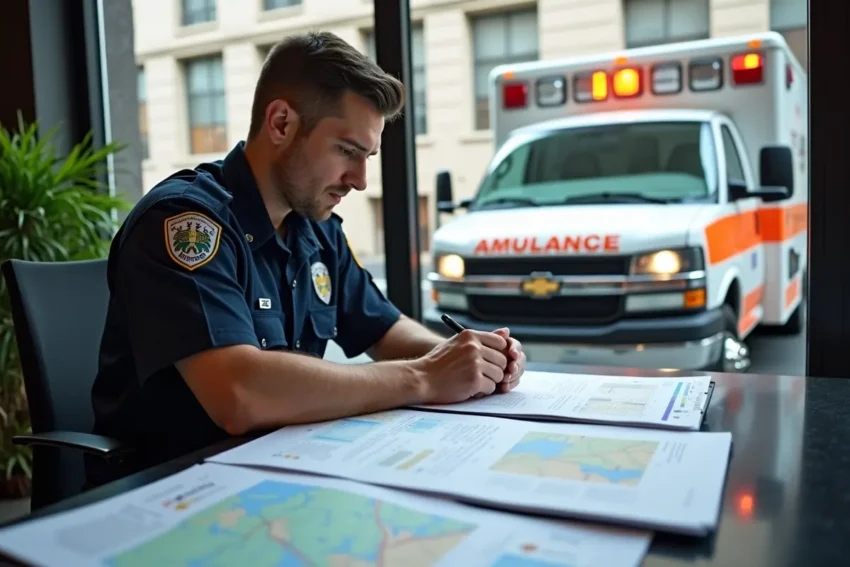
People don’t move into a career in emergency medicine by accident. It’s often a deliberate career path or one that’s been leading up to this point. And for the most part, people who build a real career in EMS (Emergency Medical Services) follow a similar pathway, whether they realize it or not: they get early exposure, they take an entry-level role seriously, they choose their training deliberately, and they understand that reputation starts forming long before the first paramedic job.
If you’re trying to work out how to get from interest to employment in EMS, the steps below reflect how it actually happens in practice.
Contents
Start with Real Exposure
A lot of people enter EMS thinking it’s constant adrenaline. It isn’t. Most shifts are long stretches of routine, interrupted by moments where everything changes fast. Ride-alongs, tech shifts, patient transport, and volunteer response work tend to reset expectations quickly. You see how much of the job is communication, patience, and decision-making under fatigue.
People who skip this stage often struggle later. They reach formal training without knowing whether they can tolerate the pace, the emotional weight, or the unpredictability. The ones who start know what they’re walking into.
Entry-Level Roles
But not just any entry-level roles, ones that actually lead somewhere. And while they don’t feel impressive on paper, these are where habits form. ER techs learn how to function in a clinical environment without needing constant direction. Transport staff learned time management, communication, and how quickly things can fall apart when you cut corners. Volunteer responders either become reliable or they get sidelined.
Inside the system, people notice who takes these roles seriously, and it’s an important step for you to build your reputation.
EMT Certification is the First Gate
What this means is it’s not the end of your journey, rather a gateway to the next stage. And those who make it through training and come out the other side are the ones who were able to handle pressure, structure, and accountability.
Most agencies don’t just look at who passed, they look at how they passed. Were they dependable? Did the instructors trust them? Did they handle feedback without defensiveness? This matters just as much as the actual pass.
Choosing Paramedic Training with Intent
Paramedic school is where the pattern changes. You’re no longer following algorithms; you’re making decisions. You’re accountable for outcomes, and this shift often catches people off guard.
The stronger candidates usually don’t pick programs based on speed or convenience. They ask where graduates end up working. They ask how clinical rotations are structured and ask about field internship expectations. They look for training programs for paramedics that are connected to real agencies rather than isolated classrooms.
Field Time is Where People Decide
Not just you deciding who you are and if this is what you want, but others, too. Perceptions will form quickly. Crews will notice who listens, who adapts, and who stays calm, and the impressions you make will stick for your career.
It’s common for new providers to underestimate how much their reputation travels. Supervisors move between agencies, preceptors talk, and word spreads fast.
People who take feedback seriously will excel here, as will those who show a willingness to learn, show consistency, and be a team player, not a hotshot.