How Perth’s Climate Affects Garage Doors (Performance & Lifespan Guide)
How Perth’s climate affects garage door performance and long-term care is something many homeowners don’t think about until problems start to appear.
Perth’s intense summer heat, high UV exposure, coastal air, and winter rainfall place constant stress on garage doors, often in ways that aren’t immediately visible.
Over time, these conditions can cause metal components to corrode, materials to expand or warp, and moving parts to wear faster than expected.
What makes this challenging is that most climate-related damage happens slowly. Small issues like minor rust, misalignment, or fading finishes are easy to ignore, but they can quietly reduce performance and shorten a garage door’s lifespan, leading to costly repairs or premature replacement.
This article breaks down exactly how Perth’s unique climate impacts garage doors and explains what homeowners should understand early to protect performance, reliability, and long-term value.
Contents
- 1 Why Perth’s Climate Is Unique Compared to Other Australian Cities
- 2 How Heat and UV Exposure Impact Garage Door Materials
- 3 The Effects of Coastal Air, Salt, and Humidity on Garage Doors
- 4 Seasonal Weather Changes and Their Impact on Garage Door Performance
- 5 How Perth’s Climate Affects Garage Door Lifespan Over Time
- 6 Common Garage Door Problems Caused by Perth Weather (And Why They Happen)
- 7 Preventive Garage Door Care for Perth Homes (Long-Term Focus)
- 8 Are Insulated Garage Doors Better for Perth’s Climate, and When Should Issues Be Ignored
- 9 FAQs
- 9.1 Does Perth’s heat damage garage doors over time?
- 9.2 Are garage doors in coastal Perth areas more likely to rust?
- 9.3 How often should garage doors be checked in Perth’s climate?
- 9.4 What garage door materials perform best in Perth weather?
- 9.5 Can climate-related garage door issues affect home safety?
- 10 Key Takeaways for Perth Homeowners
Why Perth’s Climate Is Unique Compared to Other Australian Cities
Perth’s climate places very different demands on garage doors compared to many other Australian cities. Classified as a Mediterranean climate, Perth experiences long, hot, dry summers followed by cooler, wetter winters. This seasonal contrast creates ongoing stress on garage door materials, components, and finishes throughout the year.
One key difference is Perth’s consistently high UV exposure, which is generally stronger and more prolonged than in many eastern states.
According to the Australian Bureau of Meteorology, Perth regularly records some of the highest sunshine hours and summer temperatures in the country, increasing long-term material fatigue.
Coastal exposure is another defining factor. Suburbs such as Fremantle, Scarborough, Rockingham, Hillarys, and Cottesloe are frequently exposed to salt-laden air, which increases the risk of corrosion on metal tracks, springs, and fixings, even when a garage door appears well-maintained.
In addition, daily and seasonal temperature swings cause materials to expand and contract.
Over time, this repeated movement can affect alignment, increase friction, and place added strain on moving parts, impacting long-term performance and reliability.
How Heat and UV Exposure Impact Garage Door Materials
Perth’s intense heat and high UV exposure directly affect how garage door materials perform over time.
Prolonged sun exposure causes materials to expand, protective coatings to break down, and mechanical components to work under increased stress.
The impact varies significantly depending on the type of garage door material used, making material choice and care especially important in Perth conditions.
Metal Garage Doors (Steel & Aluminium)
Metal garage doors are widely used in Perth, but constant heat exposure causes thermal expansion, which can gradually affect door alignment and smooth operation. As metal expands and contracts, tracks and panels may shift slightly, increasing friction during opening and closing.
UV radiation also accelerates paint and protective coating breakdown, leaving metal surfaces more vulnerable to corrosion, especially in coastal areas. Over time, this added resistance places greater strain on springs, rollers, and tracks, potentially reducing their lifespan.
Timber Garage Doors
Timber garage doors are particularly sensitive to Perth’s climate. Extended heat exposure can dry out timber, leading to warping, cracking, and surface fading. During cooler or wetter months, the material may absorb moisture, creating an imbalance that weakens structural integrity.
After long, hot summers, this cycle of drying and rehydration can cause timber doors to lose their original shape, affecting sealing, alignment, and long-term reliability.
Composite & Insulated Garage Doors
Composite and insulated garage doors are generally more stable in Perth’s climate. These materials offer better thermal resistance, reducing the effects of expansion and contraction caused by heat fluctuations. Insulated cores also help shield internal components from extreme temperatures.
As a result, composite and insulated doors often maintain alignment longer and experience less climate-related wear, contributing to a longer usable lifespan under Perth’s demanding conditions.
The Effects of Coastal Air, Salt, and Humidity on Garage Doors
For many Perth homeowners, especially those living near the coast, salt exposure is one of the most damaging yet least understood threats to garage door performance.
Suburbs such as Fremantle, Scarborough, Rockingham, Hillarys, and Cottesloe are regularly exposed to salt-laden air carried inland by coastal winds. Even homes located several kilometres from the shoreline can be affected.
Salt particles settle on garage door components and absorb moisture from the air, creating ideal conditions for accelerated corrosion. Hinges, rollers, springs, cables, and fasteners are particularly vulnerable, as these parts are often made from steel and experience constant movement.
In many cases, rust can begin forming within 5–10 kilometres of the coast, even when a garage door appears visually clean.
What makes this type of damage difficult to detect is that corrosion often starts in hidden areas, such as inside tracks, behind brackets, or within spring assemblies. From a materials perspective, salt speeds up oxidation by acting as an electrolyte, allowing metal to corrode faster when moisture is present.
Over time, this weakens structural components, increases friction, and reduces the reliability and lifespan of the entire garage door system.
Seasonal Weather Changes and Their Impact on Garage Door Performance
Perth’s seasonal weather shifts place different types of stress on garage doors throughout the year. While problems may appear minor at first, repeated exposure to extreme summer heat and winter moisture can gradually affect performance, safety, and durability if left unaddressed.
Summer Risks
During Perth’s long, hot summers, garage doors are exposed to sustained high temperatures that affect both materials and mechanical components.
- Track expansion: Heat causes metal tracks and panels to expand, which can lead to tight movement, scraping noises, or alignment issues.
- Motor overheating: Prolonged heat can place extra strain on garage door motors, reducing efficiency and increasing the risk of shutdowns.
- Sensor misalignment: Expansion and vibration may cause safety sensors to shift slightly, resulting in inconsistent operation or failure to close properly.
Winter Risks
Cooler months introduce moisture-related challenges that are often less visible but equally damaging.
- Moisture ingress: Rain and condensation can enter tracks, hinges, and internal components.
- Rust formation: Damp conditions accelerate corrosion, particularly on springs, cables, and fasteners.
- Swelling of seals and timber components: Rubber seals may lose flexibility, while timber doors can absorb moisture and swell, affecting door balance and sealing.
Seasonal Garage Door Checklist
- Check tracks for tight movement after extreme heat
- Listen for unusual motor strain or noise
- Inspect metal components for early rust spots
- Ensure seals remain flexible and intact
- Monitor door alignment after seasonal temperature changes
How Perth’s Climate Affects Garage Door Lifespan Over Time
Climate plays a significant role in determining how long a garage door performs reliably, and Perth’s conditions are considered more demanding than those in milder Australian regions.
In areas with stable temperatures and low coastal exposure, a well-maintained garage door may last 20–25 years.
In contrast, garage doors exposed to high heat, strong UV levels, salt air, and seasonal moisture, such as those in Perth, often experience a reduced effective lifespan.
Without regular climate-aware maintenance, Perth homeowners may see garage door components deteriorate 5–8 years earlier than expected. Heat accelerates wear on springs and motors, UV exposure breaks down protective coatings, and salt-driven corrosion weakens metal parts long before visible failure occurs.
What makes this challenging is that many early warning signs are subtle and easy to overlook. Homeowners often miss indicators such as:
- Slight increases in operating noise
- Slower opening or closing speeds
- Minor rust forming on internal components
- Small alignment changes that affect smooth movement
Over time, these small issues compound, placing additional strain on the entire system and shortening the garage door’s usable lifespan. Understanding how Perth’s climate contributes to this gradual decline allows homeowners to identify risks earlier and make more informed long-term decisions.
Common Garage Door Problems Caused by Perth Weather (And Why They Happen)
Perth’s climate doesn’t usually cause sudden garage door failures. Instead, it leads to gradual performance issues that develop over time as materials and components respond to heat, UV exposure, coastal air, and seasonal moisture.
Understanding why these problems occur helps homeowners identify climate-related wear before it escalates.
1. Noisy Operation
Unusual grinding, squeaking, or rattling noises are often linked to temperature-related expansion and corrosion. Heat can cause metal parts to expand slightly, increasing friction along tracks and rollers.
In coastal areas, salt exposure may begin to corrode moving components, making smooth operation more difficult and noisy.
2. Slow Opening or Closing
Garage doors that move more slowly than usual may be reacting to increased mechanical resistance. Heat-stressed motors, expanding tracks, or moisture-affected components can all reduce efficiency.
Over time, even small increases in resistance place additional strain on the system, affecting overall performance.
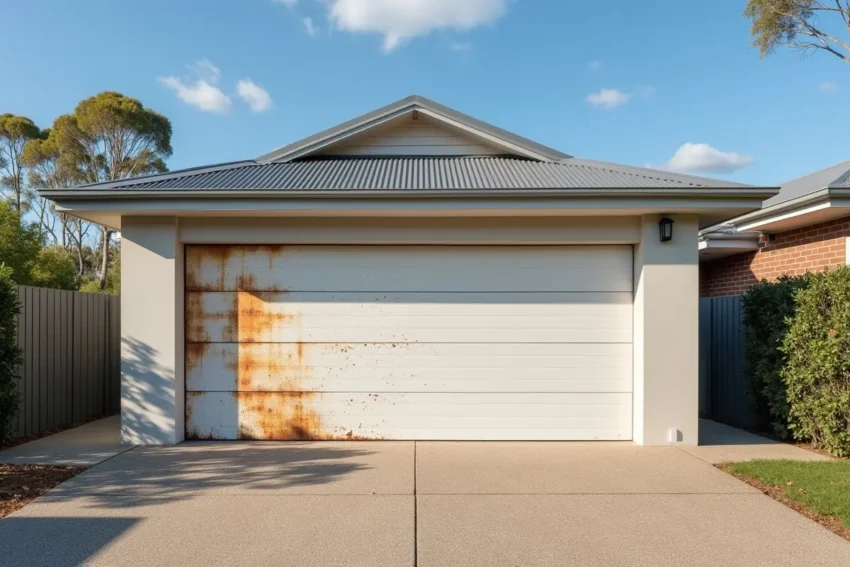
3. Rust Stains or Paint Bubbling
Visible rust marks, flaking paint, or bubbling finishes often indicate underlying corrosion. In Perth’s coastal and humid conditions, salt particles and moisture can penetrate protective coatings, allowing oxidation to develop beneath the surface, sometimes long before serious structural damage becomes obvious.
4. Gaps Forming Around the Door
Gaps along the edges or base of a garage door are commonly caused by material movement.
Repeated expansion and contraction from temperature changes can affect alignment, while moisture may cause timber or seals to swell or deform.
These gaps can reduce weather protection and further expose internal components to the elements.
Preventive Garage Door Care for Perth Homes (Long-Term Focus)
Because Perth’s climate places ongoing stress on garage doors, preventive care is especially important.
For homeowners researching garage doors perth, understanding how local conditions affect long-term performance is critical, as noted by Perth-based specialists like Slide and Glide Garage Doors.
Climate-Smart Maintenance Habits
Preventive care in Perth starts with adapting maintenance routines to local environmental conditions.
- Cleaning frequency: Dust, salt, and airborne debris build up more quickly in Perth, particularly in coastal areas. Regularly removing this buildup from tracks, panels, and exposed hardware helps reduce abrasion and corrosion.
- Lubrication timing: Seasonal lubrication is especially important. Applying appropriate lubricants before peak summer heat and again ahead of winter can help moving parts cope with temperature changes and moisture exposure.
- Visual inspections: Homeowners can safely perform simple visual checks, such as looking for early rust spots, loose fasteners, worn seals, or changes in door alignment. Identifying these signs early helps prevent compounding damage.
Why Preventive Care Matters More in Perth Than Other Cities
According to the Western Australian Government, WA experiences increasing temperature extremes and coastal climate exposure, which can accelerate material wear across buildings and infrastructure.
In Perth, climate-related wear develops faster and more quietly, making preventive care essential for long-term reliability.
Are Insulated Garage Doors Better for Perth’s Climate, and When Should Issues Be Ignored
Insulated garage doors are often discussed in relation to Perth’s climate, but understanding their role requires a balanced perspective. Rather than being a universal solution, insulation primarily helps moderate temperature extremes, which are common during Perth’s long, hot summers and cooler winter months.
From a performance standpoint, insulation can reduce the amount of heat transferred through the door, helping to stabilise temperatures inside the garage.
This can improve energy efficiency, particularly in homes where the garage shares walls or ceilings with living areas. In these cases, insulation may also contribute to greater indoor comfort by limiting heat buildup that can radiate into the home.
Insulated doors can also experience less material movement, as temperature fluctuations are moderated within the door structure. This may reduce expansion-related stress on panels and hardware over time, particularly in high-exposure locations.
At the same time, certain climate-related garage door issues should not be ignored, regardless of door type. Spring failures can occur when components weaken under repeated heat and corrosion stress, posing safety risks if they break unexpectedly.
Warped or heat-affected panels may place uneven structural pressure on tracks and frames, while ongoing motor strain from increased resistance can lead to electrical or mechanical failure.
Recognising these risks early is important for maintaining both safety and long-term reliability in Perth’s demanding climate conditions.
FAQs
Does Perth’s heat damage garage doors over time?
Yes. Prolonged heat and high UV exposure can cause materials to expand, protective coatings to break down, and mechanical components to experience increased stress. Over time, this can affect alignment, surface finishes, and the smooth operation of a garage door.
Are garage doors in coastal Perth areas more likely to rust?
Garage doors located in coastal suburbs such as Fremantle, Scarborough, Rockingham, and surrounding areas are more exposed to salt-laden air. Salt particles accelerate corrosion, particularly on metal components like springs, tracks, hinges, and fasteners, even when the door appears clean.
How often should garage doors be checked in Perth’s climate?
In Perth’s conditions, visual inspections throughout the year are beneficial, especially after extreme heat or heavy rainfall. Seasonal checks help identify early signs of rust, misalignment, seal deterioration, or unusual movement caused by temperature changes.
What garage door materials perform best in Perth weather?
Materials with greater resistance to heat, UV exposure, and moisture—such as composite or insulated doors- tend to remain more stable over time. However, performance also depends on location, exposure level, and ongoing care rather than material alone.
Yes. Climate-driven wear can weaken springs, strain motors, and affect structural alignment. If left unaddressed, these issues may increase the risk of mechanical failure or unsafe operation, particularly as components age.
Key Takeaways for Perth Homeowners
- Perth’s Mediterranean climate creates greater long-term stress on garage doors than milder Australian regions
- Heat, UV exposure, coastal air, and seasonal moisture all contribute to gradual performance decline
- Climate-related damage often develops slowly and out of sight, especially inside tracks and mechanical components
- Different materials respond differently to Perth’s conditions, affecting lifespan and reliability
- Preventive, climate-aware care helps homeowners identify risks early and protect long-term performance
- Understanding how local weather impacts garage doors supports safer, more informed decisions over time