Emerging Home Decor Trends – The Rise of Artistic Glass Bowls & Vases
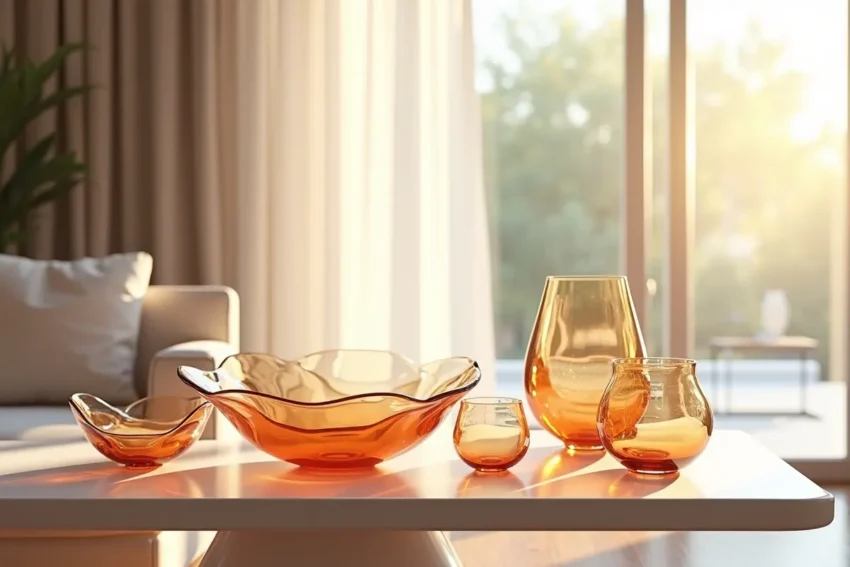
When thinking about decorating your home, why not choose one of the current rising trends, artistic glass bowls and vases? Not only are they stunning, but they are also functional. Artistic glass bowls can hold salads at a dinner party, chocolates as an after-dinner treat, or sweets on a side table for Christmas. With an artistic glass vase, add a beautiful, fresh bouquet or maybe dried foliage for a long-lasting effect.
Artistic glass vases and bowls, however, are not a new invention. In fact, they have been around since ancient Mesopotamia and Egypt. They have experienced highs and lows, with new designs and techniques being developed throughout history.
Their artistry reflects the culture of the times they were created, but many are timeless and look as striking now as they did centuries ago. Let’s delve into the history of glass bowls and vases, see how they are created, and find out why they are popular today.
Contents
The History of Artistic Glass Bowls and Vases
Ancient Times
Glassmaking goes back to Ancient Egypt and Mesopotamia, around 3,500 BC. However, most items made at this time were functional and often used for storage. It was in the 1st century BC that the Syrians invented glassblowing, first blowing the glass and then shaping it in molds, and later without the use of molds.
They created beautiful, spherical shapes which were then formed into vases, bowls, and glasses using tools. They were exported throughout the Roman Empire, and soon the Romans were producing their own glass. The skill of the glassmakers is shown in the delicate patterns decorating their glass vases and other items. These showed that they were not only interested in creating functional vessels, but also in the aesthetics.
However, when the Roman Empire fell in the 5th century, glassmaking declined, and a dark period followed until the Middle Ages, when glass production resumed.
The Middle Ages
In the Middle Ages, Venice led the revival of glassmaking, reintroducing techniques, such as filigree and millefiori, which had been invented in Ancient times. In 1291, the glassmakers were moved across the lagoon to the island of Murano, partly to keep their techniques safe from the rest of the world. They weren’t even allowed to leave the island, resulting in the glass being different from that produced in the rest of Europe. Their glass bowls and vases had delicate, intricate patterns, and the colors were vibrant. Glassblowing was mainly used to produce the artistic vases and bowls, leading to complex shapes and designs.
The Renaissance
The Renaissance continued the trend of development and expansion, with new techniques appearing, such as avventurina, which was developed in Murano in the 17th century. During this period, there was an emphasis on both artistry and functionality, resulting in elaborately patterned vases and bowls in bright colors that people displayed for their artistic value, but were also used.
The 19th and 20th Centuries
The 19th century brought the advent of the Industrial Revolution, and glass started to be mass-produced. However, glass artists in Murano kept the craft alive, and in Great Britain, the Arts and Crafts Movement was created, emphasizing the importance of handcrafted objects. This period was marked by a mixed range of artistic glass products being developed, including bowls and vases. Artists weren’t afraid to try out new patterns, textures, and colors.
In the 20th century, the Studio Glass Movement began in the US, emphasizing individual artistic expression. Artists began to work independently, exploring new techniques and designs. These included Dale Chihuly, Harvey Littleton, and Lino Tagliapietra, all of whom pushed artistic glass to the forefront. The differences between mass-produced glass and handcrafted glass were evident, and artistic glass became even more popular.
How Artistic Glass Bowls and Vases are Created
Glassblowing
Glassblowing is one of the best ways to produce artistic glass bowls and vases, as distinctive shapes and designs can be created. Because each piece is handcrafted, they are unique, and no one vessel is the same.
The first step is to heat the raw materials of sand, soda ash, and lime at a high temperature, usually around 2000°F (1093 °C), until you have molten glass. A portion of the molten glass is then gathered by the glassblower at the end of the blowpipe.
He or she then blows air into the pipe, creating a bubble of glass. The size and shape can be changed by adjusting the amount of air blown. The shape can also be changed by using different tools or by swinging the glass. As the glass becomes cool, it is harder to work, so it sometimes has to be reheated in a separate furnace. Glassblowing creates organic and fluid shapes, which are perfect for vases and bowls.
Casting
Casting is also used to make glass bowls and vases. This method gives a more standardized shape with a higher level of accuracy as the molten glass is poured into a mold. However, when the glass has cooled, it can be polished or ground to enhance the surface. Casting is often used to create complex geometric patterns.
Glass Fusing
Glass fusing involves assembling two or more pieces of glass of different colors or designs and then heating them in a kiln until they fuse and produce one piece of glass. Full fusing involves heating the glass to a temperature of around 1450°F ( 787.78 °C) until the glass completely fuses. Tack fusing involves a lower temperature of 1350°F (732 °C). This partially melts the glass so that it retains its original shape. Contour fusing takes place at 1400°F (760 °C) and allows the edges to soften, but keeps the pieces distinct.
Glass Techniques
Many different techniques are used to create art glass, including vases and bowls. Here are some of the most popular glassmaking techniques preferred by the glass masters because they allow the most freedom of artistic expression.
Millefiori
Millefiori translates from Italian to ‘thousand flowers,’ and the technique results in beautiful, delicate flower-like designs which look particularly spectacular in glass bowls.
To create these designs, multicolored glass rods called murrine are heated and stretched until they fuse. When they have cooled down, the rods are sliced to reveal floral or sometimes geometric patterns. The slices are then embedded into molten glass, which is then shaped.
Avventurina
Avventurina is particularly spectacular in a longer vase because you can see it in its full glory. The vessels have a sparkling look, which is achieved by adding flecks of metal to the glass. Copper is generally used, giving a shimmering effect which is sophisticated and luxurious.
The process is precise and needs great skill because the temperature has to be controlled so that the metal doesn’t oxidize and lose its glittering effect.
Sommerso
Sommerso means ‘submerged’ in Italian and is a technique that has layers of color within the glass. A colored glass core is dipped into a layer of clear or differently colored glass, and once this is done, it is dipped into another color. It is a precise method because a smooth gradient is required. Sommerso is a technique often used to create art glass vases, where the interaction of the colors can be displayed to full advantage.
Gold and Silver Leaf
Gold and silver leaf are often added to glass for a luxurious effect and can be used with other techniques such as millefiori or sommerso. To create the transformation, thin sheets of metal are placed on the molten glass, where they fuse. Gold leaf is used for warm tones, while silver gives a cool, shimmering effect.
Why Artistic Glass Bowls and Vases are Popular Today in Home Decor
Aesthetic Appeal
Artistic vases and bowls are aesthetically pleasing and can turn heads. They are a good choice for home decor as they will stand out and be a topic of conversation with guests.
You can purchase art glass in a wide variety of colors and designs, so it shouldn’t be difficult to find pieces that suit your taste and your home decor. Murano glass is bright and colorful, adding depth and character to a room. Choose rich ambers for a luxurious feel or bold red for a powerful theme. However, in 2025, muted tones have been in demand, giving a calm and sophisticated look to a space.
Bubbled textures have also gained popularity because they are visually captivating. The Bulicante technique is used to create this type of glass.
Craftsmanship
Murano glass is famous for its exceptional craftsmanship and artful designs, often with complex patterns and vivid colors. Traditional techniques, like millefiori and sommerso, make the glassware unique and are well known to fans and collectors alike.
Many artistic vases and bowls have been hand-etched with florals and geometric patterns, which takes great skill and patience, but produces unique pieces that are rooted in tradition.
Versatility
Glass bowls and vases can be both artistic and functional, which increases their appeal. Designers are creating bold, sculptural glass with twists and curves, unusual angles, and irregular rims, which make them stand out as pieces of artwork, while still being useful as vessels.
Durability
As long as it is looked after, glassware can last for centuries without showing many signs of age. It has a timeless quality, which means that you can hand it down through the generations without it looking out-of-date.
Collectability
Blown glass bowls and vases can make beautiful collector pieces. Whether you want to collect the work of a particular artist, or build a collection based on a certain technique, color, or theme, there are many unique vintage Murano Glass bowls and vases in the market to choose from.
Final Thoughts
Artistic glass vases and bowls have been around for centuries, with varying degrees of popularity, and it is likely that they will still be produced in years to come. They are currently experiencing a surge in popularity due to their aesthetics, high levels of craftsmanship, and versatility. People feel proud to exhibit them in their homes, and this is nothing but good for the handcrafted glassmaking industry.