How Dirty Air Ducts Affect Your HVAC System’s Performance
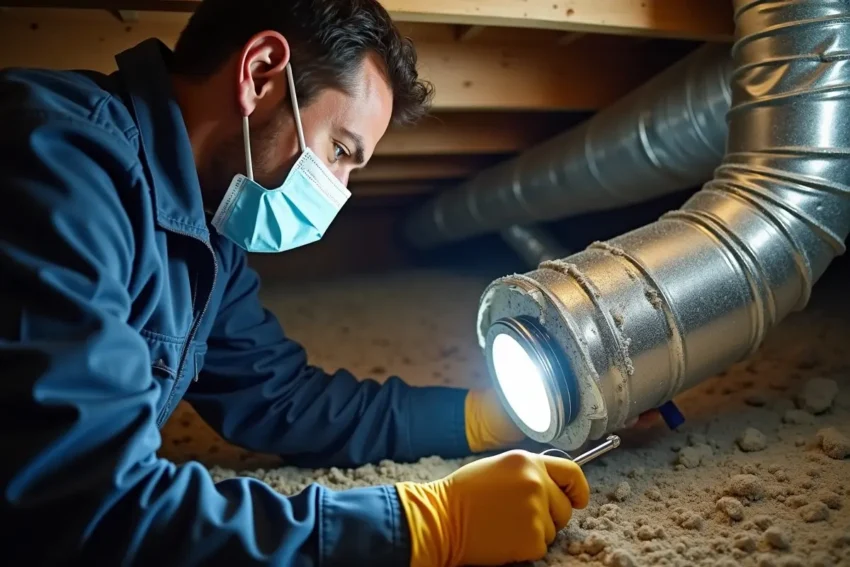
When most people think of air ducts, they think of dust and allergens that can impact indoor air quality. However, dirty ductwork creates issues that have nothing to do with air quality and everything to do with how well a heating and cooling system performs.
Dirty ductwork forces the furnace blower motor to work harder, the air conditioner compressor to strain and energy bills to creep up without explanation. Understanding how dirty ducts impact HVAC performance allows homeowners to recognize when maintenance is needed versus professional intervention.
Contents
How Airflow Gets Complicated
Here’s what’s going on inside the HVAC when ducts get dirty. Air needs to flow freely through the maze-like network of ductwork to allow airflow to reach every corner of the home. When dust lines the walls of ductwork or debris collects in bends and joints, it creates an obstruction. The blower fan has to work harder as it tries to overcome that obstruction, sucking down even harder just to push the same amount of air through a smaller pipe.
It’s like breathing through a straw versus through an open mouth. The lungs have to work ten times harder to force air out through a much smaller opening. That’s how HVAC systems feel when ducts are dirty. Blower motors run longer cycles, use more power and create more heat in the motor from working harder than it should have to. Over time, longer run cycles shorten important motor component lifespans.
Dirty Ducts = Rising Energy Costs
When homeowners experience increased utility costs but have not increased their energy usage/expenditures, they don’t always connect their HVAC systems running harder with dirty ducts. Energy bills fluctuate for all sorts of reasons; a 10-15 percent increase might get attributed to seasonal activities or higher rates in the area. However, when airflow is restricted, the system has no choice but to run longer to achieve the same runtime it once had.
For example, if a system once ran perfectly for twelve minutes to achieve temperature but now takes eighteen, those extra six minutes adds up on a system that runs dozens of times per day. The compressor, blower motor and heating elements all have longer run times compounding the issue.
The issue only gets worse when extreme weather prevails. That’s when homeowners recognize their systems can’t keep up but still fail to realize dirty ducts may prevent airflow from maximizing performance.
Which Components Suffer Most?
Certain components suffer differently when ducts are clogged. The blower motor is most impacted as it’s forced to work harder against more resistance. Motors designed to run at certain load tolerances have their tolerances exceeded for prolonged periods before strain occurs, which results in stronger wear and tear on bearings, high voltage on windings and burnt-out motors.
Heat exchangers are impeded by poor airflow. When heat exchangers do not operate at optimal level airflow, they cannot disperse thermal energy adequately. High levels surpass burn temperatures, tripping safety shut off mechanisms and potentially cracking in extreme cases. Modern furnaces are designed with features that protect them from dangerous situations, but this also means shut off occurs more frequently and rooms get cold.
Air conditioning systems deal with similar issues on the cooling side. Evaporator coils need consistent airflow to function efficiently. Reduced airflow means refrigerant doesn’t absorb heat properly, potentially causing the coil to freeze. A frozen evaporator coil stops cooling entirely until it thaws, and repeated freeze-thaw cycles damage the coil over time. Working with a reputable air duct cleaning service addresses these underlying airflow problems before they escalate into expensive component failures.
Uneven Heating/Cooling
Ducts do not impact every room in the same way. Rooms furthest from the primary air handler will naturally receive less airflow than those closest under normal circumstances. When ducts are dirty, however, those rooms, the bedrooms, get no airflow whatsoever, while the master bedroom has been cooled down even more than desired.
This is how the master bedroom stays comfortable during an August heat wave while the back bedroom struggles to break past 85 degrees. The opposite occurs as well; from rooms getting too hot when certain vents close because others are blowing more than average volume because they’re clean and adjusted properly.
This happens because dirty ducts create uneven pressure across the entire system; thus, without consistent access to all sides of the system (via branches) accessible flows are diverted elsewhere.
Compensating via adjusting vents or thermostats within a zone means attempting a Band-Aid fix that’s not truly addressing anything substantial.
How Do Ducts Get Dirty?
Understanding how ducts get dirty helps make sense of how problems progressively get worse over time. Each time the system runs, it sucks air out of rooms through return vents. Air is filled with dust, pet dander, fabric fibers and other particles that end up settling within ductwork – some of which are captured by air filters and others that are not.
Moisture issues heavily contribute to debris loads. Water from leaks or condensation lets dust conglomerate into hard-edged accretions that catch more airflow than loose dust. Thus, dirty ducts become worse than just dusty over time.
Dirt work from renovations gets pulled into ductwork for distribution. Yes, it settles unless humidity causes it to clump; otherwise, it stays suspended in certain areas based on how airflow works within ducts – meaning airflow patterns and ductwork geometry does exist.
Moisture can provide mold growth in ducts if homes are overly humid or experience mold growth elsewhere from dirt and dampness.
Signs That Ducts Are Impacting Performance
Performance problems don’t have to wait until system failure occurs if it’s apparent that ducts are responsible. Rising energy bills despite consistent use patterns indicate something is off which means the system is working harder than it should.
Longer run times signify a struggle in efficiency to meet those temperatures; inconsistent temperatures (comfortable living room at 75 while bedrooms struggle at 80 or 70) indicate airflow distribution problems (typically caused by dirt) across zones.
More air blowing into one room than another suggests dirt is caught elsewhere in discomforting spaces; sounds coming from ductwork when the system runs either mean airflow is turbulent around dust or something is loose in ductwork (which no one wants).
Whistles mean air is forced out through smaller openings it’s not supposed to go through. It’s less about if problems exist but when they exist.
What It Costs When You Don’t Address Problems
Ignoring these options in favor of saving money costs thousands down the line when other options fail from misuse. All that extra power used during overworked systems adds up month after month. Component failures due to excessive strain come with repair/replacement costs. A simple blower motor replacement is $300-$600; a cracked heat exchanger might mean a furnace replacement.
System lifespan is always reduced when systems work harder than expected. An HVAC system designed for 15-20 years may last for only 10 if it was never meant to operate so hard during its lifetime. That premature replacement equals tens of thousands of dollars lost equity.
It’s not worth saving money now to pay for inflated prices elsewhere.
Making Choices About Maintenance
Not every homeowner needs duct cleanings on a schedule; proximity of pets, renovations, air quality and home age all dictate how soon ducts collect problematic dirt debris.
Ducts obviously need cleaning when homes have recently remodeled or too many pets, frequent attention is necessary, and homes near roads or dusty streets receive dirt build-up faster than homes in low-trafficked roads.
The bottom line: if system performance isn’t as functional as it used to be, and it’s been on par for years, it’s time for a professional assessment. There’s no value in waiting until complete failure, but there’s also no value in giving immediate cleaning without considering performance issues first, which may be premature.
When the ducts are clean and allow the system to perform as it’s meant, energy isn’t wasted working additional hour while the system runs at double efficiency creating acceptable temperature durability without any failed components, cleaning the ducts while it was a subtle inconvenience saves money down the line.