What Every Construction Manager Should Know About Silica Exposure
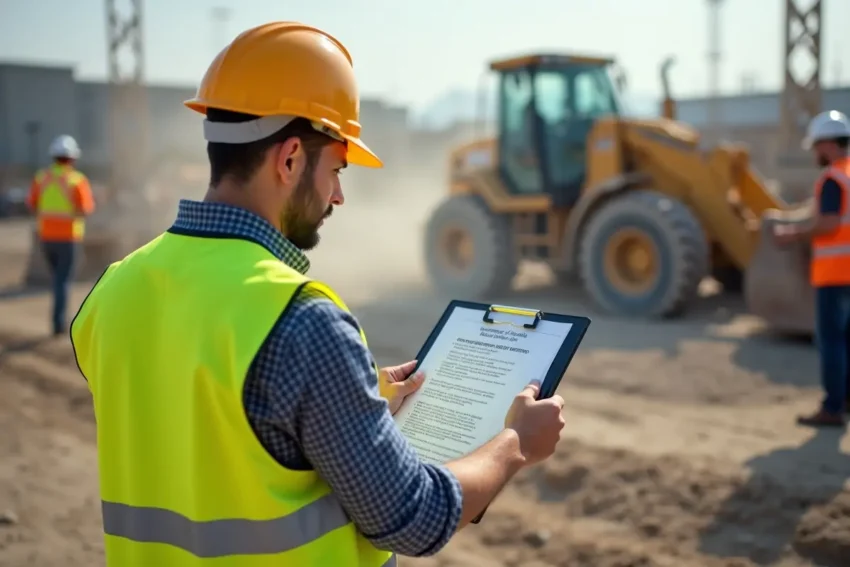
As one of the most impactful occupational safety problems construction managers face, exposure to silica is often overlooked despite how much responsibility construction managers have for ensuring worker safety.
The dust created by cutting, grinding, drilling, or demolishing worksites is sufficiently damaging to lungs that once exposure occurs, the irreversible damage occurs without workers knowing they’re at exposure levels until it’s too late.
Contents
Why Silica Dust Is Problematic
Crystalline silica is present within concrete, bricks, tiles, mortar, stone benchtops, and other materials. It is created when workers cut, grind and otherwise smooth surfaces. When particles get into the air around a job site, they are so small they’re even not detectable by the naked eye, which means they’re small enough to enter the body without passing through its natural defenses.
The damage done is significant, too, as workers cannot breathe in inhaled silicon particles back out again, and consequently, exposure to such elements can lead to silicosis (an incurable lung condition that makes breathing increasingly difficult), lung cancer, chronic obstructive pulmonary disease and kidney disease. Health problems emerge years later, sometimes decades after exposure, leading construction managers to wonder if they’ve done something wrong when inevitable symptoms emerge years down the line.
When Is Testing Necessary?
While many construction managers know that silica dust control is necessary, knowing when professional testing is required leaves room for ambiguity. According to WHS regulation in Australia (but similar considerations are made elsewhere), in situations where work involves specific crystalline silica materials known to create respirable dust and there’s no understanding of exposure levels, professional respirable crystalline silica air monitoring is warranted. Professional tests determine whether existing dust control mechanisms are working or if others are needed to safeguard workers from hazards.
Risky activities include jackhammering, concrete cutting with power tools, abrasive blasting, grinding masonry surfaces and demolitions, though even such activities as dry cutting can create problematic levels of exposure. They do not need to be dense or visible; in fact, a common misconception among construction workers is that they only need to worry about silica exposure when dust is overwhelming in volume.
How Can Controls Be Effective?
As with most hazards, the hierarchy of controls applies; however, implementation matters more than academia. Eliminating opportunities for crystalline silica occurrence with concrete and similar materials would be best; however, for the purposes of many constructions, this isn’t possible. Substituting through conditions, choosing products with less crystalline silica is possible, but more importantly, choosing water suppression on cuts and grinding has an astronomical decrease in related airborne dust versus dry actions.
Engineering controls provide the most protective measures on paper; tools with dust extraction systems and proper ventilation in confined spaces yield high levels of control when implemented correctly. Unfortunately, like many solutions in theory but not effectively applied in practice, many construction managers fail to work with powered tools that include these features and instead focus only on conducting the work without added safeguards.
Personal protective equipment is the last defense. For exposure to silica dust or when cutting or grinding materials with crystalline products, respirators are appropriate, but only if they’re fitted, the correct types for protection from such elements and worn consistently by everyone all the time who needs them. Construction managers often employ disposable dust masks thinking they’re effective when in fact, they’re not good protective equipment against any grade of silica dust let alone the respirable variety.
Why Workers Don’t Take Silica Seriously
It’s easy to tell workers that silica is a concern during toolbox talks; it’s another matter to help them understand why it matters what they cannot see compared to what they can breathe in every day at work. Many workers have been cutting concrete for years without symptoms—why should they think this behavior is bad? Because particles are invisible doesn’t mean they aren’t dangerous; it’s just an unfortunate hazard of construction work.
Training for effective solutions must contain information about what crystalline silica is and where it exists, what materials contribute to cuts/exposure and how to use proper controls effectively as well as health outcomes that significant exposures cause. But training alone doesn’t change behavior; construction managers must monitor compliance consistently and enforce such behavior so it’s easier to comply than it is to ignore policies.
Why Documentation Matters
Documentation matters for various reasons; firstly, regulations require a construction manager on site of documented acknowledgment of a risk resulting from tested results.
Second, helpful documentation for various parties will protect a business after health risks emerge potentially years from when an exposure event initially occurred, which not only makes workers feel more comfortable but businesses as well when regular compliance assessments occur. Third, proper documentation helps highlight an emergence of a problem over time with insufficient protective controls.
Air monitoring results should illuminate whether what’s currently being done is acceptable or requires improvement, it’s not enough just to keep results stored on a computer somewhere away from sight. If exposure levels are at or above acceptable limits of one’s ability to live comfortably with their job site efforts, then something must be done. They deserve to know what’s harmful before them while Construction Managers owe it to them to research solutions once problems have been identified.
Making Silica Safety a Priority
Ultimately, exposure isn’t optional; safety relative to silica dust is integral for risk management. The protection of health complications far outweighs any legal consequences that could easily be avoided; compliance makes it clear that construction managers need to support their efforts where such exposure is concerned.
Serious health outcomes are all but guaranteed without due care while construction managers can implement their policies to maintain safe standards with them as well as avoiding potential fines, lost contracts or worse down the road. Silica must be taken just as seriously as fall protection or electrical safety, not relegated as an opportunity for whenever it’s convenient.