Why Construction Conveyors Have Become Standard on High-Rise Projects
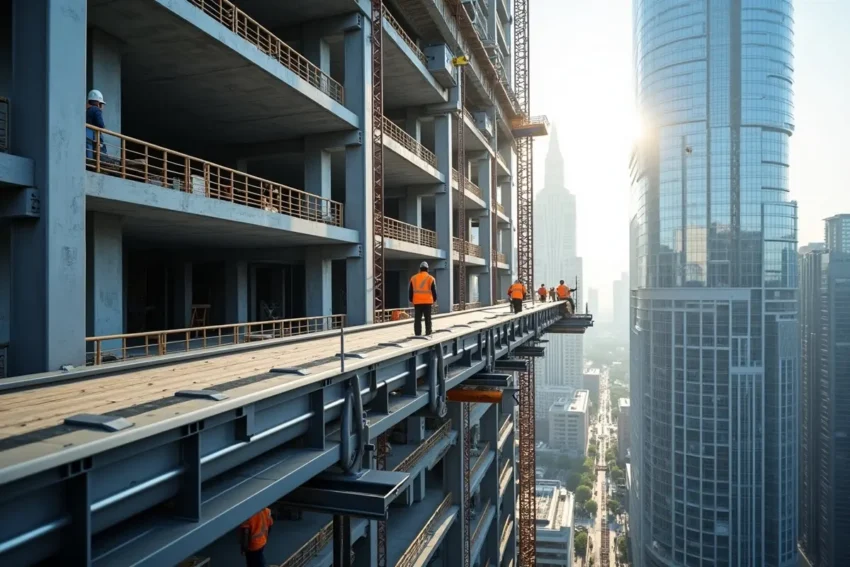
Take a walk around any major high-rise construction project and you will see conveyor systems snaking up walls or running in and out of interiors. It would have been rare to see this twenty years ago, but today, it’s hard to imagine constructing a vertical building without it.
This is because the old way of doing things wasn’t working. Getting off the ground literally hit a snag. When buildings started to go up higher with tighter construction timelines, the last thing anyone wanted to do was rely upon hoisting things via crane or going up the extra story with a lift. Too much downtime, too much waiting and way too many safety concerns stacked up floor by floor.
Contents
The Crane Issue No One Talks About
What the average person doesn’t realize is that cranes are expensive to operate and their function is dedicated to one operation at a time. If a tower crane is moving concrete, it’s not moving steel. If it’s placing precast panels, everything else is waiting. On a thirty-story building, that crane has to service every floor and the height dictates how long it will take to just go back and forth.
For example, one crane operation may take 15 minutes up and down to the 25th floor. That’s four opportunities per hour at best with perfect timing. But concrete doesn’t care about the crane operations; it arrives ready to be placed. If you can’t get it upstairs faster than it takes to turn around, you’re either turning trucks away or letting the material harden before you even place it.
But for conveyors, a dedicated means of moving concrete means the crane can stay on the job for all structural pieces and mechanical equipment and the other heavy movement that craning can support. The concrete gets continually moved regardless of what else is happening on site.
Speed Is Important
Conveyors move. They don’t batch moving; they continuously move. The placement rates speak for themselves. For example, if a concrete conveyor is properly sized, it can place 50-100 cubic yards per hour effortlessly (assuming everything else is in place). Contrast that with crane buckets or pumping from ground level and time savings seem apparent.
But speed also relates to consistency. When there’s consistency in concrete delivery, there’s consistency in finishing work, i.e., they can smooth out the material without having to hurry through one bucket/batch before they get another. There’s no in-between situations where they can sit around as work slows down or quality goes down. This translates to decreased labor costs.
For projects working against schedules, this only gets compounded. Faster placement means faster form cycling which means floors are ready faster which means buildings go up faster; on a 40-story building, if you can save just one day per floor cycle, you’ve saved weeks on the job.
Getting Materials Where They Need to Go
The vertical aspect is obvious but so too is the need to travel horizontally. Many high-rise floors span large areas and getting concrete from point A (where it’s pumped or dropped off) through A1 and A2 is complicated. Having workers push buggies through a half-acre floor deck eats up time and energy. Conversely, pumping from a singular location works, but moving boom lines creates additional downsides.
More contractors are looking into construction conveyor for rent and for sale, since they are easy to configure extendable boom points which can all be achieved without repositioning. A flexible capability of various boom angles means that it can service an entire floor level without ever moving from its original position, which reduces equipment moves from point A to point B, allowing workers to keep placing instead of figuring out logistics.
The ability to move around obstacles is equally important. High-rise work involves rebar cages/electrical conduit/mechanical rough-ins/hoarding and all sorts of other things that take up floor space—and conveyors can arch over things or go between obstacles better than ground equipment.
Safety Enhancements That Changed the Game
The case for safety may be even more prevalent than for efficiency. Moving concrete through a closed conveyor system mitigates much of what would normally be exposed from buckets suspended through cranes or manual handling. Workers aren’t working underneath suspended loads. No one is fighting with heavy loads through confined spaces, concrete moves in a controlled manner straight from truck to placement point.
Fall risks are reduced as well. When crews aren’t constantly moving around the floor trying to move things or catch up with something else in an interims level, they have less exposure opportunities to unprotected edges/openings, work areas are more organized because they’re not constantly trying to move equipment around with no placement.
Repetitive stress injuries are reduced as well because concrete work is physical regardless, but when you eliminate moving from Point A to Point B over such a long distance with concrete, workers’ bodies are spared from overuse. Workers stay fresher throughout the day which enhances productivity and safety awareness.
The Numbers Work
Conveyor systems are an expensive piece of equipment upfront, but for high-rise work, payback seems immediate enough. Labor savings prove often enough for cost justification; one (or two) workers operate a conveyor versus what could be five or six workers moving with buggies or attempting to sync a crane pick.
Time savings equate to money on multiple fronts; faster construction means shorter rental periods, less overhead on site, projects complete sooner, getting tenants into a building one month faster means millions for owners in potential rent.
Less reliance on cranes means financial flexibility for operators, when concrete flow isn’t competing with craning hours, there’s potential for lower cranes or fewer hours, which cuts down budget significantly on tall buildings, crane costs alone can reach millions.
How This Became the New Normal
Construction industry equipment selections typically lean conservative; however, when industrial conveyors make so much sense for high-rise work, it took minimal time for them to catch on relative quickly. The early adopters of projects that brought them into action found quantifiable benefits for schedule, cost, and safety, and word traveled well in an industry where competitive advantage matters.
Building codes evolved relatively quickly for them as safety regulations sought closed material handling systems instead of open buckets from cranes. Insurance companies noticed the decreased incidents and adjusted coverage accordingly and owners specified conveyor systems within project specifications because they recognized schedule benefits.
Even the technology itself got improved along the way; advanced conveyors are more reliable, more intuitive to set up, more adjustable than previous iterations. Remote controlled devices, adjusted boom actions and better pumping systems make them responsive across previously infeasible situations, which allowed conveyors once relegated only for mega-projects now standard for anything over twelve-stories.
What This Will Mean Going Forward
The high-rise construction market isn’t slowing down any time soon and buildings keep going up taller and more complicated. Conveyor systems will continue to evolve with greater reach and better capabilities which make efficiency gains no longer just nice to have, but necessary for projects operating on tight schedules and budgets in an industry where margins remain tight with expectations running high.